How Britain is moving towards a ban on Israeli settlement goods

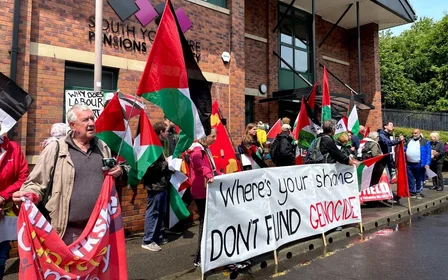
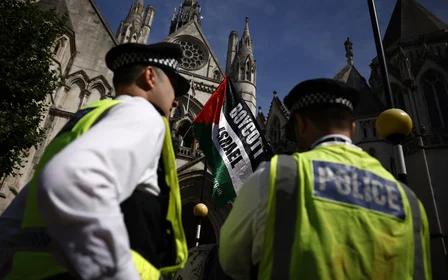
The UK could soon impose a ban on the import of goods from illegal Israeli settlements, as MPs from various parties, including from the ruling Labour Party, press for stronger action.
A significant shift in British policy now appears highly plausible in the near future – even likely – sources told Middle East Eye.
According to several people close to the government, Middle East Minister Hamish Falconer told Labour MPs late last year that a ban on settlement goods is desirable.
The ultimate decision, however, lies with Downing Street.
In opposition, Labour called for a ban on the import of settlement goods, with then-Shadow Foreign Secretary Lisa Nandy saying in June 2020 that the move would require "courage that so far ministers have not been willing to show".
New MEE newsletter: Jerusalem Dispatch
Sign up to get the latest insights and analysis on Israel-Palestine, alongside Turkey Unpacked and other MEE newsletters
The party did not carry that idea into government. Two years ago, Labour's position was that there could be no sanctions or boycotts against Israel. This view has since changed fundamentally.
Ministers accept that a ban on settlement goods would be consistent with the British position on the occupied territories, sources said.
The mood is also shifting across Europe. France and Sweden recently put forward a proposal calling on the European Union to enforce strict import controls on settlement goods.
The Netherlands also banned trade in goods from the occupied territories last month.
And the US-Israeli war on Iran has pushed the Starmer government further away from having regard for what the Trump administration says about British policies.
Debate due on banning goods
Abtisam Mohamed, a Labour MP who sits on the parliamentary Foreign Affairs Committee (FAC), which scrutinises government policy, has secured a debate in parliament on banning settlement goods.
Its date has not yet been confirmed, but the debate will pile further pressure on the government.
'The ICJ ruling that no state should aid or assist in the illegal occupation of Palestine is now two years old and the UK is falling behind our allies'
– Abtisam Mohamed, Labour MP
"The ICJ’s [International Court of Justice's] ruling that no state should aid or assist in the illegal occupation of Palestine is now two years old and the UK is falling behind our allies," Mohamed told MEE.
"Several EU states are taking steps to restrict or ban settlement goods, while the UK government continues to argue that action would be too complicated.
"However, the mechanisms exist. If we can impose strict sanctions on Russian-occupied territories under the Russian Sanctions Guidance, why not Israeli-occupied territories?"
An ICJ opinion in 2024 ruled that Israel's occupation of Palestinian territory is illegal.
According to Israeli human rights group B’Tselem, Israel has driven out 59 Palestinian communities, home to more than 4,000 people, since 7 October 2023.
The United Nations recorded almost 2,000 settler attacks in 2025 – approximately five a day.
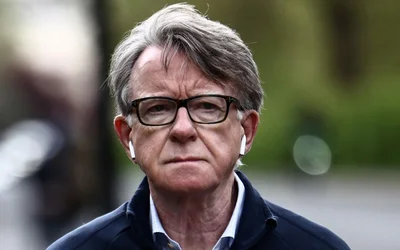
Emily Thornberry, a senior Labour MP and the chair of the FAC, and whose opinions on foreign policy are said to be taken seriously by both ministers and Labour backbenchers, told MEE that the "situation in Palestine is intolerable, and yet we tolerate it".
Thornberry said Britain must "make it so economically painful for Israel that settlement expansion becomes untenable".
What would this look like in practice?
"We should be banning the import of goods produced in illegal settlements," Thornberry explained.
"We should be placing sanctions on those involved in the settlements. We should be making sure we are stopping the involvement of any British companies.
"We should be coming down hard on insurance networks. We should be making it clear that it is not possible to construct settlements on the West Bank, and we are going to do everything to stop it."
Pressure from within the Labour Party
Polling of Labour members released on Wednesday showed that a staggering 87 percent support a ban on trade with Israeli settlements, with only 6 percent opposing it.
In May 2024, the Labour government sanctioned several prominent Israeli settlers in the West Bank, including veteran settler activist and head of the Nachala movement Daniella Weiss.
Last June, the UK – alongside several allies – then sanctioned two far-right Israeli ministers, National Security Minister Itamar Ben Gvir and Finance Minister Bezalel Smotrich, over "their repeated incitement of violence against Palestinian communities" in Gaza and the West Bank.
A Foreign Office spokesperson told MEE: "We have strongly and repeatedly condemned settler violence and the expansion of illegal settlements, and we have imposed sanctions both on those responsible for that violence and on individual members of the Israeli cabinet for inciting it.
"We continue to call on the Israeli authorities to clamp down on all those who are seeking to inflame tensions, and to tackle the unacceptable violence and destruction of property that is being committed by settler groups against Palestinian communities."
Labour MP Kim Johnson, considered a prominent voice in the party pushing for a stronger reaction to Israeli violations of international law, criticised the government for its current approach.
She said Britain "should have joined the growing international calls for meaningful action by imposing sanctions on those responsible for settlement enterprise a long time ago.
Israeli Minister of National Security Itamar Ben Gvir said “we took everything from the terrorists in prison, and now we want to take their lives” in response to a Hamas statement condemning Israel’s death penalty laws for Palestinians. pic.twitter.com/9lbp8DTtLV
— Middle East Eye (@MiddleEastEye) April 7, 2026
"Our government cannot claim to support a rules-based international order," Johnson added, "while allowing economic and political support to flow to activities that violate international law."
Britain would be unlikely to go it alone in imposing a ban on settlement goods, sources told MEE, but could do so in tandem with other countries, like France or the Netherlands.
The UK was joined by Australia, Canada, New Zealand and Norway last year in imposing sanctions on Ben Gvir and Smotrich. It also recognised a Palestinian state last September alongside France, Canada and Australia.
The Greens and SNP pile on the pressure
Labour is thought to be particularly concerned about the threat from the Green Party, which made huge gains in last month's local elections.
Green MP Ellie Chowns, the party's foreign affairs spokesperson, told MEE that the UK must go further than just banning settlement goods, and "impose further sanctions on all Israeli government officials responsible for authorising illegal settlements".
'It is time for the UK government to stop making excuses'
– Chris Law, Scottish National Party MP
Chowns accused the Labour government of "an utter failure of our legal and moral obligations", calling settlement goods the "proceeds of crime".
MEE has seen a copy of a letter sent by Hamish Falconer, the Middle East minister, to Scottish National Party MP Chris Law, saying: "We support the accurate labelling of settlement goods to ensure consumers are not misled... We recommend that settlement products are labelled so as not to mislead consumers."
In the letter, Falconer adds: "The UK’s overseas business risk guidance sets out the clear risks to UK operators related to economic and financial activities in the settlements."
Law, who is the SNP's spokesperson on trade and international development in Westminster, criticised this approach.
He told MEE: "Imported settlement products should not be labelled as such for the benefit of consumers, they should be banned so that the UK is no longer involved in this immoral trade and to demonstrate to Israel that flagrant breaches of international law will not be tolerated."
Law added that "the UK government has not provided a single legitimate reason why it is not following" the ICJ's 2024 legal opinion.
"European states are taking action and there is a precedent in UK law and policy of not trading with illegally occupied lands, such as Crimea and other illegally occupied parts of Ukraine."
He said it was "time for the UK government to stop making excuses".
Órlaith Roe, the public affairs officer at the International Centre of Justice for Palestinians (ICJP), a UK-based legal group, warned that Britain "is failing to meet its obligations under international law on the occupied Palestinian territory."
Roe added that the ICJ's advisory opinion means "there is simply no alternative to ending Israel’s illegal occupation. The UK must immediately ban imports from illegal settlements and adopt weighty, enforceable measures - not cosmetic, paper‑thin gestures - to align its trade policy with international law and protect Palestinian rights."
Independent MP Shockat Adam, who visited the occupied West Bank on a fact-finding mission last year, told MEE: "The brutal reality is that settlement expansion is driving the ethnic cleansing of Palestinians from their land in the West Bank, while settler violence continues with impunity."
Adam added: "Each week in parliament we hear vacuous words of condemnation from the government. But if ministers are willing to tolerate new settlements, land seizures, attacks on Palestinian communities, and an apartheid system that now extends to the imposition of the death penalty, then clearly their words mean nothing."
He insisted that "international law cannot be applied only when it is politically convenient".
The coming leadership contest
Israel was Britain's 43rd largest trading partner during 2025.
Although Britain provided arms and intelligence from surveillance flights over Gaza to Israel throughout its genocide, there has been a marked deterioration in diplomatic relations over the last year.
Ultimately the biggest factor likely to shift policy on the West Bank settlements will be the expected leadership challenge to the prime minister over the next few months.
The expected candidates for the premiership, including the frontrunner, Greater Manchester Mayor Andy Burnham (who is standing to be an MP in Makerfield in a by-election later this month) and former Health Secretary Wes Streeting, may feel the need to take a much more strident position on Israel.
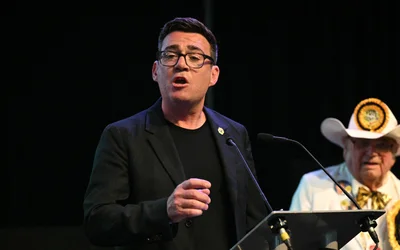
“Labour’s refusal to properly oppose Israel’s genocide in Gaza is one of the key issues that has appalled huge numbers of former Labour voters and driven them away from the party,” Labour MP Richard Burgon told MEE.
This logic implies that the topic of Israel and Gaza will be brought to the forefront in the leadership contest.
Ordinary Labour members are much more left-wing than the parliamentary party. A poll last June showed that nine out of ten members thought the UK should be more critical of Israel than it currently is.
This will likely influence how candidates present themselves once the battle goes to the membership.
At hustings and in television studios, and among ordinary members, each contender will come under heavy pressure to take a position on Starmer’s handling of Gaza.
Streeting privately supported imposing sanctions on Israel as a whole last year, it was recently revealed.
It remains to be seen whether he will take such a strident position in public, but he has already ramped up his criticism of Israel in recent months.
And there is another possibility: Starmer may well seek to adjust his policy to undercut his opponents and try to win back the support of the Labour left.
For all these reasons, a stronger policy on Israel – at the very least involving a ban on settlement goods – may be on the way.
Middle East Eye delivers independent and unrivalled coverage and analysis of the Middle East, North Africa and beyond. To learn more about republishing this content and the associated fees, please fill out this form. More about MEE can be found here.