Israel advances crocodile plan to stop Palestinian prisoners escaping

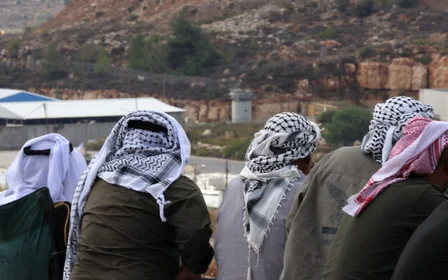
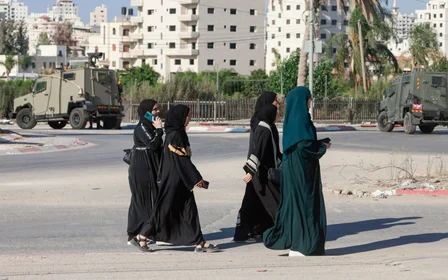
The Israeli government has stripped Nile crocodiles of their protected status, paving the way for a proposal to build a detention facility for Palestinians surrounded by the reptiles, Israeli media reported on Thursday.
Environment Minister Idit Silman signed a decree on Wednesday reclassifying Nile crocodiles as a "specially managed wild animal" - a new legal category that allows the state to keep the animals for security purposes, according to Israeli news site Ynet.
In the decree, Silman said Israel's security forces could now keep crocodiles under specific conditions.
According to Ynet, the move went against the advice of the Environment Ministry's legal adviser and environmental groups.
The decision follows months of pressure from National Security Minister Itamar Ben Gvir, who in December proposed building a prison encircled by crocodiles.
New MEE newsletter: Jerusalem Dispatch
Sign up to get the latest insights and analysis on Israel-Palestine, alongside Turkey Unpacked and other MEE newsletters
Ben Gvir, who oversees the Israel Prison Service (IPS), said he was inspired by Florida's controversial immigration detention centre, dubbed "Alligator Alcatraz".
Officials at the Israel Nature and Parks Authority had previously argued that crocodiles should only be kept for education and research.
The Environment Ministry's legal adviser, Neta Drori, also opposed the plan, saying it lacked a sufficient legal and professional basis.
The IPS argued its staff could handle crocodiles because of their experience working with attack dogs, an argument Drori rejected.
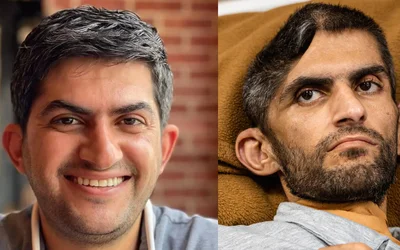
"The IPS does not appear to have expertise in raising dangerous wild animals such as crocodiles," she wrote, concluding that the legal requirements for the declaration had not been met.
Despite that opinion, Silman approved the measure this week.
Ben Gvir celebrated the decision on Facebook on Thursday, posting an AI-generated image of himself holding a crocodile on a lead.
"Damn terrorist, thinking of trying to escape? Think again," the minister wrote.
Since the genocide in Gaza began in October 2023, Ben Gvir has overseen a sharp deterioration in conditions for Palestinians held in Israeli prisons, including torture, starvation and degradation.
Human rights organisations have accused Israel of widespread abuses and have described some detention facilities as "torture camps".
‘Significant risks’
Silman's decision drew opposition from the Israel Nature and Parks Authority (INPA) and environmental groups, which argued the move is unlawful and puts both crocodiles and the public at risk.
The INPA said there was "no sufficient professional basis" to permit crocodiles to be kept at security facilities.
The agency, which is responsible for protecting Israel's wildlife, warned that introducing crocodiles into IPS facilities would create "significant risks", adding that it doubted the prison service could provide appropriate care for the animals.
In a joint statement, several environmental organisations said they "strongly object to the use of animals as a means of guarding and deterrence".
"Crocodiles are sentient beings, with complex needs for space, water, temperature and natural behaviour," the groups said, arguing that prisons should rely on conventional security measures instead.
They also questioned the proposal's effectiveness, noting that crocodiles "slow down their metabolic rate, become very sluggish and stop eating" during winter.
"Security should be achieved through real means, not through animals," the statement concluded.
Nile crocodiles have been a protected species in Israel since 2013. Before then, crocodile farms operated as tourist attractions, but many switched to breeding the animals for their skins as visitor numbers declined.
Last year, the Israeli military killed more than 250 Nile crocodiles at a farm in an Israeli settlement in the occupied West Bank, prompting condemnation from animal welfare groups, which accused it of slaughtering protected animals.
Middle East Eye delivers independent and unrivalled coverage and analysis of the Middle East, North Africa and beyond. To learn more about republishing this content and the associated fees, please fill out this form. More about MEE can be found here.