
After deadly shooting, Israel forcibly evicts hundreds of Palestinian families from Hebron homes

Israeli forces have forcibly evicted hundreds of Palestinian families from their homes across several neighbourhoods after a shooting on Friday near the Farsh al-Hawa checkpoint west of Hebron, in which two soldiers were killed and three others wounded.
As part of what it termed an "operation to thwart terrorism", the Israeli military said the operation was launched in the city of Hebron, in coordination with the Shin Bet (internal security service) and the Border Police in the West Bank.
The two suspected Palestinian attackers were also killed by Israeli forces, according to the military.
The army said it was conducting searches to locate and dismantle what it described as “terrorist infrastructure” and weapons, while interrogating dozens of suspects.
It said the operation was focused on the area from which the alleged attackers had operated and that residents could leave through designated exits.
New MEE newsletter: Jerusalem Dispatch
Sign up to get the latest insights and analysis on Israel-Palestine, alongside Turkey Unpacked and other MEE newsletters
But residents described being ordered from their homes at gunpoint, with little time to gather belongings and no clear information about when they would be allowed to return.
The families who spoke to Middle East Eye said they were evicted on Saturday morning from the neighbourhoods of al-Jalada, Ein Deir Bahha, Wadi al-Maghariba and Shi'b al-Milh.
The al-Jalada neighbourhood is home to the families of the two alleged perpetrators of the shooting, Ahmad and Hamouda al-Joba, who were killed by Israeli military fire after they reportedly killed two soldiers and wounded others.
Abdul Hamid Shahada, a resident in the neighbourhood, told MEE that the Israeli military stormed the area shortly after the attack on Friday morning.
A large number of soldiers, accompanied by several military vehicles, took up positions near the homes of the Joba family.
During the incursion, the Israeli military distributed a map designating homes and adjacent buildings for evacuation and compelled a number of families to leave their residences.
'Until further notice'
Shahada and his family said they watched the unfolding events from their windows.
“We watched them forcing families out of their homes; they even beat one of the men."
"We stayed in our building, waiting anxiously, and packed small bags with essentials: medicines, mobile phone chargers, and important documents. We didn't sleep all night," he said.
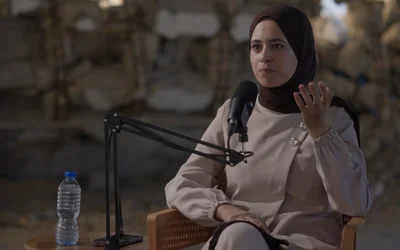
At 9am on Saturday, soldiers stormed the family’s building and ordered Shahada to tell all the residents, about 54 people, mostly children, along with his 79-year-old ailing mother, to leave at once.
"They gave us only five minutes. Although we had anticipated an evacuation and tried to prepare the children, they were trembling and crying. Even the women wept as we were being led out," he told MEE.
"The soldiers ordered us to keep our hands behind our heads and forbade us from taking any clothing or belongings other than our small personal bags," he added.
The soldiers directed the families along a specific route toward Al-Salam Street.
From there, some went to stay with relatives, while others sought shelter at the Child Happiness Centre, which the municipality had opened to accommodate them.
The soldiers didn’t tell Shahada and his family when they might be able to return, saying only "until further notice", though they did inform some other families that they would be kept out of their homes for six months to a year.
Shahada and his family say they cannot stop thinking about the fate of their homes, especially after seeing the houses of their neighbours left with doors and windows wide open and being ransacked and vandalised by the soldiers.
Emergency plan
The forcible displacement has coincided with demolitions targeting residential buildings, commercial shops and industrial facilities in Farsh al-Hawa, west of Hebron. Local sources reported that around seven dunums of land had been levelled.
Israeli forces also imposed a broad closure on the city of Hebron and its surrounding villages, towns and refugee camps, blocking main entrances and roads. Simultaneously, they raided homes, conducted searches and carried out arrests.

Local sources reported that at least 13 Palestinians were arrested in the city, while dozens were detained for several hours and subjected to field interrogations.
In response to the repercussions of the operation, the Hebron Municipality announced the activation of an emergency plan.
This includes the preparation of shelters for families forced to leave their homes, as well as the establishment of an operations centre to monitor residents' needs amid concerns that the scope of evacuations may expand and the number of families requiring shelter could rise.
Khaled al-Qawasmi, deputy mayor of Hebron, told MEE that the Israeli military began its operation in the area around midnight, giving residents one hour to vacate their homes.
He said that the evacuation included both adults and children, and that residents were not permitted to remain in the area.
Approximately 250 families have been forced to leave the area so far, Qawasmi said, noting that this figure is not final, given the ongoing military siege and the possibility that more families may be evacuated.
"Families evacuated during the first wave sought refuge in the homes of relatives, while the Hebron Municipality worked to open centres to accommodate those affected, including family guesthouses, the Childhood Happiness Centre, the Korean Centre and several other facilities," he said.
Qawasmi warned that if the military operation continues and expands, it could lead to a crisis in finding shelter, given the limited capacity of the centres already opened to accommodate any additional people.
"The military operation has not ended, and the closure is not limited to the targeted area; it extends to the entrances and gateways of Hebron, with Israeli forces continuing to be deployed across various parts of the city," he said.
Middle East Eye delivers independent and unrivalled coverage and analysis of the Middle East, North Africa and beyond. To learn more about republishing this content and the associated fees, please fill out this form. More about MEE can be found here.