UK secretly considered suspending Israel trade deal during Gaza famine

The British government quietly considered suspending Israel’s preferential trade privileges before ultimately deciding against the move, according to a report by Sky News.
According to revelations by the broadcaster, the government ultimately kept the agreement in place and concealed the review from parliament and the public.
At the time Israel was deliberately starving Palestinians in Gaza, leading to famine in the besieged territory in August 2025.
The Department for Business and Trade carried out an impact assessment that same month under former Prime Minister Keir Starmer, Sky News reported.
The review examined the possible suspension of the UK-Israel Trade Partnership Agreement, which allows most Israeli goods to enter Britain tariff-free.

Ministers commissioned the assessment as pressure mounted over Israel’s genocide in Gaza and its accelerating ethnic cleansing, settlement expansion and apartheid system in the occupied West Bank.
Yet the government neither announced the review nor disclosed its findings.
It continued to avoid a decision even as Israel deliberately imposed conditions that produced famine in Gaza and Israeli ministers openly advocated the territory’s destruction and ethnic cleansing.
Labour had suspended negotiations on an expanded free trade agreement with Israel three months earlier.
Then Foreign Secretary David Lammy described remarks by Israel’s defence minister about “cleansing” Gaza and “destroying what’s left” as “repellent” and “monstrous”.
But the existing 2019 agreement remained untouched.
"Essentially the government clearly did not want to take this measure last summer," Chris Doyle, director of the Council for Arab-British Understanding, told Middle East Eye.
"The measure of course that it did take was the conditional recognition of the state of Palestine. And I think typical of this government it did not want to do two measures at once."
"I think it was a serious error not to have suspended the trade agreement earlier," Doyle said. "I don't think Israeli goods should come into Britain under preferences as it perpetrates genocide."
'Risk to British jobs'
The then Trade Minister Chris Bryant defended the UK's position in October, telling parliament that “exports to Israel support thousands of jobs in the UK”.
Suspending preferential treatment, he said, “risks unpredictable consequences and significant economic disruption for British businesses”.

Bryant has longstanding links to Labour Friends of Israel, a pro-Israeli lobby group. He previously served as the group’s vice-chair and accepted visits to Israel financed by the organisation and Israel’s Ministry of Foreign Affairs.
The government did not mention the assessment when MPs questioned ministers about the trade agreement.
The department disclosed its existence only after Global Justice Now submitted a freedom of information request.
Officials refused to release the assessment’s scope, findings, timetable or any decisions arising from it.
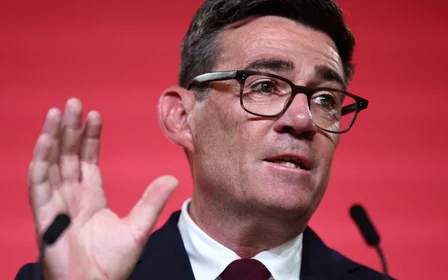
The UK now has a new Labour Prime Minister, Andy Burnham, who has sought to have a tonal change from the previous leadership on Labour's response to Israel’s genocide in Gaza. He has said his party “didn’t get it right” and that it must now do more.
As yet, the Burnham government has made no new announcements on Israel.
Doyle is sceptical that it will suspend the trade agreement, especially “if they are going to go ahead with a ban on settlement products, trade in settlements. If they do that, I don't think they're going to do both at the same time.”
“I think that maybe later down the line, if Israel does not change its conduct, then you may see a Burnham government annulling, suspending this trade agreement,” he said.
“If the Burnham government does suspend the trade agreement with Israel, it would send a very powerful, constructive signal that it will not be business as usual with the state of Israel. That is long overdue.
“It would send a message that international law now matters and things are going to change.”
The review coincided with mounting international pressure for economic sanctions on Israel. The European Union faced demands to suspend parts of its agreement with Israel and later proposed withdrawing some trade concessions.
It also came more than a year after the International Court of Justice said states must prevent trade or other actions that sustain Israel’s illegal settlement enterprise in occupied Palestinian territory.
Middle East Eye delivers independent and unrivalled coverage and analysis of the Middle East, North Africa and beyond. To learn more about republishing this content and the associated fees, please fill out this form. More about MEE can be found here.