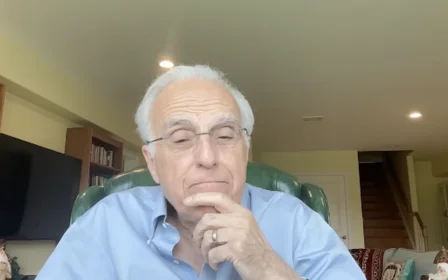

John Esposito's warning against a clash of civilisations has never been more urgent


John Esposito would occasionally joke that he owed his success to Ayatollah Khomeini of Iran.
As one of a limited number of academic specialists on Islam at the time of the 1979 Iranian revolution, Esposito would be called upon time and again throughout his illustrious career to help explain the significance of events in a rapidly transforming region to a mystified American public.
Even as the field proliferated with scores of scholars and analysts aiming to fill the void with expert knowledge and policy recommendations, he stood apart.
He stood apart for his deeper engagement with the people of the Muslim world, and for his commitment to fostering compassion and understanding.
As friends, colleagues and former students come together to mourn Esposito following his death on 15 July, we reflect upon a life lived with purpose and an unwavering commitment to knowledge and truth in the face of prejudice and ignorance.
New MEE newsletter: Jerusalem Dispatch
Sign up to get the latest insights and analysis on Israel-Palestine, alongside Turkey Unpacked and other MEE newsletters
Though he initially planned to attend a Catholic seminary, Esposito embarked on a road less travelled, taking on the challenge of specialising in the study of Islam at a time when the religion and its just over half a billion adherents around the world were the furthest things from the minds of most Americans.
A path of understanding
Esposito often spoke of the role of his mentor, the late scholar Ismail al-Faruqi, who was instrumental in guiding him as he forged a path of understanding across worlds, cultures and religious traditions.
Al-Faruqi had been forced to confront his own exile from Palestine at the hands of the Zionist project, making his way to the United States, where he produced foundational works such as The Historical Atlas of the Religions of the World (1974) and pioneered the critical Islamisation of Knowledge project.
Esposito began his scholarly career in an era where American decision-makers and the broader public still looked at the world through the black-and-white lens of the Cold War.
Even from the early part of his career, what always came through in Esposito's work was how seriously he took the core spiritual beliefs that animated social movements and political projects
The Iranian Revolution shattered that outlook with its suggestion that geopolitics would no longer be defined by the decades-long struggle between capitalism and communism, and that religion would play a significant role in global affairs long after it had been thought to have been relegated to the margins.
Even during the early part of his career, what always came through in Esposito's work was how seriously he took the core spiritual beliefs that animated social movements and political projects.
As he addressed audiences across the US, he emphasised the need to look beyond superficial explanations and account for deeply held values when bridging the political divisions that had been at the root of so much conflict.
In the post-Cold War era, the US foreign policy establishment became increasingly fixated on an impending confrontation with the Muslim world, buoyed in part by scholars such as Samuel Huntington and Bernard Lewis warning of an imminent civilisational clash.
In The Islamic Threat, Esposito rejected such reasoning, instead challenging readers to look beyond facile stereotypes to the root causes that have given oxygen to such narratives.
As a high school student coming of age at a time of increasing uncertainty and insecurity for Muslims in the US, this text helped illuminate for me what was at stake in this debate and the responsibility we shared to challenge a prevailing outlook that threatened the sanctity of faith communities at home and around the globe.
A voice in the wilderness
The aftermath of 9/11 and the proclamation of the global "war on terror" brought even greater urgency to this question.
As the US marshalled unprecedented resources to exert its power and influence throughout the Muslim world in the name of eradicating terrorism, Esposito was a voice in the wilderness.
He urged decision-makers to avoid the ideological pitfalls that would only lead to more violence and devastation.
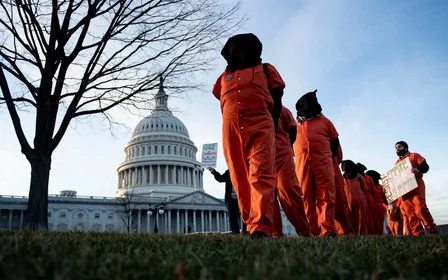
As forever wars in Afghanistan and Iraq, along with the expansion of mass surveillance, drone warfare and the use of rendition and torture, became fixtures of US policy throughout the first decade of the 21st century, Esposito recognised the enormity of the challenge but refused to give in to despair.
By this point a seasoned scholar, he offered immeasurable support to his students, continued to elevate critical voices across the Muslim world, and was even more prolific than before.
He provided invaluable resources such as the Oxford Encyclopedia of the Islamic World, and books such as Unholy War and Who Speaks for Islam? The latter was an ambitious data-driven study representing public opinion polling in more than 35 Muslim-majority countries.
By the time anti-authoritarian uprisings were sweeping across the Arab region in late 2010, Esposito was among the most well-placed scholars to provide much-needed contextual and nuanced analysis as the question of Islam's compatibility with democracy vexed a new generation of journalists and policymakers.
Esposito greeted the moment with tremendous optimism but urged caution and patience, given the pressures, both internal and external, to which these democratic openings would be subjected.
Unlike many scholars of Islam, what distinguished him was a determination to avoid the orientalist trap of focusing solely on textual sources at the expense of understanding the lived experience of Muslims.
Long before it became fashionable to do so, Esposito travelled everywhere and spoke to everyone, from heads of state and senior religious scholars to movement leaders and youth activists from Morocco to Indonesia.
In the vibrant days of the Arab uprisings, the Center for Muslim-Christian Understanding at Georgetown University, for which he served as founding director, was bustling with activity, from conferences and workshops to policy briefings and keynote lectures.
A public intellectual
At every event, Esposito exhibited the role of a true public intellectual, one who saw his responsibility as extending well beyond his academic scholarship. Whether through his refreshing sense of humour or the compassion that came through in his voice, his ability to connect with audiences was unmatched.
As he recounted one of his many anecdotes or reflected on a recent headline, his eyes would light up as he scanned the captivated faces around the room.
Putting his ethical commitments into action, Esposito never shied away from standing with those who paid the ultimate price for their beliefs.
He spoke up on behalf of Anwar Ibrahim, now Malaysia's prime minister, during his imprisonment by the Malaysian government on false charges.
He advocated on behalf of political prisoners in the US, including the Holy Land Five, officials from what was once the country's largest Muslim charity, convicted in 2008 on terrorism financing charges.
He also took up the case of my father, Sami Al-Arian, a university professor and colleague with whom Esposito collaborated on a number of intellectual projects before his imprisonment in a failed post-9/11 terrorism case.
Most recently, Esposito had been raising the case of Rached Ghannouchi, the 85-year-old scholar, activist and Ennahda Party leader imprisoned by Tunisian authorities, following a widespread anti-democratic crackdown.
Throughout the course of his life, Esposito also frequently raised the plight of the Palestinian people, identifying it as a major fault line in the perceived conflict between the Islamic world and the West.
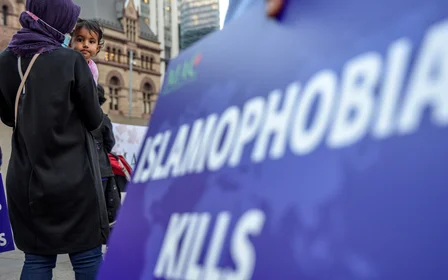
In his extensive work on Islamophobia, he identified the consequent dehumanisation of Palestinians as a pressing need to redress in the pursuit of justice, a stance that earned him the ire of Israel's staunchest advocates throughout his career.
More than four decades after he first asserted the need for western publics to become better informed about the beliefs, values and lived experiences of Muslim societies as a means of avoiding conflict and promoting greater understanding, the US launched a war against Iran that has wrought widespread destruction and destabilisation that is sure to reverberate for years to come.
It is worth recalling the caution Esposito urged in The Islamic Threat more than 25 years ago, writing: "Our challenge is to better understand the history and realities of the Muslim world... [to] lessen the risk of creating self-fulfilling prophecies that augur the battle of the West against a radical Islam or a clash of civilisations."
As we honour his memory, we also recognise that Esposito's legacy is more urgent now than ever.
John Esposito's funeral is being held on Saturday 25 July at St Anastasia Church in Newtown Square, Pennsylvania. His family has asked that donations be made to Georgetown University's Bridge Initiative.
The views expressed in this article belong to the author and do not necessarily reflect the editorial policy of Middle East Eye.
Middle East Eye delivers independent and unrivalled coverage and analysis of the Middle East, North Africa and beyond. To learn more about republishing this content and the associated fees, please fill out this form. More about MEE can be found here.