'Something broke': Italy's Arab communities increasingly fearful of police violence

Recent deaths involving North African men during police operations have sparked renewed fears over excessive force by police, discrimination and political neglect affecting people from Middle Eastern and North African backgrounds in Italy, intensifying anxiety across the community.
On 19 July, Abderrahim Fakir, a 42-year-old Moroccan born man, died after being restrained by two police officers and a civilian in Bologna. Police had been called by a resident as Fakir, in a state of psychological distress, was claiming he was in mortal danger and kicking garage doors.
Footage filmed from a nearby apartment appeared to show him handcuffed, sprayed with tear gas and pinned to the ground by police officers for several minutes while repeatedly calling for help.
Italian Red Cross volunteers, who had arrived at the scene, could be seen standing nearby throughout the nearly seven-minute recording without providing assistance.
The video quickly spread across social media, prompting outrage among the opposition and a segment of the public and raising questions about both the officers' use of force and the Red Cross's lack of response. The public prosecutor's office has opened an investigation for manslaughter.
New MEE newsletter: Jerusalem Dispatch
Sign up to get the latest insights and analysis on Israel-Palestine, alongside Turkey Unpacked and other MEE newsletters
Four days after his death, Mohamed Amin Bessioud, a 25-year-old born in Italy to Tunisian parents, died after jumping from a third-floor balcony during a search carried out by Italy's Carabinieri in the southern city of Cosenza.
Local activists describe the case as yet another fatal consequence of police violence and targeting of the community, demanding truth, accountability and justice.
Speaking to Italian media, Bessioud's mother said her son had struggled with depression and had become increasingly fearful of repeated police searches, claiming he felt "tormented" by one officer. Prosecutors have opened an investigation into the circumstances of his death.
Together, the two cases reignited long-standing concerns over policing within Italy's Arab communities, particularly in neighbourhoods with large migrant populations.
Their deaths came after years of cases that have profoundly marked the community: Youns El Boussettaoui, shot dead in 2021 by a former police officer in the town of Voghera; 19-year-old Ramy Elgaml, whose death after a police chase in late 2024 sparked weeks of protests in Milan; and Abderrahim Mansouri, shot dead by a police officer in January during a drug control operation in Milan's Corvetto district.
‘Equality in theory, not in practice’
In Bologna, thousands of people marched to demand justice for Fakir. Protests soon spread to several Italian cities, while clashes on the sidelines between some demonstrators and riot police turned the case into a national political flashpoint.
Bologna's mayor, Matteo Lepore, of the centre-left Democratic Party, found himself under pressure from opposing sides.
‘Italian policing has long been used to control populations considered marginal’
- Emmanuele Jonathan Pilia, editor at D Editore
Police unions and right-wing politicians accused him of legitimising violence against law enforcement during the protest, while grassroots organisations argued that his administration had responded to years of neglect in Pilastro - the working-class neighbourhood where Fakir was killed - with increased policing rather than sustained social investment.
Power to the People, a communist party, accused both the municipality and Prime Minister Giorgia Meloni's government of accelerating the militarisation of one of Bologna's poorest neighbourhoods.
The party argued that security policies pursued by local and national authorities increasingly treat working-class districts as public-order problems instead of addressing the structural inequalities that have shaped them for decades.
In fact, for Arabs in Italy, the deaths of Fakir and Bessioud cannot be understood in isolation but as part of a broader climate of discrimination where policing, migration and political dissent have become increasingly intertwined under the language of security.
"The law no longer openly declares people unequal. Instead, it creates exceptional categories in the name of security. Equality remains in theory, but not in practice," Omar Korichi, an Italian-Moroccan trainee lawyer, told Middle East Eye.
Korichi argues that the emergency legislation introduced in the name of "public safety", which gives authorities and law enforcement broader powers to control or punish specific groups, increasingly discriminates against people of Middle Eastern and African origins, treated as potential threats.
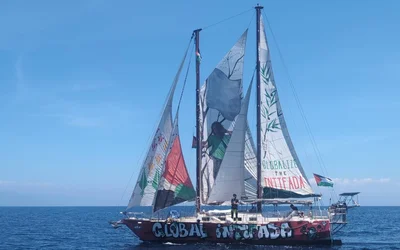
Since coming to power in 2022, Meloni’s far-right government has introduced a series of increasingly restrictive decrees in response to street protests and petty crime, often associated in public debate with Arab and Muslim communities.
A measure approved in February is now being applied for the first time in the case of the two police officers involved in the Bologna case, allowing them to bypass the standard investigative process.
Emmanuele Jonathan Pilia, editor at the independent publishing house D Editore, says the recent events reflect a much longer history of policing in Italy.
"Italian policing has long been used to control populations considered marginal," he told MEE. "Today that same logic is increasingly directed towards neighbourhoods where many Arab, Muslim and migrant families live."
According to Pilia, years of political rhetoric linking migration, Islam and public security have normalised aggressive policing while legitimising hostility towards Muslims in public life.
He points to recent episodes involving politicians publicly targeting Muslims, including far-right Lega MEP Silvia Sardone filming a woman wearing a niqab in Turin before telling her to "move to Islamabad".
‘Under growing pressure’
For those directly affected, these developments and the perception that Arab identity is increasingly associated with criminality and threat are no longer abstract political debates but have triggered a growing sense of insecurity and anxiety.
"After Youns El Boussettaoui was killed, something broke," Rajaa Ibnou, an Italian-Moroccan activist at Milan's Lambretta social centre, told MEE.
‘Before violence becomes institutional, it becomes cultural. When non-white people are consistently portrayed as dangerous, their dehumanisation becomes normalised’
- Camilla Ponti, decolonial psychotherapist
"Many of us realised we were no longer seen first as citizens, but as Arabs."
"The Arab community in Italy is under growing pressure," she added. "Not only because of increasingly restrictive security policies, but also because of the silence of much of the political opposition."
Camilla Ponti, an Italian decolonial psychotherapist whose work focuses on prisons, migration and racialisation, argues that this process begins long before police intervene.
"Before violence becomes institutional, it becomes cultural," she told MEE.
"When non-white people are consistently portrayed as dangerous, their dehumanisation becomes normalised."
According to Ponti, the same logic underpins Italy's immigration detention system and the growing use of security legislation against racialised communities and pro-Palestine activists.
Gaza protests and 'terrorism'
Since the beginning of Israel's genocide in Gaza, solidarity with Palestine has become another arena shaped by security policies, with several Arab organisers arrested and detained on “terrorism” charges.
Italian-Pakistani journalist Sara Tanveer believes the media are central to this process.
"Italian journalism still struggles to recognise its own biases," she told MEE. "Too often, Arabs and Muslims become visible only through stories about crime, terrorism or security."
She argues that reporting on cases such as Fakir often gives greater prominence to accusations against victims than to the circumstances of their deaths or the concerns raised by their families, reinforcing suspicion rather than empathy.
The same pattern, she says, has characterised coverage of Palestinian activists arrested in Italy, where investigations relying heavily on Israeli intelligence have frequently been reported with little scrutiny, reinforcing long-standing associations between Muslim identity and “terrorism”.
For many activists, lawyers and journalists, Fakir's death did not open a new debate about police violence. Instead, it revived one that has persisted in Italy for decades, recalling earlier emblematic cases such as that of Carlo Giuliani, a left-wing activist who was killed by police during the 2001 G8 summit protests in Genoa, and Stefano Cucchi, whose death in 2009 after being beaten by Carabienieri during his arrest for possession of narcotics exposed serious failures in police accountability.
The timing of Fakir's death was particularly striking: it happened while demonstrators were gathering in Genoa to commemorate Giuliani's killing.
Middle East Eye delivers independent and unrivalled coverage and analysis of the Middle East, North Africa and beyond. To learn more about republishing this content and the associated fees, please fill out this form. More about MEE can be found here.