'They want to make us leave': Israel destroys West Bank wells serving Palestinian herders

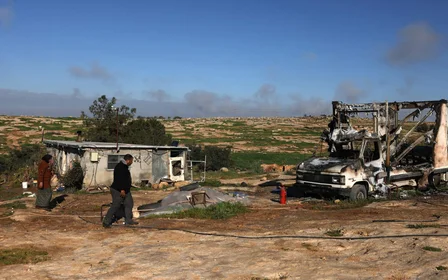
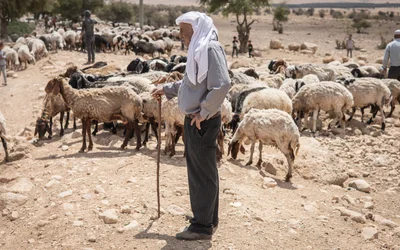
As first light reaches the scattered tents and animal pens of Ras al-Ahmar in the northern Jordan Valley, the silence is broken only by the cries of thirsty livestock waiting for water that no longer comes.
Days after Israeli forces destroyed three of the Palestinian community's main water wells, residents are scrambling to secure enough water for their families, crops and animals in one of the occupied West Bank's driest regions.
For 60-year-old Ali Bani Odeh, the destruction of the wells was more than merely the loss of infrastructure. A father of four and grandfather of 14, he has spent decades farming and raising livestock to support his family in Ras al-Ahmar.
Now, like dozens of other families, he is uncertain how long they can continue living on the land without a reliable water supply.
"Water is everything for us," Ali told Middle East Eye.
New MEE newsletter: Jerusalem Dispatch
Sign up to get the latest insights and analysis on Israel-Palestine, alongside Turkey Unpacked and other MEE newsletters
"Without water, we cannot live. We need it for our families, our sheep and our crops. Since the wells were destroyed, we have been forced to bring water from town at a much higher cost, and even then, we're not always allowed to pass."
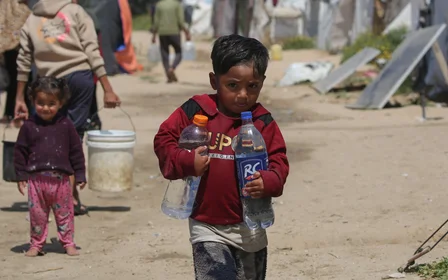
Families must now haul water from distant towns at far greater expense, while military checkpoints and movement restrictions frequently delay or prevent tankers from reaching the village.
'The wells were the lifeline of this community'
– Abdullah Bisharat, head of the village council
According to Ras al-Ahmar village council head Abdullah Bisharat, the three destroyed wells supplied more than 47 Palestinian families, serving over 600 people and irrigating around 7,500 dunams of farmland.
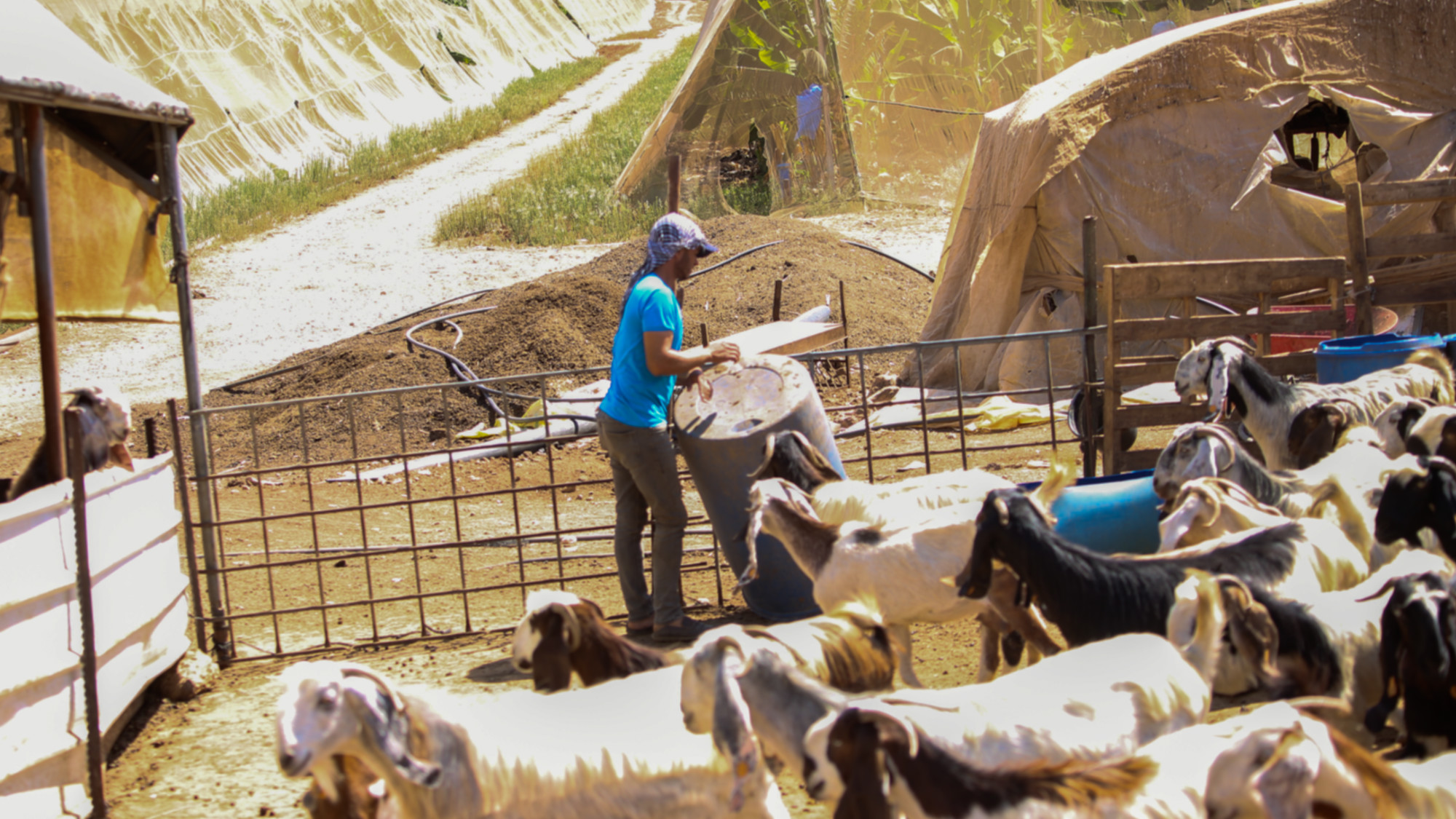
The wells also sustained thousands of sheep and goats, the main source of income for many families.
"The wells were the lifeline of this community," Bisharat said.
"Their destruction has affected every aspect of daily life, from drinking water and agriculture to livestock, leaving dozens of families struggling to meet their most basic needs."
Settler attacks
Residents say the destruction marked the worst escalation in a months-long water crisis caused by Israeli settler attacks.
They say settlers repeatedly cut the pipelines supplying the community, forcing families to rely on costly water tankers. This time, however, the wells themselves were destroyed, eliminating the community's main source of water.
Ali's son, Obeida Bani Odeh, fears the loss of the wells threatens not only his family's livelihood but also their future in Ras al-Ahmar.

"We cannot survive here without water," Obeida said.
"For months, the pipelines supplying our community were repeatedly cut, and we had to bring water from nearby towns, often at three times the usual cost.
"Now the wells have been destroyed, and there is no reliable source of water left for our families or our livestock."
He said the challenges extend beyond water shortages. Settler attacks and movement restrictions have made it increasingly difficult to bring in water, animal feed and other essential supplies.
"The settlers attack everyone, from the young to the old," Obeida said.
"They want to make people afraid and force them to leave. But we have been living on this land for generations."

Around 700,000 Israeli settlers live in the occupied West Bank and East Jerusalem across roughly 300 settlements and outposts. The settlements are regarded as illegal under international law, according to the International Court of Justice.
Settler attacks on Palestinian herding communities have increased sharply in recent years. Between January 2023 and April 2026, at least 5,910 Palestinians were internally displaced due to settler violence in the West Bank, according to UN data.
‘A silent war’
Aref Daraghmeh, a human rights activist, says the destruction of water infrastructure in Ras al-Ahmar reflects a broader struggle over control of natural resources in the Jordan Valley.
"Water has become a silent war against Palestinians in the Jordan Valley," Daraghmeh told MEE.
"The occupation has taken control of many Palestinian water sources, while the water available to Palestinian communities is insufficient for agriculture and sustaining life on the land."
Daraghmeh said restrictions on water access have contributed to the decline of Palestinian agriculture, making it increasingly difficult for farmers and herders to sustain their livelihoods. As water becomes harder to access, he argues, communities face growing pressure to leave their land while settlement agriculture continues to expand across the Jordan Valley.
He added that movement restrictions have compounded those challenges.
"The Jordan Valley is effectively under closure," Daraghmeh said. "Military checkpoints control movement, roads are restricted, and residents often have to wait for hours before they can enter or leave their communities."
For farmers and herders, those restrictions make it harder to reach grazing land and transport livestock, produce and agricultural supplies, adding to the pressures already created by limited access to water.
But for Ali Bani Odeh, leaving Ras al-Ahmar is not an option. Displaced from his home as a child, he says he will not leave again.
"I have left before, but I will not leave this place," Ali said.
"If we leave, they will take over the land. We are staying because this is where our lives and our history are."
Middle East Eye delivers independent and unrivalled coverage and analysis of the Middle East, North Africa and beyond. To learn more about republishing this content and the associated fees, please fill out this form. More about MEE can be found here.