Israel is not 'testing' its ceasefires. It's violating them


How many people do you need to kill before you’ve violated a ceasefire?
One, surely. But what about two? 10? 100?
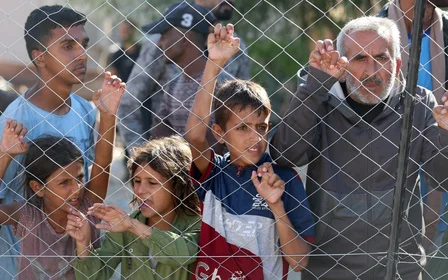
Or how about more than 1,200? That’s how many Palestinians Israel has killed in Gaza since agreeing to an ostensible ceasefire with Hamas in October.
Israel has also continued to pummel southern Lebanon, despite a “ceasefire” there. But the western media appears to see no violations at all. Instead, it sees ceasefires that are “fragile”, “tested”, “strained” or “shaky”.
Given that news reporting is supposed to rely on precision and accuracy, you’d imagine organisations such as the BBC, Reuters, the Associated Press and CNN have read the terms of the deal that was signed between Israel and Hamas in Egypt. It’s unequivocal, and there really isn’t much room for interpretation.
New MEE newsletter: Jerusalem Dispatch
Sign up to get the latest insights and analysis on Israel-Palestine, alongside Turkey Unpacked and other MEE newsletters
There were conditions that needed to be fulfilled within the first 72 hours before the truce could take effect, including the withdrawal of Israeli forces to agreed lines within Gaza, and the return by Hamas of all remaining Israeli hostages, living or dead.
Once the prerequisites were met, which they were, the text said that “all military operations, including aerial and artillery bombardment and targeting operations will be suspended”.
Snuffed out
It’s worth pausing on those words: “all military operations, including aerial and artillery bombardment and targeting operations will be suspended”.
Now square that with more than 1,000 dead Palestinians. Square it with the fact that many were women and children. Square it with the Israeli attack on southern Lebanon that killed school principal Esperanza Ghandour, her mother, a domestic worker and a Syrian labourer as they travelled together in a car.
Square it with the eight people killed at a Palestinian funeral last month. And dare try to square it with the Israeli attack on Gaza that killed Firas al-Masri; his wife, Salsabeel; and their three daughters and son.
None of these firmly established truths seem to stop international journalists from abandoning their duty to call things what they are
They were snuffed out by an occupying force as they slept in their family home, a place that is supposed to be one of love, safety and security.
I could not find a single report in the western media that described the massacre of the Masri household as a ceasefire violation. That’s a pattern across similar atrocities.
Israel said it was targeting a Hamas member without, as usual, providing evidence. But let’s assume for illustrative purposes that Firas al-Masri was in Hamas. After all, since the bogus October agreement, whenever Israel claims it has killed a Hamas member, the western media seems fine with it.
But who did Israel agree the ceasefire with? Yes, Hamas.
None of these firmly established truths seem to stop international journalists from abandoning their duty to call things what they are.
Double standards
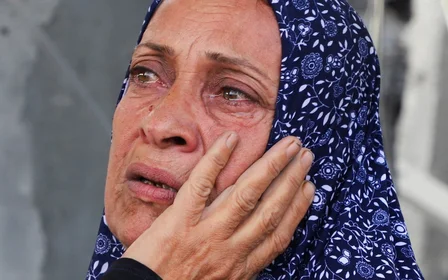
A Reuters report on the targeted killing of the Masri family captured some of the horror, and quoted Masri’s father as he mourned the loss of his son, his daughter-in-law, his grandson and three granddaughters.
But despite that, the news agency managed to write 500 words - which also catalogued five other Israeli attacks on Gaza in the preceding days - without coming even close to saying that Israel had violated the ceasefire.
Instead, Reuters treated the truce as an existing reality, not a fiction that is ignored on a daily basis, using this remarkable sentence construction: “The latest deaths add to a toll of more than 1,160 Palestinians, mostly civilians, killed by Israeli attacks since an October ceasefire between Israel and Hamas militants took effect.”
“Since” the ceasefire took effect.
It says a lot about the difference in how the international media reports on Israel, and how it reports on almost every other country, that a storied news agency known for the deliberation with which it chooses every word could come up that.
Meanwhile, the BBC’s report on the attack on Lebanon that killed Ghandour and three others was astonishing for its naked double standard.
In the headline, like Reuters, the BBC opted for “since”: “Headteacher among four killed in deadliest Israeli attack on Lebanon since latest ceasefire”.
The elusive “violating”, though, did appear in the story itself: “Israel continues to carry out sporadic strikes, accusing Iran-backed Hezbollah of violating the deal,” one paragraph read.
The BBC published a piece about Israel’s killing of four innocent people, after which the Israeli army absurdly said it bombed the car because it “posed a threat” to its soldiers, and yet the only violations it mentioned were unproven Israeli accusations against others.
Aid blocked
Journalism like this goes against everything that was drilled into me as a young news reporter for a western organisation. That’s a key point: the journalists who work for these outlets would tell you that they are being fair and balanced.
They would probably say that news organisations that call what is happening in Gaza a genocide - such as Middle East Eye, Al Jazeera and Zeteo - are partial, or that they are activists, not media professionals. But the opposite is true.
Those newsrooms have stepped into a space abandoned by the mainstream when it comes to Israel; the space where events are reported accurately and with rigour.
Though the killings are the most obvious breaches of the ceasefire agreements, there are others. The Gaza deal said in black and white that the Israeli army “will not return to areas it has withdrawn from”. It also noted that Israel had agreed to “immediate commencement of full entry of humanitarian aid and relief”.
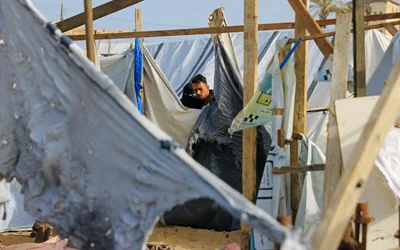
Not only did the Israeli army return to areas it had withdrawn from, Prime Minister Benjamin Netanyahu publicly ordered the expansion of the Gaza occupation to 70 percent of the territory, trapping most Palestinians along a small strip of coastline.
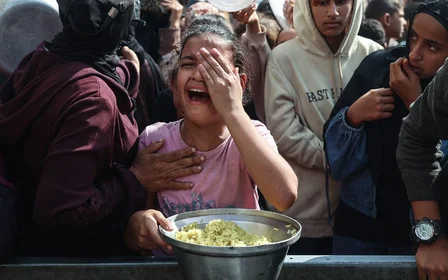
And according to United Nations agencies, Israel has not permitted the agreed amount of aid to enter Gaza, where the UN recently warned the risk of famine was growing again.
Has the western media reported those verified facts as violations? Of course not.
US President Donald Trump last week announced that Hamas and Israel had agreed to move to phase two of his Gaza plan, which involves the disarmament of Hamas and other Palestinian factions, and the withdrawal of the Israeli military from Gaza.
But as thorny questions about the plan remain, Israel has continued violating the ceasefire, killing two more Palestinians on Saturday and destroying medicine storage facilities at Al-Aqsa Martyrs Hospital in Deir al-Balah.
When - if - phase two moves forward, an Israel that sees no consequence for killing Palestinian men, women and children will probably violate its terms again. And the western media will refuse to see it.
The views expressed in this article belong to the author and do not necessarily reflect the editorial policy of Middle East Eye.
Middle East Eye delivers independent and unrivalled coverage and analysis of the Middle East, North Africa and beyond. To learn more about republishing this content and the associated fees, please fill out this form. More about MEE can be found here.