Jack Letts appeals for repatriations from Iraq in 'out of the blue' phone call to parents

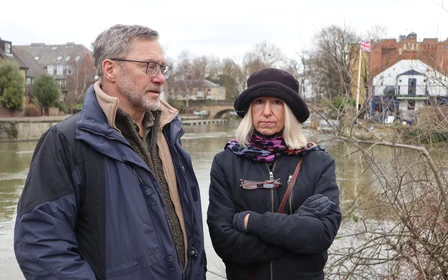
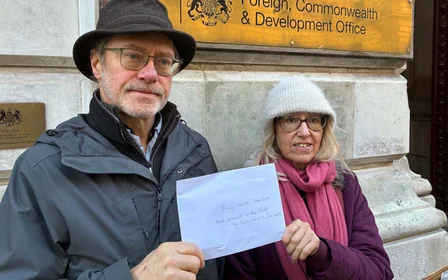
The parents of Jack Letts, a British-born Canadian man who travelled to Islamic State-controlled territory in Syria as a teenager in 2014, have described their shock, relief and frustration after being phoned “out of the blue” by their son from an Iraqi detention centre nine years after they were last able to speak to him.
Sally Lane, Letts's mother, told Middle East Eye she hoped the unexpected phone call was a sign of mounting pressure by Baghdad to force the repatriation of foreign nationals held over alleged links to the Islamic State group (IS) for almost a decade in Syria until their transfer into Iraqi custody earlier this year.
"It came completely out of the blue. It was just a random phone call and normally I wouldn’t answer. But I happened to recognise the Iraqi code so I answered it and Jack said 'Hello Mum'," said Lane.
"It was very short and he said there were a million things he wanted to say to me. The good thing is he sounded perfectly sane and normal."
Lane said she believed the phone call, which lasted just three minutes and took place last month, had been facilitated by Iraqi officials amid growing impatience about the continuing refusal of western nations including Canada and the UK to take responsibility for their own nationals.
New MEE newsletter: Jerusalem Dispatch
Sign up to get the latest insights and analysis on Israel-Palestine, alongside Turkey Unpacked and other MEE newsletters
"He said he needed to convey a message that an Iraqi lawyer had visited the Canadians a couple of days before," she said.
"And he said to them that they needed to get a message out to the Canadian government that it needs to repatriate them before trial because the Iraqis don’t want them there."
John Letts, Jack Letts's father, said his son had delivered the same message to him in a similar phone call.
“He said: ‘The Iraqis don't want us here and the Iraqis are desperate to send us back',” said John Letts.
Jack Letts, 30, was born and grew up in the UK and travelled to IS-controlled Iraq and Syria in 2014 aged 18. In 2017 he was stripped of his British citizenship, like many other British nationals who went to Syria during the country’s civil war.
He was detained by Kurdish forces in northeastern Syria the same year amid the collapse of IS-held territory and has been held without charge among suspected IS fighters ever since.
His parents were last able to communicate with him via voice messages shortly after he was captured, but for much of the past nine years they have only received scant and occasional updates about his whereabouts and well-being.
In an interview in 2024, after he was located by a Canadian television crew in a Syrian prison, Letts denied he had ever been a member of IS but said there were things he could not say while he was still in prison.
In January, Letts was among more than 5,000 prisoners previously held in northeastern Syria who were moved to Iraq in a US-led operation as part of the transfer of powers from regional Kurdish authorities to Syria’s central government.
More than 3,500 of the detainees being held in Iraq are Syrian, according to Iraqi Ministry of Justice figures seen by MEE.
They also include at least five Canadians, 10 Britons, 27 Germans and 13 Australians, with larger numbers from Arab countries, including Morocco (187), Egypt (116) and Saudi Arabia (68). Other countries with significant numbers of detainees include Russia (130) and Turkmenistan (165).
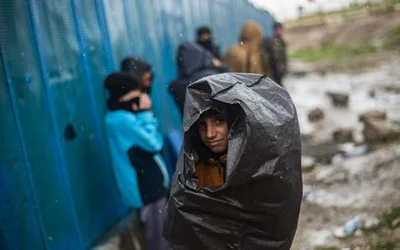
MEE understands that Letts is currently being held in a detention centre for foreign nationals controlled by Iraq’s Directorate for General Intelligence and Counter-Terrorism near Al-Karkh Central Prison, near Baghdad.
While Canada has repatriated a number of women and children who had been held in Syria’s al-Hol and al-Roj camps, it has refused to do the same for male prisoners on national security grounds.
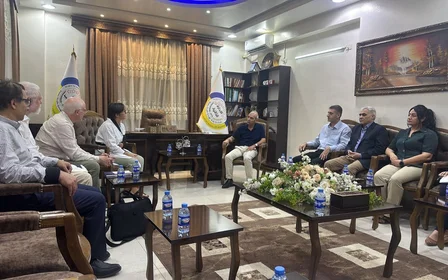
Lane said Canadian embassy officials had visited Letts and other prisoners since their transfer to Iraq earlier this year and had passed on letters and photos.
But she said Canada was continuing to reject calls from families to repatriate its remaining nationals and had advised them to hire local lawyers to represent their relatives.
"The Canadian government has said that they can't interfere in the judicial affairs of another country," she said.
"They've just said you need to get a lawyer, either somebody appointed by the Iraqi court, or an international lawyer who is approved by the Iraqi Bar Association."
'Legal nonsense'
Legal experts and human rights organisations have raised concerns about the prospect of detainees being put on trial in Iraq for alleged offences committed in Syria after years being held in conditions widely criticised as amounting to unlawful detention.
In February, Human Rights Watch warned that detainees transferred to Iraq were at risk of "enforced disappearance, unfair trials, torture, ill-treatment, and violations of the right to life" because of the country's "well-documented due process violations in counterterrorism proceedings".
Clive Stafford Smith, a prominent human rights lawyer, told MEE it was "legal nonsense" to suggest that detainees held in Iraq should now be put on trial there for alleged offences that had not been committed in the country.
He said that those accused of offences should face trial in their own countries, but noted that many had already spent the best part of a decade imprisoned "in pretty barbarous conditions".
John Letts accused the Canadian government of "hiding behind words" since the detainees had been transferred to Iraq.
In Syria, Canada had routinely refused to provide them or their families with consular assistance on the grounds that it did not have diplomatic representation in the country during the civil war.
"In practical terms, nothing has actually changed. The Canadian position is still no repatriations," said John Letts.
He said he had continuing concerns about how his son was being treated in detention since his transfer to Iraq.
Despite having just three minutes, Jack Letts had given his father the names of two fellow detainees who he said needed help with finding lawyers.
"We hardly had any time. I got the names of the two detainees and then the line went dead," said John Letts.
"He sounded together, but the bittersweetness is that you know he’s had a terrible time and that terrible time is still continuing."
Both of Letts's parents said they intended to travel to Iraq soon in the hope of visiting their son.
MEE has contacted the Iraqi foreign ministry for comment.
A spokesperson for Global Affairs Canada said: "The Government of Canada continues to assess developments related to Canadian citizens detained in Iraq. Canada cannot comment on specific consular cases."
Middle East Eye delivers independent and unrivalled coverage and analysis of the Middle East, North Africa and beyond. To learn more about republishing this content and the associated fees, please fill out this form. More about MEE can be found here.