UK faces mounting pressure to repatriate British nationals from Syrian camps and prisons

The UK government is facing growing pressure to repatriate British nationals held for years in arbitrary detention in northeast Syria.
Those detained include some stripped of their citizenship and dozens of young children.
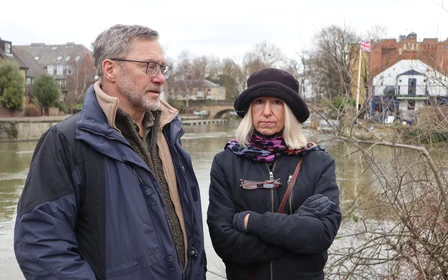
On Wednesday, the parents of Jack Letts, a British-Canadian man imprisoned among suspected Islamic State (IS) group fighters since 2017, protested outside the Foreign, Commonwealth & Development Office in London to draw attention to the plight of their son and others still being held without charge in Kurdish-controlled camps and prisons.
Holding a letter they hoped to deliver to Yvette Cooper, the foreign secretary, Sally Lane, Jack's mother, told Middle East Eye: “I want to force the government to tell us what their plan is. They've fudged the issue for so long and had such a wide range of excuses.
“That's what I want to get out of Yvette Cooper, and I don't think she can dodge the issue any more, because she will be overtaken by events in Syria. The clock is ticking for the UK.”
New MEE newsletter: Jerusalem Dispatch
Sign up to get the latest insights and analysis on Israel-Palestine, alongside Turkey Unpacked and other MEE newsletters
The Letts' appeal to the government for urgent action follows the recent publication of an influential report on counterterrorism policy, which found that the government’s refusal to repatriate its own nationals, including those deprived of citizenship, was becoming increasingly untenable.
The three-year review by the Independent Commission on UK Counter-Terrorism Law, Policy and Practice, led by Sir Declan Morgan, a former lord chief justice of Northern Ireland, called on the government to appoint a special envoy to oversee repatriations and found the UK was failing to uphold its international human rights obligations.
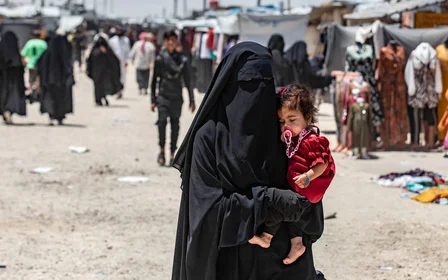
Detainees had been abandoned in “inhuman, dangerous, and degrading” conditions in camps such as Al-Hol and Al-Roj, it said, while many women and children were victims of coercion, trafficking and exploitation.

The report criticised the use of citizenship-stripping powers against Letts and others, including Shamima Begum, a woman now detained in Al-Roj camp. Begum had travelled from London to IS-controlled territory in 2015 at the age of 15, with two school friends.
“Conditions are aggravated for third-country nationals," the report said, "who are subject to ad hoc and arbitrary detention, limited access to legal representation, uncertainty over citizenship, and continued violence by ISIS supporters and opponents who see them as potential or actual traitors.”
An FCDO spokesperson told MEE: "Since 2011, the FCDO has advised against all travel to Syria and all services of the British Embassy in Damascus are suspended.
"All requests for consular assistance for British nationals in Syria are considered on a case-by-case basis, taking into account all relevant circumstances including, but not limited to, national security.”
'UK is a complete outlier'
Calls for repatriations come amid a growing international clamour for a resolution to the situation in northeastern Syria, where tens of thousands of people have been corralled for almost a decade, since the military defeat of IS primarily by Kurdish forces backed by a US-led international coalition.
Around 42,500 people are estimated to still be held in the camps and prisons, including around 22,500 children and around 8,600 foreign nationals.
'On every single measure, the UK is out of step with its partners, including its security partners globally'
– Fionnuala Ni Aolain, former UN special rapporteur
But experts told MEE that the UK's current Labour government had failed to grasp the issue since taking office in July 2024, and has largely upheld the same policy – of ad hoc and sporadic repatriations of a few women and children – pursued by the previous Conservative governments.
According to data compiled by Rights and Security International, the UK has repatriated just four women and 21 children from Syria.
The government has refused to comment on the number of British nationals held in Syria. The Independent Commission report last month estimated they numbered between 55 and 72, including around 10 men, up to 20 women and up to 40 children, mostly aged under 10.
By contrast, many other countries have now repatriated most of their own nationals, Fionnuala Ni Aolain, the former UN special rapporteur on the promotion and protection of human rights and fundamental freedoms while countering terrorism, told MEE.
“The UK is a complete outlier, and actually with very little reasonable basis for that, given we've seen successful repatriation in other countries and recidivism is really low. The data is very clear," she said.
“On every single measure, the UK is out of step with its partners, including its security partners globally.”
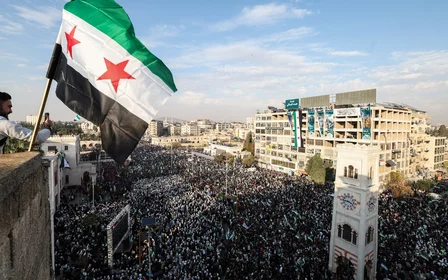
The fall of Bashar al-Assad’s government one year ago, the end of Syria’s civil war, and international support for the transitional government led by Ahmed al-Sharaa, has brought further urgency to the situation.
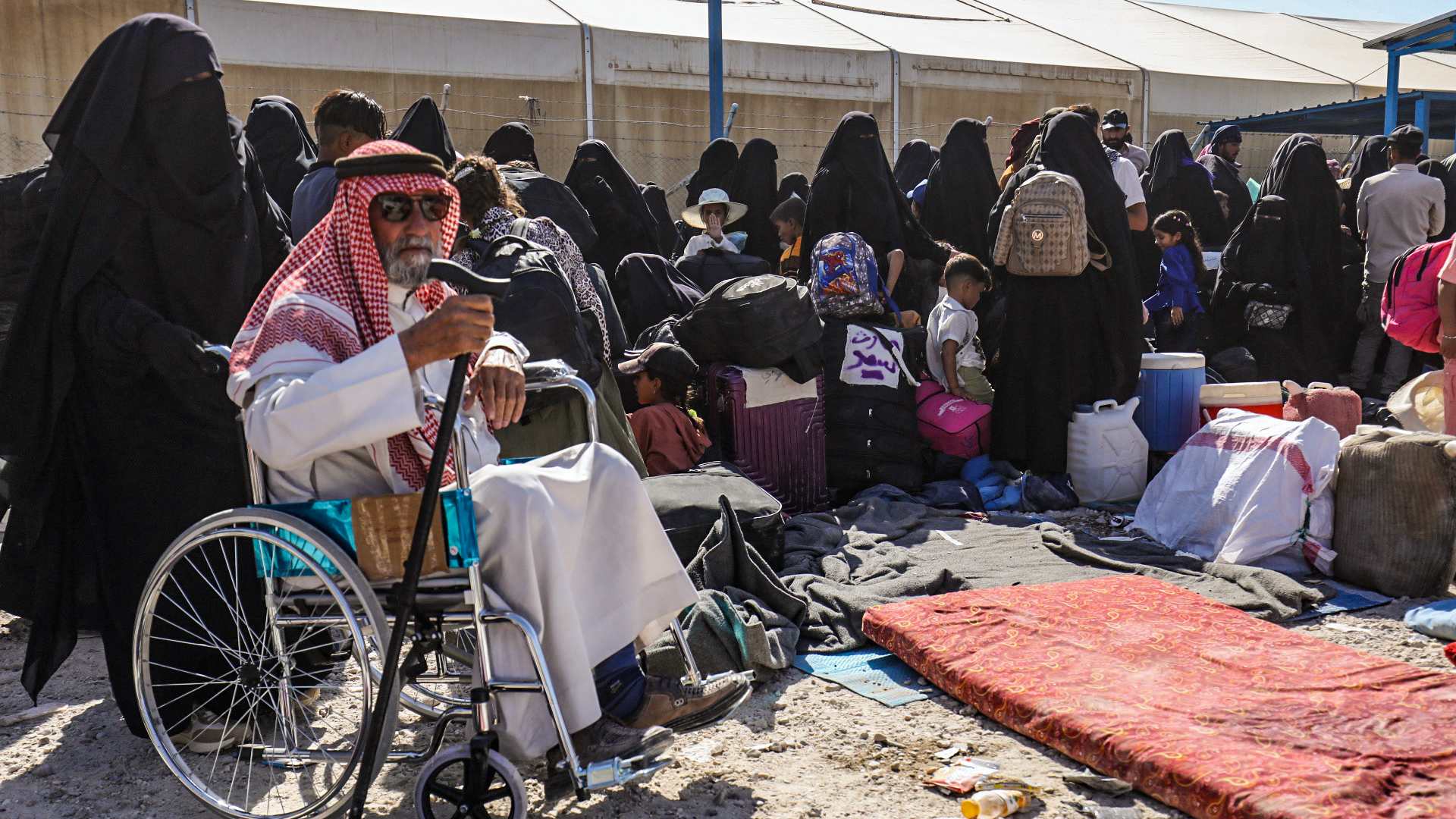
 In March, the Syrian government signed a deal with Kurdish leaders that aimed to shift responsibility for the camps and prisons in the semi-autonomous northeast region to Damascus within six months.
Closer coordination has led to an accelerated evacuation of many Syrians from the camps, while neighbouring Iraq has also stepped up repatriations, with the aim of completing the process by the end of the year.
In September, a UN conference organised by Iraq and the UN’s counterterrorism office called on member states to accelerate the “safe and dignified repatriation and reintegration of their nationals” and hailed the current moment as a “critical window to catalyze decisive action”.
That call was backed by the US military commander in the Middle East, Admiral Brad Cooper, who announced plans to create a special repatriation cell in northeastern Syria to “supercharge” the return of detainees to their home countries.
“We're in a post-Assad Syria, which at a minimum should force a major policy reconsideration from the UK government,” said Ni Aolain.
“One would have expected some kind of thoughtful rethink of British policy.”
'Medieval exile'
Human rights and humanitarian organisations have long condemned the dire and dangerous conditions in the camps and prisons, with some comparing the lack of due process and arbitrary conditions to those faced by detainees in the US military prison at Guantanamo Bay.
Security experts have also warned of the risks of an IS revival in Syria, as the fragile country grapples with continuing instability, and say the facilities risk becoming an incubator for a future insurgency.
“There's always been a strong security view that in fact it would be better for states to not just dump their national security problems somewhere else,” said Ni Aolain.
“And the best way to do that would be to bring people back.”
Middle East Eye first revealed in 2017 that the British government was using citizenship-stripping powers against people who travelled to Syria.
The former Conservative government made extensive use of the controversial powers against dozens of British nationals during Syria’s civil war.
Critics say the policy has damaged the UK’s international standing by pushing the burden of responsibility onto other countries on the basis of sometimes tenuous or unrecognised citizenship claims, and amounts to a policy akin to “medieval exile and banishment”.
But both Labour and Conservative governments have defended the utility of the powers on national security grounds.
Jack Letts, now 30, travelled to IS-controlled territory in Syria in 2014, aged 18.
His parents’ last contact with the British foreign office came almost six years ago, in January 2020, when a consular official told them in an email that their son was “no longer entitled to consular assistance having been deprived of his British nationality” and advised them to seek Canadian support instead.
Canada brought home women and children from Syria in 2023 after facing legal action by families. But Letts and other men were left behind after the country’s appeal court ruled that Canadian citizenship was not a “golden ticket” obliging the government to repatriate them.
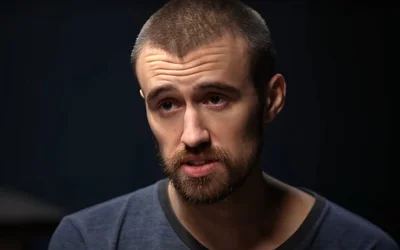
A year ago, Letts was located in a prison near Raqqa by a Canadian TV crew, but John Letts, his father, said the family had heard nothing further since then.
Standing outside the foreign office, where security guards refused to accept the hand-delivered letter, John Letts told MEE that all he was demanding for his son was “basic human rights”.
“He needs to see people. He needs medical help. We need to know he's alive,” he said.
“Let’s talk to him. I want to talk to him. Is that so much to ask as a father after nine years?”
Middle East Eye delivers independent and unrivalled coverage and analysis of the Middle East, North Africa and beyond. To learn more about republishing this content and the associated fees, please fill out this form. More about MEE can be found here.