ICC states decision on Karim Khan ‘inherently political’, says leading criminal law expert

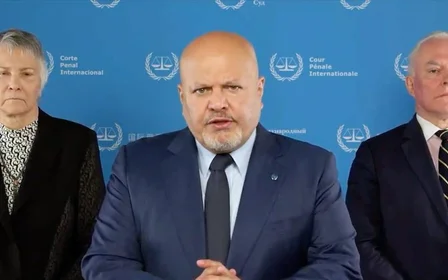
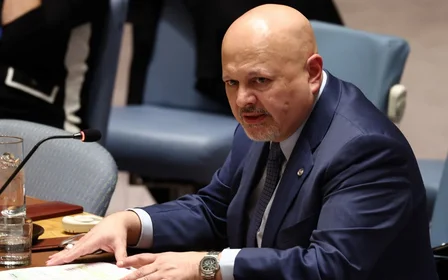
International law professor William Schabas has expressed his concern over the independence of the next prosecutor of the International Criminal Court following the controversial removal of Karim Khan by member states after an 18-month long misconduct probe.
The Assembly of States Parties (ASP), the ICC’s governing body, voted on 24 July to dismiss Khan after deciding that "the elected official... committed serious misconduct and a serious breach of duty" by engaging in "prohibited conduct against a subordinate staff member".
The opinion was contrary to the conclusion reached by the judicial process established by the bureau - the executive body of the ASP - to make a legal determination on a United Nations fact-finding investigation that outlined the evidence from the complainant, Khan and more than 30 witnesses.
In March, the panel of three judges appointed by the bureau concluded unanimously that the facts presented in the UN probe did not establish any wrongdoing under the relevant legal framework.
The July removal vote was based on the recommendation of the 21-member ASP bureau a month earlier that effectively disregarded the judges' panel opinion, finding instead that Khan committed “serious misconduct” by engaging in a sexual relationship with a subordinate. Khan has denied any wrongdoing.
New MEE newsletter: Jerusalem Dispatch
Sign up to get the latest insights and analysis on Israel-Palestine, alongside Turkey Unpacked and other MEE newsletters
The bureau has also amended the voting rules to lower the threshold for Khan’s removal, from a two-stage vote - in which members would vote separately on whether Khan had committed misconduct and whether he should be removed from his job - to a single vote.
'Great harm has been done to the court in general and to the independence of the prosecutor'
- William Schabas, Middlesex University
The bureau’s decision and its handling of the investigation have been widely scrutinised by rights groups and legal experts, particularly over concerns that the process had been “politicised” and inconsistent with due process.
“The ASP is a political body. Delegates vote on issues in accordance with instructions from their governments,” Schabas said.
“A determination by the ASP that ‘serious misconduct and serious breach of duty’ has taken place is an inherently political one,” he added.
“The ASP adopted a decision that refers to various sources of evidence that it says were considered. It is not a proper judgment. It is not a judicial decision. It does not indicate what was believed and what was disbelieved by members of the ASP.
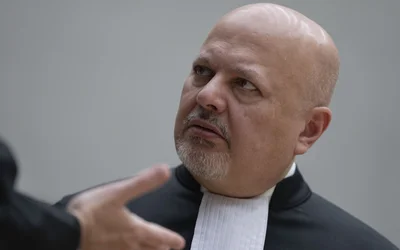
Schabas also noted that the ASP’s decision “does not identify the specific act or acts that constitute ‘serious misconduct and serious breach of duty’”.
He added that while some states may have voted against Khan due to their genuine belief that he committed misconduct, in particular following the CNN interview with the complainant, others inevitably voted based on political considerations.
“Undoubtedly, the anger of some States Parties at Khan’s decision to pursue prosecution of Israeli leaders contributed to the decision,” he said, adding that “others may have voted to remove him because they were promised something by Israel or by the United States.”
Khan was the first prosecutor in the ICC’s history to seek warrants against sitting leaders of non-African states, including Russian President Vladimir Putin, Israel’s Prime Minister Benjamin Netanyahu, Myanmar's Min Aung Hlaing, Taliban leaders in Afghanistan, and Rodrigo Duterte of the Philippines.
His decision in May 2024 to seek arrest warrants for Israel’s Netanyahu and then-defence minister Yoav Gallant over alleged war crimes in Gaza was the first such move against nationals of a western-allied state. It has since prompted sanctions by the US, including against Khan, his two deputies and eight of the ICC’s judges.
Prosecutor's independence
In the weeks prior to Khan’s removal, US officials have vowed to “dismantle the ICC, brick by brick” over its prosecution of Israeli leaders, while President Donald Trump has declared that the US campaign against the ICC is aimed at shielding Netanyahu.
The court is currently examining appeals by Israel that seek to invalidate the warrants.
“Great harm has been done to the court in general and to the independence of the prosecutor,” said Schabas, when asked about the implications of Khan’s removal on the court’s future. “The next prosecutor will live with the concern that decisions to investigate certain situations and to seek arrest warrants against certain individuals will provoke the ire of some States Parties who may then use the disciplinary proceedings in order to threaten or intimidate the prosecutor.”
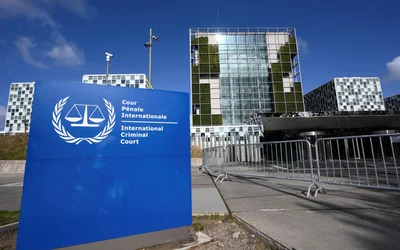
Schabas, who is a leading expert of international criminal law and an authority on the ICC, said the Khan probe was “improvised” and that it did not follow the procedure stipulated in the Rome Statute and rules of procedure and evidence.
“The legal framework of the rules, and the approach taken by the Bureau of the ASP, do not offer sufficient protection to the independence of the prosecutor,” he told Middle East Eye. “Due process is important not only in order to protect the rights of the prosecutor but also to protect the independence of the position.”
He called for revising the ICC’s rules to ensure that any future decision to remove an elected official is judicial in nature.
“In order to ensure prosecutorial independence, it is very important that the prosecutor be confident that she or he can only be removed if a properly constituted tribunal, composed of independent and impartial judges, has made such a determination,” he said. “If such a judgment were to rule in favour of the prosecutor, the ASP would then be without authority to decide on removal."
Middle East Eye delivers independent and unrivalled coverage and analysis of the Middle East, North Africa and beyond. To learn more about republishing this content and the associated fees, please fill out this form. More about MEE can be found here.