Why the Mecca Agreement is a necessary show of force


It will be three years in October since Israel started its genocide in Gaza, a war crime it has repeated in the Occupied West Bank, South Lebanon, and Iran.
For much of that time, Turkey and the Arab world held up their hands in horror but did nothing. "What can we do? Start a war with Israel?" the collective cry of the impotent went.
This line was frequently heard in Ankara which continued, despite a trade embargo, to allow Azerbaijani oil to flow through one of its ports and into the eager hands of the Israeli military.
Turkey did stop an Israeli and US armed ground incursion of Iran by Iranian Kurdish militias. And Saudi Arabia has honourably refused to normalise with Israel, absent a credible path to a Palestinian state.
But for much of those three years, Israeli Prime Minister Benjamin Netanyahu has had a free hand to reshape the region, by invading a large part of southern Syria, and by attempting to construct a new high tech security order by which over seven million Israeli Jews would dominate 450 million Arabs.
New MEE newsletter: Jerusalem Dispatch
Sign up to get the latest insights and analysis on Israel-Palestine, alongside Turkey Unpacked and other MEE newsletters
Until last week.
What finally pushed Crown Prince Mohammed bin Salman, who had spent billions investing in US President Donald Trump, to sign a mutual defence pact with Turkey and Pakistan will be a matter for historians to work out.
But at a guess, I would say the Chinese have it right. So far there has been no official statement from the Chinese foreign ministry, but the official Xinhua agency put it like this:"America is unreliable: Saudi Arabia, Turkey and Pakistan sign a defence agreement."
China could have taken the view that the pact is an 'Islamic Nato', but it does not. Rather, it views this pact as a direct result of the US and Israel’s military disaster in Iran.
Xinhua quoted Yan Xuetong, dean emeritus of the Institute of International Relations at Tsinghua University, who said that the war has not only prompted the Arab nations under the US military umbrella to question Washington’s actual military strength, but also its ability to protect them.
Regional states had come to realise that their national security "can not depend on the United States, but must depend on themselves", Xuetong said.
A formidable pact?
On paper - at least - a military pact between these three powers is formidable. Pakistan, Turkey and Saudi Arabia have respective nominal GDPs of $452bn, $1.6 trillion and $1.3 trillion.
Between the three countries, they could field over 5,600 main battle tanks, over 1,100 combat fighter jets, a fleet of drones, ballistic missiles and a nuclear deterrent and well over a million soldiers.
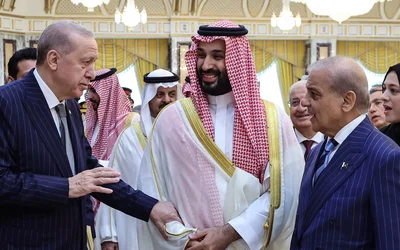
Each partner in the Mecca Joint Defence Agreement has a different motivation.
Pakistan, which is battling at least two insurgencies, needs money. Pakistan’s army is finding its military strength becoming an economic asset, one security official told Middle East Eye.
It also needs a strategic counterweight to India. The point was not lost on New Delhi.
Former Indian Foreign Secretary Kanwal Sibal described the pact as a "very negative development for Indian interests", and added that India should expand its strategic options with the UAE, Israel, Greece and Cyprus.
Turkey needs a nuclear deterrent, particularly against frequent Israeli threats. It also needs to help the new government in Syria to force a withdrawal of Israeli forces from Southern Syria.
Its very quickly expanding military industrial complex needs new markets.
If this military pact had one author, it is the Turkish Foreign Minister Hakan Fidan. A day before Erdogan flew off to Riyadh, Fidan specifically warned Israel of the dangers of international isolation.
He said: "What Israel fears most is international isolation. Up to now, it has used the extensive resources at its disposal, including resources located in other countries, to create an illusion.
"There is a political practice that it has built upon this illusion, one that consistently works in Israel’s favour. They commit genocide, and even then, nothing may happen."
The implication of Fidan’s remarks is that Israel’s free ride is coming to an end.
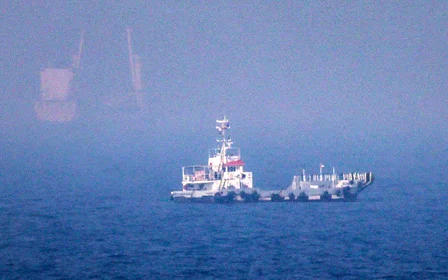
Saudi Arabia needs a lever over Iran and Yemen’s Houthis (officially known as Ansar Allah), which have recently closed the strait at the mouth of the Red Sea, and have begun bombarding oil fields in the kingdom.
The Saudi crown prince’s plan to modernise the kingdom has repeatedly hit a brick wall, with all the wars going on around the kingdom.
But the common thread in all of this is that America has become an unreliable security partner.
US: an unreliable partner
Close behind this development lies the conclusion that an isolationist America, that seeks to delegate colonial authority, is uniquely incapable or unwilling to rein in its closest ally, Israel, which it needs more than ever in retreat.
This conclusion is brought home to America’s Arab allies almost every week.
The strains between Trump and Netanyahu are growing but not enough to curb his Israeli ally. If anything Trump’s weakness is spurring Netanyahu on
Israel, along with domestic US opposition, effectively collapsed the Memorandum of Understanding Trump signed with Iran in June, which bound the US to stop all military action on all fronts including that of Israel in Lebanon.
Working through a rival faction in the Washington administration to the one that signed the MoU, Israel signed a deal with the Lebanese Presidency, although not with its government, which allowed Israel to continue its occupation of Southern Lebanon and continue military operations there.
Within 24 hours of signing a nuclear cooperation deal with Saudi Arabia, Trump inserted a demand that the kingdom had to normalise with Israel first, a condition that was not part of the talks or the agreement but was the result of Israeli lobbying.
Then came the agreement "the Board of Peace" signed with Hamas in Gaza in which armed factions agreed to decommission its heavy weapons, but not to disarm completely.
Within a matter of days, a text which stated that Hamas will hand in its heavy weapons to the new Palestinian technocratic administration of Gaza, and that those weapons would be logged in an inventory and stored, but only after a full Israeli withdrawal, was rewritten by the toothless Board of Peace.
It said withdrawal and decommissioning would proceed simultaneously, and all weapons light and heavy alike would be destroyed, not simply logged and stored.
Not content with forcing a rewrite of the deal, Israel has now sabotaged the deal entirely. On Sunday, Netanyahu came out with a straight rejection of the plan Trump’s Board had negotiated.
Five months into the war on Iran, and three months before elections in which he could very well lose control over Congress, Trump is not in a position to control Netanyahu even if he wanted to.
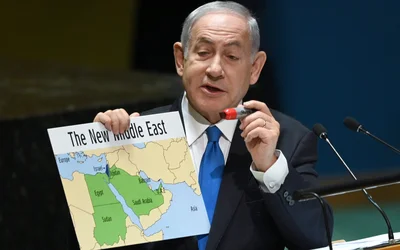
Obviously, the strains between Trump and Netanyahu are growing but not enough to curb his Israeli ally. If anything Trump’s weakness is spurring Netanyahu on. He deals with Trump’s frequent changes of mind in the same way in which he played on the mental weakness of Joe Biden.
With his own re-election in November very much in doubt, and desperate to keep the far right on board, Netanyahu had little hesitation turning what Trump had described only days ago as "a monumental step toward lasting peace and security" into a major retreat.
He said the Israeli military "will not carry out any withdrawal until Hamas is genuinely disarmed" and they will continue to attack Gaza "to thwart threats against our forces and our citizens".
Neither on Gaza nor on Iran is Trump getting himself heard in Tel Aviv. And as he did with Biden, Netanyahu is now testing Trump’s willingness to apply real levers on Israel.
Netanyahu has surrounded Trump with his men, and as the Israeli investigative journalist Ronen Bergman revealed, a well-oiled machine exists to turn completely invented Iranian quotes about a bomb programme into a reality that is bounced around Fox New Room as truth.
Trump went into this war on Israel intelligence that the Islamic Republic was so weak after the failed January uprising, that was low hanging fruit which would fall at the merest push.
The opposite happened.
Israel's real agenda
The Islamic Revolutionary Guard Corps (IRGC) became stronger under sustained kinetic attack and now feels it is in a position to dictate terms to Trump about reopening the Strait of Hormuz.
On Saturday, the Secretary of Iran’s Supreme National Security Council, Mohammad Bagher Zolghadr, said that Washington would have to lift its naval blockade and sanctions, withdraw US military forces from the region, pay war reparations, release frozen Iranian assets before the Straits were reopened.
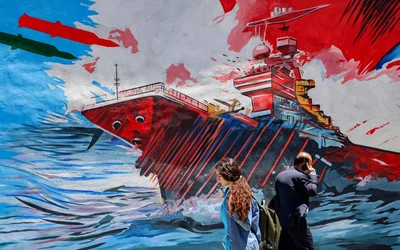
On Sunday, the IRGC said it now regarded the Strait not just as a waterway but a "theatre of war". While Iran's Foreign Minister Abbas Araghchi said talks would only begin with the US when Washington honoured the conditions of the deal it signed in June.
Trump is baulking at going back to war, but he equally cannot get Iran to open the strait on anything like his terms.
Will the Mecca Agreement have an immediate impact on stopping Trump from walking away from what he has just signed, or Israel blowing up any ceasefire?
Not immediately.
On Sunday alone, the Houthis said they had targeted Saudi troop concentrations in Yemen's Red Sea coast city of Mocha with ballistic missiles and drones.
But if this alliance really does come into operation, it will strengthen the hand of regional negotiators with Iran and over time shrink the space in which Israel can operate.
On Gaza, it was clear from the start that Netanyahu had a radically different agenda than either Biden or Trump did.
Both US presidents, and now the Board of Peace, operate under the illusion that Israel’s object was to disarm Hamas, and once that happened, it would withdraw. All three think the war is temporary.
Israel’s purpose is very different to that.
If Hamas disarmed, Israel would continue to arm its proxy militias in Gaza, stoking a civil war that would quickly push a substantial part of the population of Gaza into the sea and permanent exile.
Israeli ministers have made little secret of their aim to engineer large-scale "voluntary migration" from Gaza, and that remains the aim today.
The model for what could still happen in Gaza was Beirut in 1982, under the then Prime Minister Menachem Begin.
A new regional order
Before the Palestine Liberation Organisation (PLO) withdrew from Beirut, they required assurances from Israel of safe passage and the safety of Palestinians in the camps, assurances that would be underwritten by guarantees from the State Department.
These assurances were contained in two letters from Philip Habib, late President Ronald Reagan’s special negotiator in Lebanon.
If a pact with this military, technological and financial weight falls at the first hurdle, each Arab government knows it will be the next victim of an Israeli-inspired war
Late Palestinian President Yasser Arafat’s negotiating team stated repeatedly that among its conditions for withdrawal was the safety of the Palestinians left behind in the refugee camps.
Palestinians in Lebanon made little secret of their fear that once the PLO departed, the Lebanese Christian Phalange would have their day of vengeance.
Both Begin and Bashir Gemayel, the leader of the Phalange, were in on Habib’s talks. Upon Begin’s answers, which Gemayel endorsed, Habib and the state department issued its guarantee to the PLO.
On 14 September, Gemayel was assassinated and the Israel army went into Beirut.
The following day, an Israeli general, who was one day to become prime minister Ariel Sharon, sat in a tank and with flares lit the way for Phalangists to enter Sabra and Shatila refugee camps.
Between 2,000 and 3,500 Palestinian refugees and Lebanese civilians were killed in two days.
Later that year, US journalist Milton Viorst raised the issue of US responsibility for the massacres with Charles Hill, a US diplomat in the State Department.
Hill’s reply to Viorst still resonates today.
"Legally, we did not violate our commitment to the PLO," Hill said. "We had not made the commitment on our own. We said we had assurances from others and, without our own armed forces in the area at the time, we had no way to enforce our own commitment. We said to the PLO only that we were convinced that others would keep the commitment made to us.
"The PLO's decision to evacuate Beirut was contingent on our word, however. The sequence would have unfolded differently without it. When the news came out about Sabra and Shatila, Begin said it was a blood libel to hold Israel responsible. But here in this building we felt that we had a responsibility for what happened. Morally, we let them down."
What happened in Sabra and Shatila has etched a deep scar in the Palestinian memory. Palestinians should not allow this to be repeated with Hamas, nor with the population of Gaza.
The Mecca Agreement is a much needed, long overdue, start to a new order in the Middle East. It is abundantly in Egypt’s interest to join it. Because ultimately the core issue is not an America in decline, or what Israeli troops are allowed to get away with in Palestine.
Ultimately it's about Arab and Turkish sovereignty over their own land, and their own people.
Either the region is doomed to another century of colonial domination by an Israel that starts wars at will. Or it is time for the three biggest powers of the region to break that cycle.
If a pact with this military, technological and financial weight falls at the first hurdle, simply because its rulers cannot summon the political will, each Arab government knows it will be the next victim of an Israeli-inspired war.
The views expressed in this article belong to the author and do not necessarily reflect the editorial policy of Middle East Eye.
Middle East Eye delivers independent and unrivalled coverage and analysis of the Middle East, North Africa and beyond. To learn more about republishing this content and the associated fees, please fill out this form. More about MEE can be found here.