How to stop US-Iran conflict from becoming endless war


The 14-point memorandum of understanding signed between Iran and the US in June appeared to offer the most significant diplomatic opening between the two countries since 1979.
Yet before confidence-building measures could take hold, renewed military confrontation overwhelmed diplomacy. US President Donald Trump’s Iran deal collapsed, leaving Washington with few good options.
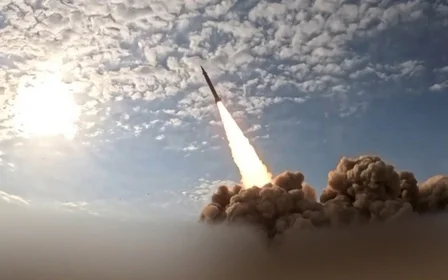
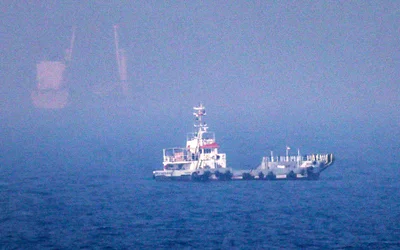
Over the past two weeks, clashes between the US and Iran have disrupted maritime traffic in the Strait of Hormuz, through which more than 20 percent of global oil and gas shipments typically pass, contributing to renewed volatility in energy markets.
Oil prices surged on Friday, with Brent crude reaching more than $88 a barrel, posting gains of over 16 percent to hit its highest level in more than a month.
The fighting has also expanded beyond direct US-Iran exchanges, highlighting the growing risk of a wider regional conflict.
New MEE newsletter: Jerusalem Dispatch
Sign up to get the latest insights and analysis on Israel-Palestine, alongside Turkey Unpacked and other MEE newsletters
The apparent shift in US strategy suggests a transition from seeking a rapid military victory, to pursuing a prolonged campaign of attrition - one designed to weaken Iran’s military capabilities, logistics, economic resilience, and domestic cohesion over time.
The US recently reimposed its blockade of Iranian ports in the Strait of Hormuz, in a move aiming to dismantle the Iranian economy. As the strategic focus moves towards the Persian Gulf and the Gulf of Oman, Washington appears to be emphasising sustained military pressure, maritime disruption, and enhanced protection of its regional forces, while allowing Israel time to rebuild its military capabilities.
Evolving campaign
Trump’s recent statements about the US potentially “taking over” Kharg Island, together with reports that American and Israeli planners have considered supporting cross-border operations by Kurdish armed groups, suggest that their future strategy may increasingly combine conventional military pressure with efforts to disrupt Iran’s critical energy infrastructure, while exploiting security vulnerabilities along its western and southeastern borders.
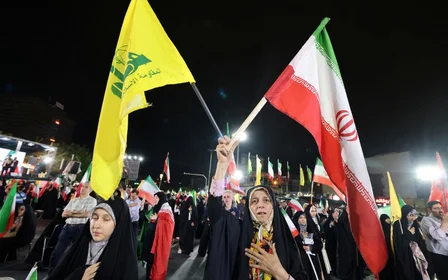
In response to the evolving US campaign, Iran appears to be adopting a broader strategy aimed at mobilising the nation, while raising the military, economic and political costs of prolonged confrontation.
Three successive rounds of war have produced enormous human and financial losses, without delivering a decisive victory for any side
In March, Iran announced the mobilisation of one million fighters to counter what it described as a “suicidal” US ground war on Iranian soil, with a particular focus on defending the strategic Kharg Island, which handles around 90 percent of the nation’s oil exports.
At the regional level, Iran may seek to expand pressure through its partners, including the Houthis, whose potential disruption of shipping through the Bab el-Mandeb Strait, together with continued risks to navigation in the Strait of Hormuz, could increase the economic costs of the conflict. On Monday, the Houthis declared a naval embargo against Saudi Arabia.
As tensions boiled over, Iran said it had hit US bases, aircraft and radar systems in Kuwait, Oman, Syria, Jordan, Bahrain and Qatar.
And after Trump said in June that he had spoken with Syrian President Ahmed al-Sharaa about the possibility of Syria taking on Iran-backed Hezbollah in Lebanon, Iran last week said it had targeted an American command centre in Syria’s al-Tanf, in retaliation for US strikes.
A central element of Iran’s approach is the regionalisation and internationalisation of the costs of war. Tehran seeks to signal that states providing bases, infrastructure and operational support for US military actions cannot remain insulated from the consequences of the conflict. An Iranian army spokesperson recently warned that if US strikes persist, “the war will be dragged into new arenas”.
War of attrition
Although the broader confrontation was fuelled by the long-running conflict between Israel and Iran, the latest phase has primarily evolved into a direct military clash between Iran and the US.
The principal strategic and economic costs are now being borne by Iran, the US, regional Arab states, and the international economy, through higher energy prices and maritime instability.
Three successive rounds of war over the course of a little more than a year have produced enormous human and financial losses, without delivering a decisive victory for any side. This suggests that the conflict has become a classic war of attrition.
Amid this backdrop, recent remarks by US Vice President JD Vance during an interview with podcaster Joe Rogan, published last week, deserve careful attention. He argued that the US has no strategic interest in an endless war with Iran, and that diplomacy remains the only sustainable solution.
Perhaps the most striking aspect of Vance’s interview was his assertion that certain elements within the Israeli government actively sought to derail US-Iran negotiations, preferring to extend the military campaign “indefinitely” by supporting a well-funded influence effort aimed at weakening public support for talks.
Vance said American policymakers must ultimately base their decisions on US national interests, rather than external political pressures, noting that the two issues central to achieving a durable peace include reopening the Strait of Hormuz to guarantee freedom of navigation, and securing a negotiated agreement to ensure that Iran does not acquire a nuclear weapon.
His public defence of diplomacy, along with his criticism of efforts to derail negotiations and his warning against another prolonged Middle Eastern war, underscore the urgency of launching an immediate diplomatic initiative focused on these priorities.
The real choice
Firstly, a new regional maritime framework should recognise that the Strait of Hormuz lies within the territorial waters of Iran and Oman. These two states should assume the primary responsibility for navigational safety under international law, while a broader agreement among Arab Gulf states, the US and Iran guarantees freedom of navigation.
Iran and Oman could receive reasonable service fees for maritime safety and navigation assistance, without making such services compulsory. To ensure its durability, international legitimacy and legal enforceability, any framework should be endorsed by a United Nations Security Council resolution.
Secondly, Washington and Tehran should negotiate a permanent bilateral nuclear agreement based on the Non-Proliferation Treaty. Under such a deal, Iran could permanently renounce nuclear weapons under comprehensive International Atomic Energy Agency verification, while the US could permanently remove nuclear-related sanctions and recognise Iran’s right to peaceful nuclear technology.
Unlike the 2015 Joint Comprehensive Plan of Action, this agreement should be ratified by both the US Congress and the Iranian parliament.
Neither Washington nor Tehran is likely to force the other into submission. The real choice is between perpetual war and sustainable diplomacy.
Washington and Tehran should revive direct dialogue, including a new meeting between Vance and Iranian parliamentary speaker Mohammad Bagher Ghalibaf, to restore diplomatic momentum and finalise agreements on Hormuz and the nuclear issue.
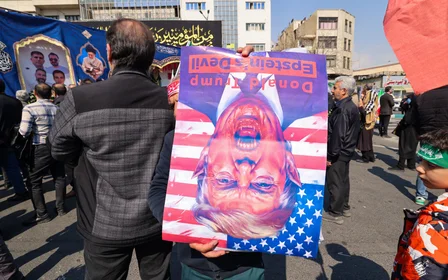
The most credible and legitimate basis for any settlement is the freely expressed will of the peoples of both countries. Both governments should respond to the preferences of their own publics: polls shows that Americans broadly disapprove of the war, which has become even more unpopular than Vietnam, while Iranians want “security without permanent confrontation, reform without revolution, sovereignty without isolation, and diplomacy without surrender”.
The views expressed in this article belong to the author and do not necessarily reflect the editorial policy of Middle East Eye.
Middle East Eye delivers independent and unrivalled coverage and analysis of the Middle East, North Africa and beyond. To learn more about republishing this content and the associated fees, please fill out this form. More about MEE can be found here.