Pakistan ratifies Mecca pact as Saudi Arabia faces attacks and Israel holds military drills

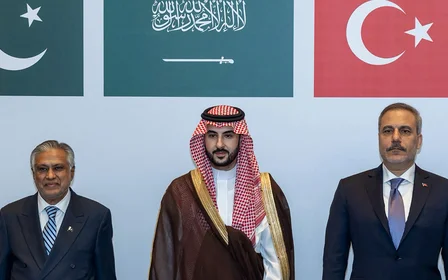
Pakistan on Friday announced that it has ratified a joint defence pact with Turkey and Saudi Arabia as the kingdom faces renewed security threats and is looking for allies to help it against Yemen's Houthis.
Pakistan’s Foreign Office spokesperson, Sajjad Haider Khan, said that Islamabad and Riyadh have completed their ratification procedures for the Mecca Joint Defence Agreement, signed by the three countries on 7 August.
“Matters related to the agreement, its ratification, and operationalisation remain under discussion by the three parties,” Khan said, according to a transcript published by Pakistan’s Foreign Office.
Turkey is still completing its domestic approval process as the agreement has not yet completed ratification by all three signatories.
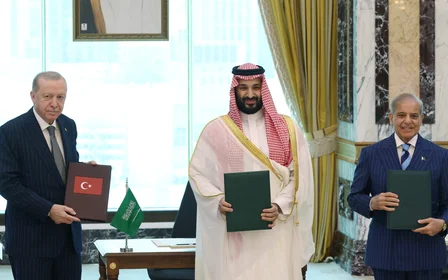
The pact was signed in Mecca by Turkish President Recep Tayyip Erdogan, Pakistani Prime Minister Shehbaz Sharif and Saudi Arabia's Crown Prince Mohammed bin Salman.
New MEE newsletter: Jerusalem Dispatch
Sign up to get the latest insights and analysis on Israel-Palestine, alongside Turkey Unpacked and other MEE newsletters
It provides for collective defence in the event of an external armed attack against any of the three countries, with the nature and level of assistance to be determined according to the circumstances.
The agreement has moved towards implementation following a 5 October meeting of the countries’ Strategic Political and Defence Committee.
The meeting called for the implementation of collective defence commitments and the rapid deployment of military forces and capabilities in Saudi Arabia, subject to the countries’ domestic laws.
Islamabad has called the agreement defensive and consistent with the UN Charter.
The development comes amid growing fears of a wider regional escalation, with the Houthis continuing attacks on Saudi Arabia and US and Israeli officials reportedly discussing renewed strikes on Iran months after the conflict between the countries and Tehran began.
Regional escalation
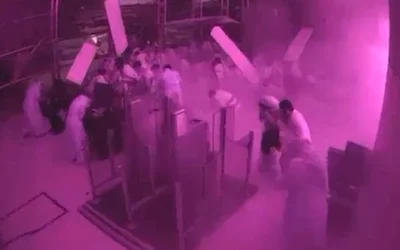
Saudi Arabia’s Civil Defence issued warnings over potential danger in parts of the kingdom this week before subsequently announcing that they had passed.
The alerts covered areas in the southwest, such as Abha and Khamis Mushait, although authorities did not disclose the nature of the danger.
They advised residents to follow safety instructions and refrain from gathering or filming in the affected areas, according to Anadolu Agency.
The alerts came amid an escalation involving Houthi missile and drone attacks targeting Saudi Arabia.
On 21 October, Reuters reported that Riyadh’s allies were providing primarily defensive support as the kingdom sought to protect its infrastructure amid the threat of further attacks.
Meanwhile, the Israeli military has announced large-scale exercises in the north and central regions of Israel on Sunday and Monday, rehearsing scenarios relating to surprise attacks and infiltrations by air and land.
The exercises will involve the air force and units from the Northern and Central Commands of the military.
The military said the drills would test its readiness to defend against attacks on multiple fronts and prepare for any potential escalation along Israel’s borders.
The preparations come as Washington and Tel Aviv are reportedly considering renewed military action against Iran.
On Friday, Trump said that the US might conduct another military operation against Iran, as the conflict approached its eighth month.
American and Israeli militaries have already developed plans for renewed strikes following the US midterm elections on 3 November, a report published this week by The Business Times, citing US officials, said.
The report said that potential targets could include Iranian energy infrastructure, nuclear facilities and missile and drone capabilities.
Middle East Eye delivers independent and unrivalled coverage and analysis of the Middle East, North Africa and beyond. To learn more about republishing this content and the associated fees, please fill out this form. More about MEE can be found here.