Israel’s ‘pilot zones’: Withdrawal on paper, continued occupation of south Lebanon

At the entrance to Zawtar al-Gharbiyeh, a village in southern Lebanon, a Lebanese Army checkpoint marks the edge of what is now officially known as a "pilot zone".
It is one of three villages - along with Froun and Srifa - designated as such under the framework agreement between Israel, the United States and Lebanon, signed in June 2026.
On paper, the pilot zones, whose implementation began on 20 July, are meant to work as a formula: a gradual Israeli withdrawal, paired with a handover of sovereignty to the Lebanese Army, and the end of Hezbollah's armed presence in these locations.
But Daniel Meier, professor of political science and director of the Master in Middle Eastern Studies at Sciences Po Grenoble, says Israel has sought to use the mechanism for a different purpose.
"Israel sees these pilot zones as another tool to undermine any possibilities for Hezbollah to continue in the south of Lebanon, and not for withdrawing its army," he said.
New MEE newsletter: Jerusalem Dispatch
Sign up to get the latest insights and analysis on Israel-Palestine, alongside Turkey Unpacked and other MEE newsletters
"The main goal for them is to use the pilot zones to continue their occupation and slow down to the maximum their withdrawal from south of Lebanon.’"
Standing at the Lebanese Army checkpoint in Zawtar al-Gharbiyeh (West Zawtar), the contradiction at the heart of the agreement is visible in real time: just a few hundred metres away, in Zawtar al-Sharqiyeh (East Zawtar) Israeli forces remain in place, carrying out near-daily demolitions and bombardments.
Data gathered by Public Works Studio, a Beirut-based research and mapping collective tracking Israeli attacks on Lebanon, documented Zawtar al-Sharqiyeh among the villages targeted by house demolitions, ground incursions, controlled explosions, arson and "tajrif" - the levelling of land with heavy machinery - between late June and late July 2026.
During Middle East Eye's time on the ground, five explosions coming from Zawtar al-Sharqiyeh were heard, with smoke rising over the horizon.
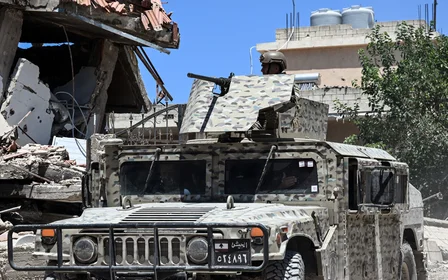
Coordinating access with the Lebanese Army, MEE was escorted into the centre of Zawtar al-Gharbiyeh. Lebanese armoured vehicles were present along the dirt road leading into the village.
Entire structures were reduced to rubble, evidence of repeated Israeli air strikes on the village, while bullet holes scarring the remaining walls pointed to ground assaults by Israeli tanks.
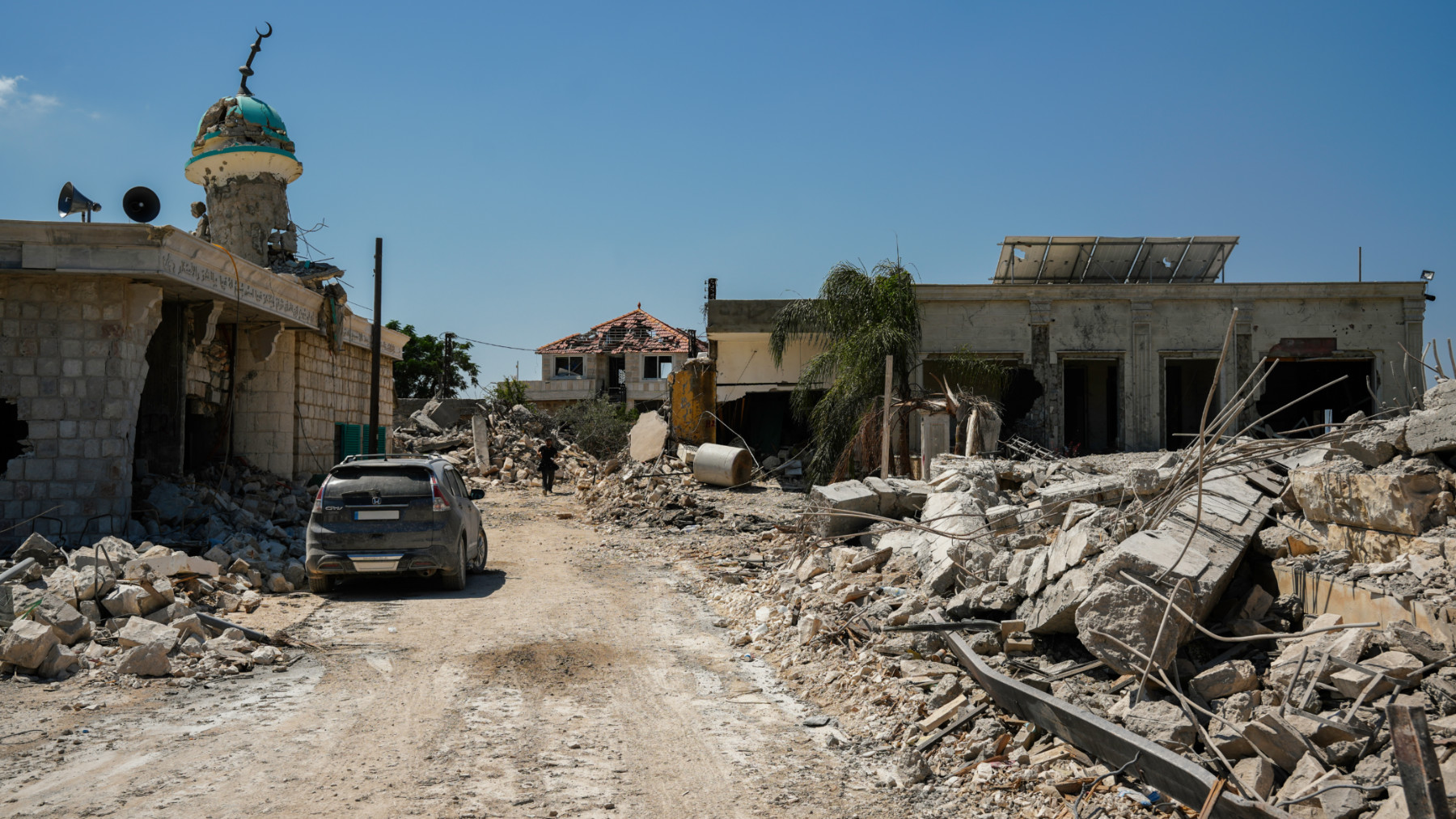

Yet, contrary to what the scope of the pilot zones might suggest, there were no traces of a sustained Israeli ground presence, nor any signs that soldiers had occupied or lived in the village.
The hallmarks of Israeli occupation documented elsewhere in Lebanon - Hebrew graffiti sprayed across walls, human waste left behind, and residents’ belongings ransacked and strewn about, as seen in villages such as Yaroun and Ayta al-Shaab in 2024 - were nowhere to be found in Zawtar al-Gharbiyeh.
Nor could the idea of the village's "return" to Lebanese sovereign control be verified on the ground, despite the presence of the Lebanese military. The main access to Zawtar al-Gharbiyeh, let alone anything resembling a return to normal life for its residents, remains blocked by the continued Israeli presence in the surrounding area.
"There is no restoration of Lebanese authority while Israeli occupation remains,’" said Meier.
"This is just another trap, another trick in misusing language, misusing words. The ‘pilot zones’ were designed to give some sort of credit to the idea of Lebanese sovereignty restoration while Israel tries to escape its responsibilities and continue its oppressive occupation strategy without any clear endgame."
Uninhabitable
Abbas Heri, 40, had just returned to Zawtar al-Gharbiyeh, his hometown, which he fled in February 2026.
"As long as they [the Israelis] don't leave Zawtar al-Sharqiyeh, there will be no life here in the village," he said, explaining that the main road connecting the village to Nabatieh, the largest city in southern Lebanon, remains inaccessible because of the Israeli presence in Zawtar al-Sharqiyeh.
'The main goal for the Israelis is to use the pilot zones to continue their occupation and slow down to the maximum their withdrawal from south of Lebanon'
– Daniel Meier, professor of political science
"My house is here, but it is unhabitable. Everything is destroyed. And there's no security either. Last night, for example, I slept at some friends' place here in the village, but there were explosions all night long," he said. "In other words, they [the Israelis] are doing something that stops life from continuing, so people can't go back to living here."
The framework agreement between Israel, the United States and Lebanon fails to specify when - or whether - Israel will vacate the broader "buffer zone" it has carved out along the border, an area Israeli officials say they intend to hold for as long as Hezbollah remains armed.
Zawtar al-Gharbiyeh, as well as Froun and Srifa, sit near the outer edge of the "Yellow Line" - the new, self–declared boundary Israel has drawn to mark its zone of military control inside Lebanese territory, and the same line that gives the buffer zone its shape.
Heri spoke with MEE in the central part of Zawtar al-Gharbiyeh, near a tent where people had gathered around a small makeshift stall selling coffee, water and cigarettes.
"It is because of these injustices that the resistance emerges and endures," Abbas said when questioned about Hezbollah's presence in the village.
"Resistance movements emerge because of injustice. Would you accept someone occupying your home without defending yourself? I mean, under what law would that be acceptable?"
For Lebanese like Abbas Heri, the concept of the pilot zone - much like the framework agreement that produced it - feels abstract, even irrelevant, next to the reality on the ground.
"The West talks about human rights… What human rights? I have a three-year-old daughter who can already tell the difference between the sound of a plane and the sound of an explosion," he said.
"If this was happening in Europe, the state would show up, the police would show up, everyone would show up. They'd film it, they'd do something to look after people's psychological state. Who is going to compensate us for what the Israelis are doing to us, and how?"
No sign of occupation
In Froun, the second "pilot zone" visited by MEE, residents echoed much of what Heri had said. The village used to be just a 10km drive from Zawtar al-Gharbiyeh, but the road that once connected the two has been destroyed in Israeli strikes, forcing a detour that now takes more than an hour to complete.
"I cannot understand how our government is negotiating with the Israelis," said Assem Jaffar, an elderly man sitting amid the rubble of what used to be the facade of his house. "I just hope they don't keep negotiating with the Israelis until they leave, until they get out of our territory."
Jaffar lost his daughter, son-in-law and granddaughter to Israeli bombardments.
"It's not possible to live in Froun today. The ceasefire they claim exists doesn't exist in practice. The resistance isn't attacking Israel, but they keep attacking us."
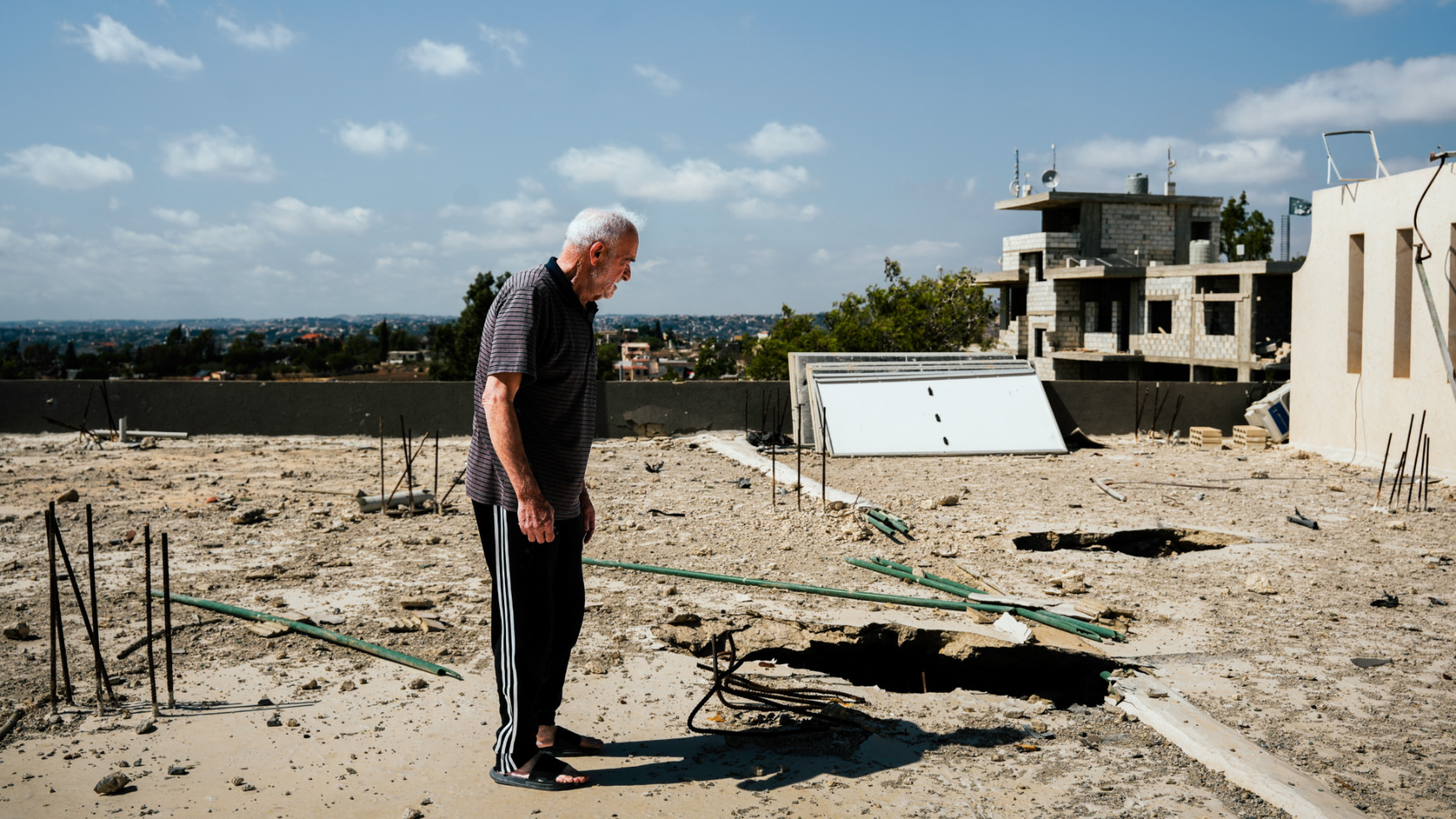
In Froun, MEE saw the same pattern of destruction found in Zawtar al-Gharbiyeh.
Civilian infrastructure has been devastated: the handful of houses still standing stick out against a landscape otherwise flattened by Israeli bombardments.
Yet there is no sign that the village was ever effectively occupied by the Israeli army - no evidence of the kind of ground presence that would need to be handed over to the Lebanese Army, as its "pilot zone" status implies.
"These villages, so-called pilot zones, have not been occupied by the Israeli army," Meier said, adding that the Lebanese government has been under intense US pressure to embrace President Donald Trump’s vision of a "new Middle East".
"The price, however, is high: accepting to negotiate with Israel and agreeing with pilot zones which actually just reinforce the erosion of Lebanon's sovereignty."
'We, the children of the south'
Abou Ali, a Froun resident who had recently returned to begin rebuilding his home, said the Israeli army never entered his village or Srifa.
"The Lebanese army wasn't here before either. They only came recently to set up a few checkpoints."
It's not possible to live in Froun today. The ceasefire they claim exists doesn't exist in practice. The resistance isn't attacking Israel, but they keep attacking us'
– Assem Jaffar, Froun resident
His account was consistent with what MEE observed on the ground.
There was no Lebanese military presence in Froun itself, only in the surrounding area. At the village’s entrance, MEE found that the checkpoint was manned by Hezbollah rather than the Lebanese Army.
"The agreement they made was a huge mistake," Abou Ali said, referring to the June 2026 framework agreement.
"This government has brought us to where we are today, and we cannot accept this agreement, because it doesn't benefit us in any way.
"We, the children of southern Lebanon, do not accept any kind of negotiation with the Israeli government."
MEE’s visits to Zawtar al-Gharbiyeh and Froun, along with interviews with residents and observations on the ground, point to a clear gap between the framework agreement’s premise and the reality in these villages.
Israeli forces destroyed large parts of both, but there was little evidence of the sustained ground presence that the "pilot zones" designation implies.
The agreement creates the appearance of a gradual Israeli withdrawal and a handover of control to the Lebanese Army. In Froun's case, however, there was no sustained Lebanese Army presence to speak of at all.
Meanwhile, the "withdrawals" from these pilot zones have coincided with continued Israeli military activity elsewhere in southern Lebanon, including in the village of Hadatha.
Territory framed as relinquished in one location exists alongside expanding operations in another, leaving the overall footprint of Israel's presence in southern Lebanon - which makes up about one-fifth of Lebanese territory - largely unchanged.
Middle East Eye delivers independent and unrivalled coverage and analysis of the Middle East, North Africa and beyond. To learn more about republishing this content and the associated fees, please fill out this form. More about MEE can be found here.