
Burnham apologised for Gaza. He has 100 days to prove he meant it


An apology is not a policy. Three decisions in his first 100 days will tell the country whether this prime minister is different from the last.
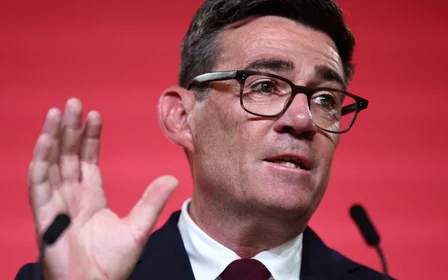
Andy Burnham has said what his predecessor never would. Labour’s response to Gaza, he conceded in July, “caused huge hurt”. He added: “We got it wrong and I am sorry for that.”
It was worth hearing. It is not enough.
Britain has no shortage of politicians willing to apologise for what other people did. What is rare is one who changes what he is doing himself.
Burnham has roughly 100 days to establish which kind of politician he intends to be.
New MEE newsletter: Jerusalem Dispatch
Sign up to get the latest insights and analysis on Israel-Palestine, alongside Turkey Unpacked and other MEE newsletters
He should not underestimate what is at stake. This is not simply the management of a grievance. It is about whether a political class that spent two years saying one thing and doing another can recover any claim to credibility.
Ipsos found last year that just nine percent of Britons trusted politicians to tell the truth, the joint-lowest score since 1983. That is the ground on which Burnham now stands.
Tenuous position
There is also the arithmetic, and it is unforgiving.
Gaza cost Labour five seats to pro-Palestine independents in 2024. In the 21 constituencies that are more than 30 percent Muslim, Labour’s vote collapsed by almost 30 points. MP Wes Streeting held Ilford North by 528 votes, while Shabana Mahmood’s majority in Birmingham Ladywood fell from more than 32,000 to 3,421.
Muslims are concentrated heavily enough to shape the result in more than 90 constituencies. By May of this year, Labour’s support among them stood at 33 percent, with three in five willing to back an independent to keep Labour out.
The apology bought Burnham a hearing. It did not buy him time. He has 100 days. After that, people stop listening
The Greens are advancing in the same wards. No serious projection now gives Labour a majority. The next parliament will be decided by a few thousand votes scattered across a few dozen seats.
In that arithmetic, Palestine is not a peripheral concern. It is the hinge.
Nor is it a minority position. A YouGov poll this past April found that 54 percent of the British public supports ending all arms exports to Israel, including the F-35 components that continue to flow. Palestine has become an issue on which voters read a politician’s character, asking one question: do you mean what you say about human rights?
Three decisions in the next 100 days will answer it.
International law
Firstly, Burnham must ban settlement trade. In July 2024, the International Court of Justice ruled Israel’s continued presence in the West Bank and East Jerusalem to be unlawful, noting that third states must not assist in maintaining the Israeli occupation.
The UN General Assembly subsequently gave states 12 months to comply. That deadline passed last September, with Britain standing still.
Ireland moved. Its ban on settlement imports was signed into law in late July. Spain acted last October, imposing an arms embargo on Israel. Britain merely labels settlement goods, a policy that acknowledges they come from stolen land while inviting shoppers to buy them anyway.
Burnham’s own trade minister has already said it is “time to move from simply labelling goods from illegal settlements to banning goods”. So ban them, and go further than Dublin by including services.
The trade is worth around £38m ($52m) a year, compared with total UK trade of around £1.9 trillion ($2.6 trillion) in the 12 months to the end of May 2026. It costs Britain almost nothing to give it up. And that is exactly the point: a country unwilling to forgo £38m, around 0.002 percent of its total trade volume, to comply with the world’s highest court should stop lecturing anyone about a rules-based order.
Secondly, Burnham must end the arms dealings.
In September 2024, Britain suspended only 30 of some 350 arms licences to Israel, and exempted the F-35 programme. In the three months after that suspension, the UK licensed £127.6m ($173m) of military equipment to Israel - more than the total for 2020-23 combined. The Royal Air Force has also flown more than 600 surveillance sorties from Cyprus and refuses to publish the logs.
Burnham says war crimes “appear to have been committed” in Gaza. A government that believes this cannot keep supplying the tools to commit such crimes and call itself a bystander.
Burnham must suspend every licence, close the F-35 exemption, ground the flights, and publish the data.
Authority corroded
Thirdly, the new prime minister must free the pensioners.
A state that cannot find cells for rapists and killers is planning to find cells for grandmothers with placards. This comes while the courts are overstretched, and policing and counter-terrorism officers are underfunded.
Now set that beside British justice. Prisons hold more than 87,000 people in an estate built for 70,000. Some 38,000 have been released early to make room. In a single year, 262 were released in error, the highest figure ever recorded - some of them serious offenders.
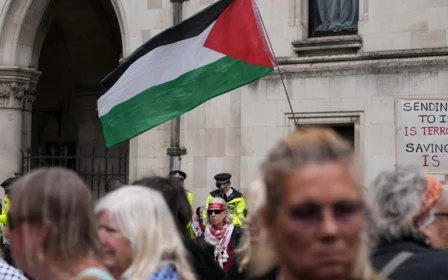
The proscription of Palestine Action is former Prime Minister Keir Starmer’s bequest, and it is among the reasons he is no longer in office. As of this past March, more than 2,700 people had been arrested for opposing it, with an average age of 59.
Among those arrested, more than 1,200 have been charged with terror-related offences, but none have been convicted. Sue Parfitt, an 83-year-old retired priest, was detained for holding a piece of cardboard.
That is not merely unjust. It is absurd. Nothing corrodes authority faster than absurdity.
None of these three acts requires new legislation, a summit, or Washington’s permission. Each requires a prime minister who decides.
The apology bought Burnham a hearing. It did not buy him time. He has 100 days. After that, people stop listening.
And once they stop, they do not come back.
The views expressed in this article belong to the author and do not necessarily reflect the editorial policy of Middle East Eye.
Middle East Eye delivers independent and unrivalled coverage and analysis of the Middle East, North Africa and beyond. To learn more about republishing this content and the associated fees, please fill out this form. More about MEE can be found here.