In Kfarchouba, life is 'a big prison' under Israeli occupation of south Lebanon

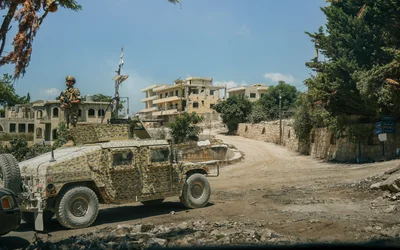
Within the Israeli occupation zone in southern Lebanon lies Kfarchouba, a village near the eastern border with Israel and one of the few villages whose residents have been permitted by the Israeli military to remain on their land.
But being spared the displacement that has uprooted hundreds of thousands of people from neighbouring villages comes at a price. Residents of Kfarchouba live in isolation, under curfews and severe restrictions on their movement, with the constant fear of being targeted for violating Israel’s strict conditions.
"The Israelis personally called two sheikhs and told them it was the Israeli defence ministry on the line," the mayor of Kfarchouba, Qassem al-Adiri, told Middle East Eye.
"They told us the most important factor would be not to allow any armed element to enter Kfarchouba. They were clear that if we did so, or protected any armed person or cooperated with them, there would be an expulsion order against the village and it would be destroyed, just like the others nearby."
Like a handful of other non-Shia villages inside Israel’s "yellow line" - an occupied area stretching around 600 square kilometres along the border - Kfarchouba, a Sunni-majority village, has distanced itself from Hezbollah.
New MEE newsletter: Jerusalem Dispatch
Sign up to get the latest insights and analysis on Israel-Palestine, alongside Turkey Unpacked and other MEE newsletters
Qassem, an octogenarian, said that, as a local political authority, he had assured the Israeli military that there were no armed individuals in the village. But this has not made life easy for residents, as constant surveillance and the threat of raids, detention and interrogation add to a pervasive sense of insecurity.
Occupying Israeli forces have also limited people's access to their agricultural lands and olive groves.
“We can’t use our land, they don’t allow us. The mountains, the valleys, the orchards, the farmlands where we cultivate," the mayor said.
He added that, although the political and security alignment of Kfarchouba remains with the Lebanese government and army, ordinary citizens have no means of preventing armed activity against the Israeli occupation in or around the village.
Qassem said it is not clear exactly where locals can and cannot go, though residents have previously reported that they are not allowed access to the southern part of their village.
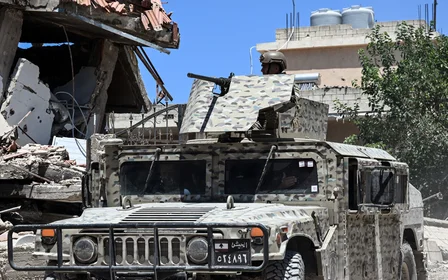
In the southeastern outskirts of Kfarchouba, the mayor added, Israeli forces have set up temporary outposts in evicted houses, located in strategic positions.
Abductions, wildfires and destruction
Abductions by Israeli troops have also become a frequent occurrence in the area.
During a pre-dawn raid on 24 March, Israeli soldiers entered Halta, on the outskirts of Kfarchouba, and abducted 35-year-old Shadi Karama Abdel Aal, accusing him of links to Saraya al-Muqawama, a Hezbollah-linked group.
During the raid, 15-year-old Mohammed Ali Abdel Aal went outside after hearing screams and was shot dead by an Israeli sniper. Another resident, Ashraf Khalil al-Qadri, was wounded. Israeli troops surrounded Abdel Aal’s home during the operation, preventing anyone from approaching to provide first aid.
“There are many cases. They’ve been to Halta farm, which belongs to Kfarchouba, and abducted five people. Three of them were cutting grass for the area of Rachaya al-Fakhar. They took them and accused them of affiliation to Saraya al-Muqawama.”
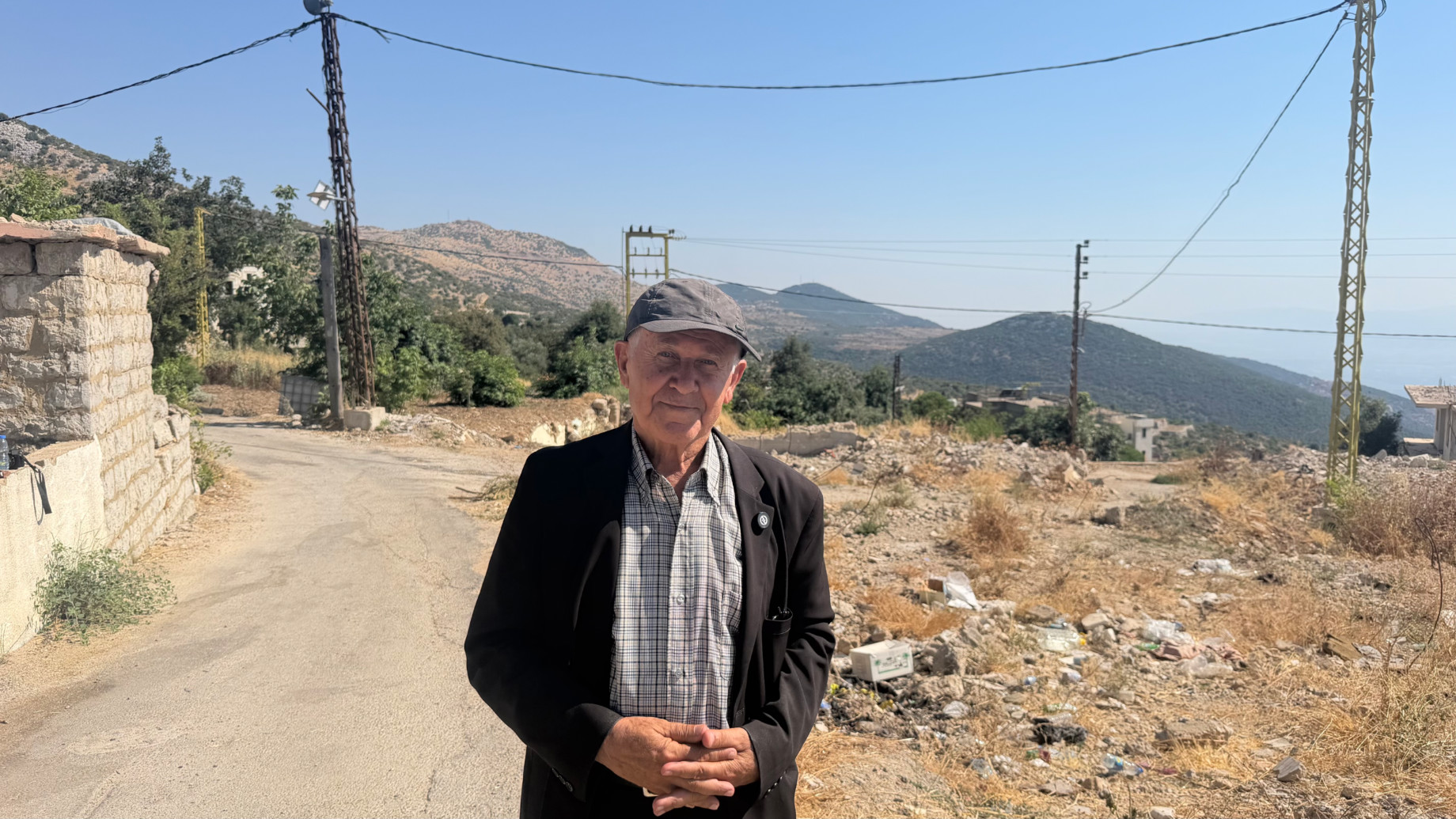

Israel's military campaign in south Lebanon has combined mass displacement with the large-scale, systematic destruction of homes, civilian infrastructure and agricultural land. The scale of destruction has left entire communities uninhabitable and damaged local productive capacity.
The Israeli military has also been setting fires across southern Lebanon, particularly in forests, olive groves and agricultural land. Residents say the fires have left the scorched land unusable.
On 5 August, Israeli military activity caused fire in a wooded area of Kfarchouba that spread towards Halta. The fires burned for hours, while the Israeli military prevented Lebanese firefighters from reaching the area, according to Lebanon’s National News Agency.
Hussein Fakih, a firefighter from Nabatiyeh, told The Guardian that on 11 August, Israeli forces started fires using incendiary materials near Khiam, a village neighbouring Kfarchouba. When Lebanese crews attempted to extinguish the blaze, an Israeli drone struck nearby, forcing them to withdraw.
Kfarchouba relies primarily on agriculture, with olive groves and tobacco plantations providing much of its income. Despite not being considered an active target, the village has faced shortages of basic necessities, compounded by severe damage to its infrastructure, particularly its electricity and water supplies.
Qassem said the power grid has been cut, and Israeli forces have prevented residents from repairing it. Instead, locals run the water pump on a generator that costs $300 a day in fuel and takes roughly 10 hours to fill the reservoir.
Living in a big prison
Kfarchouba residents told MEE that the village’s isolation has forced the local community to drastically change its consumption habits, while limiting access to food, medical supplies and the transport of goods.
Local shop owner Hasan Amro said Kfarchouba has seen a sharp decline in the flow of people and goods into the village. Residents said they have had to risk Israeli interception to reach the Bekaa Valley in search of food, medicine and other essential supplies.
“People who live outside the village used to come on weekends," Amro said, "Now we are living here but we feel like we are living in a big prison. We can’t come and go as we please.
“We can’t go much farther to check on the olive trees. The olive harvest is approaching and we need to harvest the olives."
Amro added that they had not been able to tend their olive groves since the 2024 war.
“Of course, this year we won’t be able to harvest again. We live surrounded by everything this place has to offer, but we can’t do anything. At this point, we can’t do anything,” Amro said.
He explained to MEE that the flow of supplies has improved, thanks to local efforts to bring provisions from the Bekaa Valley. But this, he added, does not replace the reciprocal trade with nearby villages such as Khiam and Kfar Kila, which have been devastated by Israel’s occupation of southern Lebanon.
“This war has been harder than the last one. We can't bring supplies from the neighbouring villages, most of them were completely destroyed," Amro said.
“The ones that haven’t been destroyed don’t want to come to us. Now we have someone who delivers supplies to our shop, and this is the first time he has come here since the beginning of the war. Before, we would go to the Bekaa to get supplies. It’s dangerous to travel on the roads at the moment.”
Since talks started between Israel and Lebanon in April, the Lebanese government has shown little sign of having the bargaining power needed to secure Israel’s withdrawal.
A US-brokered framework allows the Israeli army to remain inside occupied south Lebanon until Hezbollah is disarmed and the Lebanese army takes control, terms the group has rejected as surrender.
'We can’t use our land, they don’t allow us. The mountains, the valleys, the orchards, the farmlands where we cultivate'
- Qassem al-Adiri, Kfarchouba mayor
“Pilot zones” established in areas that had never previously been occupied, contrary to Israeli claims, have so far served only to facilitate the expansion of Israel’s occupation in southern Lebanon, according to observers.
Lebanese media reported that Israel has recently widened the area under its occupation to include villages such as Mansouri, Majdal Zoun, Haddatha and Braasheet, while advancing further towards Tibnin and Beit Yahoun.
The agreement does not offer Lebanese civilians, both in occupied areas and beyond them, any meaningful protection from the continued threats and abuses they face at the hands of the Israeli army.
Last weekend, Israel intensified its military escalation in the south, carrying out air strikes that killed 11 people, including three children, and wounded 19 in Ansar and Deir al-Zahrani. It was the deadliest attack since an agreement aimed at reducing hostilities was announced in June.
Middle East Eye delivers independent and unrivalled coverage and analysis of the Middle East, North Africa and beyond. To learn more about republishing this content and the associated fees, please fill out this form. More about MEE can be found here.