US vows to 'collapse' Iran with new sanctions as energy prices spike

The US will impose "the toughest sanctions in history” on Iran, Secretary of the Treasury Scott Bessent said on Thursday, vowing to ramp up economic pressure on the Islamic Republic even as the economic toll of the war builds.
"It is a one-two punch. We have the blockade [on Iran], and we are going to have the toughest sanctions in history," Bessent told CNBC.
"It is going to work in Iran, and we are going to collapse this regime,” he said, adding that the sanctions will be explained on Monday.
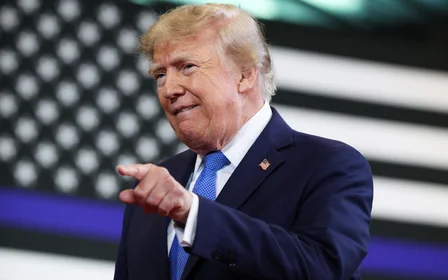
Bessent’s statements come a day after Trump said that he was launching an "economic D-Day" on Iran.
"ANY country that allows its financial institutions, businesses, airports, or government entities to provide any type of lifeline to Iran will itself face TREMENDOUS Economic Consequences," Trump said.
New MEE newsletter: Jerusalem Dispatch
Sign up to get the latest insights and analysis on Israel-Palestine, alongside Turkey Unpacked and other MEE newsletters
The Trump administration’s threats come as it continues to be unable to militarily assert its control over the Strait of Hormuz, with a ceasefire between the two countries all but collapsed.
Energy prices are rising again, posing a problem for the Trump administration as it tries to tame rising borrowing costs.
Brent Oil, the international benchmark, was up two percent on Thursday, trading at $93.41 per barrel.
The war has also upended the global shipping trade, with the cost of chartering a tanker skyrocketing. BWET, an Exchange Traded Fund (ETF) that allows investors to bet on the shipping rates, has soared 98 percent over the past month.
Asked about rising energy prices, Bessent said, ”We have asymmetric information, and I'm not sure why oil has popped up on this."
Iran has continued attacking vessels in the Strait of Hormuz, while its partner in Yemen, the Houthis, has imposed a maritime blockade against Saudi Arabia in the Red Sea. The kingdom, which relies on the waterway to export oil, has been forced to pipe crude to the Mediterranean via Egypt.
Sanctions
The US has already imposed debilitating sanctions against Iran. The June ceasefire extension the two sides struck granted Iran a waiver to sell its oil sanctions-free, but the sanctions were reimposed in July.
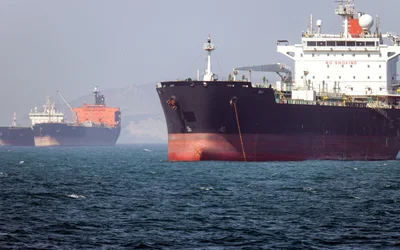
Iran’s main source of external revenue comes from oil sales by sea. Trump has boasted that the blockade is "extremely effective”.
Iran’s most important economic partner is China, which buys more than 80 percent of its seaborne oil. Experts say that the US would need to impose secondary sanctions on China in order to fully isolate the Islamic Republic.
"We are confident that everyone wants the Strait reopened, and for energy prices to come back down,” Bessent said when asked whether or not the US would impose secondary sanctions on China.
”Keep in mind that the Chinese get 50 percent [of their] energy from inside the Gulf. So it would do them a big service to get with the programme,” he added.
The UAE has also historically served as a key financial hub for Iran.
The UAE said this week that it was halting all trade and financial transactions with Iran.
US Secretary of State Marco Rubio held a phone call this week with UAE national security advisor Tahnoon bin Zayed al-Nahyan.
Middle East Eye delivers independent and unrivalled coverage and analysis of the Middle East, North Africa and beyond. To learn more about republishing this content and the associated fees, please fill out this form. More about MEE can be found here.