Turkey requests Interpol red notice for Netanyahu over Sumud Flotilla

Turkey’s Ministry of Justice has asked Interpol to issue Red Notices for Israeli Prime Minister Benjamin Netanyahu and an Israeli official on genocide charges, Turkish Justice Minister Akin Gurlek announced on Friday.
Gurlek said the decision was made during proceedings concerning Israel’s attack in international waters on activists aboard the Global Sumud Flotilla, which set sail earlier this year to deliver humanitarian aid to Gaza.
“Pursuant to the arrest warrants issued on 14 July 2026 for Benjamin Netanyahu and Afek Moskovitch on charges of genocide, our Ministry of Justice requested that the Ministry of Interior seek Interpol Red Notices for their international apprehension. The relevant documents have also been forwarded to our Ministry of Foreign Affairs,” the minister said in a statement posted on X.
“Benjamin Netanyahu and Afek Moskovitch are standing trial for crimes against humanity, genocide, aggravated unlawful deprivation of liberty, intentional injury, torture and ill-treatment, damage to property, aggravated robbery, and the hijacking or seizure of means of transport.
"The charges relate to the armed intervention against civilians delivering humanitarian aid to Gaza in international waters and the subsequent detention of activists.”
New MEE newsletter: Jerusalem Dispatch
Sign up to get the latest insights and analysis on Israel-Palestine, alongside Turkey Unpacked and other MEE newsletters
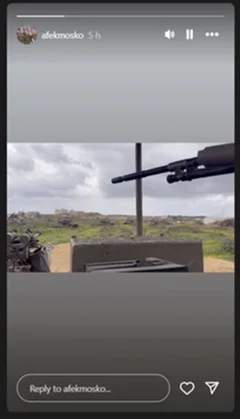
Turkish officials told Middle East Eye that Afek Moskovitch, a lieutenant serving in the Israeli army’s 71st Battalion, is accused of participating in the destruction of the Turkish-Palestinian Friendship Hospital in Gaza in March 2025.
Moskovitch posted footage on his Instagram account, @afekmosko, that appears to show rounds being fired at the hospital and the adjacent medical school at the Islamic University of Gaza.

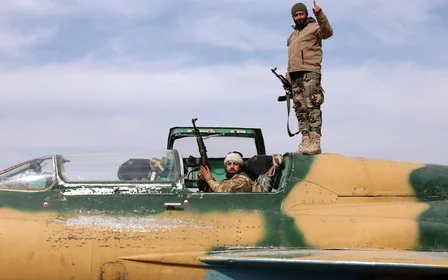
The move came shortly after Israeli strikes earlier this week on the Abu al-Duhur military airbase in northern Syria, about 70km from the Turkish border.
On Thursday, Israeli Defence Minister Israel Katz also issued a veiled threat against Turkey.
“Turkish President Recep Tayyip Erdogan is dragging Turkey into dangerous adventures in Syria,” Katz said in a social media post.
Katz said Israel would not “allow any entity to threaten its security”. He added that Erdogan would be better off curbing his anti-Israel rhetoric than “attempting to test Israel’s resolve to defend itself”.
Israel accused Syria of being on the verge of violating a security “status quo agreed with Israel” by allowing Turkish troops to deploy at the airbase. Both Turkish and Syrian officials rejected the allegation.
Turkey’s defence ministry said there had been no Turkish military presence at Abu al-Duhur airbase before or during Israel’s “unacceptable” attack.
“It is essential that Israel ceases such reckless attacks,” the ministry added.
Syrian officials told Middle East Eye that a Turkish technical team had been tasked with repairing the runway and control tower, but said there was no Turkish military presence at the base.
In a statement on Wednesday, the Turkish presidency said Israel’s actions were driven by Netanyahu’s campaign ahead of the general election in October.
Netanyahu said Israel had warned Syria before the strike not to allow Turkey to establish a presence at the base.
“Our message was very clear: Don’t. I guess they didn’t quite understand the message,” Netanyahu said on Wednesday.
Syrian Foreign Minister Asaad al-Shaibani said Israel had no legitimate justification for the bombing.
Following Tuesday’s strikes, Tom Barrack, the US special presidential envoy for Syria and Iraq, told Reuters that Washington was working to establish a deconfliction mechanism among Israel, Turkey and Syria.
Middle East Eye delivers independent and unrivalled coverage and analysis of the Middle East, North Africa and beyond. To learn more about republishing this content and the associated fees, please fill out this form. More about MEE can be found here.