Locarno Film Festival 2026: Palestine, Iran and Gaza's genocide continue to dominate debate

For the film festival circuit, this was supposed to be the year when Gaza and the Middle East faded into the background.
Since 7 October, Gaza has been the dominant subject at major film festivals, rocking Berlin, dominating Venice, and making headlines in Toronto, Cannes and beyond.
Switzerland’s Locarno has been among the most hospitable fairs to the Palestinian cause and to Middle Eastern voices.
Palestinian and Lebanese filmmakers and films, such as Maha Haj’s Upshot (2004) and Kamal Aljafari’s With Hasan in Gaza (2025), have featured prominently in the festival’s selections in recent years.
Last year, Locarno’s Italian director, Giona A Nazzaro, delivered an impassioned speech denouncing “the intolerable destruction of Gaza and the terrible humanitarian tragedy that is afflicting the Palestinian people with the violence of bombs and famine”.
New MEE newsletter: Jerusalem Dispatch
Sign up to get the latest insights and analysis on Israel-Palestine, alongside Turkey Unpacked and other MEE newsletters
The so-called ceasefire agreement of October 2025 was supposed to bring the curtain down on the most destabilising global event of the decade and relieve film festivals of the need to devise delicate ways of navigating such a highly incendiary subject.
However, the aftermath of February’s Berlin Film Festival proved that Gaza remains front and centre in festival politics.
As this year’s edition of Locarno made evident, the equally divisive war in Iran may further complicate a political landscape that shows no signs of settling down anytime soon.
Gaza remains front and centre in festival politics
From the outset, Gaza maintained a visible presence at Locarno, which opened on 5 August and concluded on 15 August.
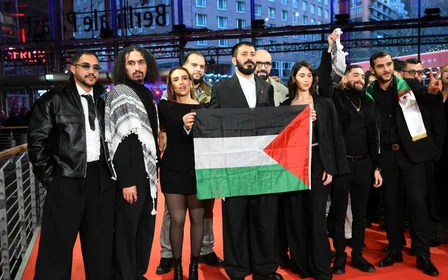
On 9 August, nearly 100 demonstrators unfurled a large pall bearing the names of the 60,000 people killed by Israel in Gaza in front of the Campari Lounge, at the heart of the festival.
According to Variety reports, the leaflets the protesters distributed called on the Swiss government “to pressure Israel to open the borders of Gaza to relief organizations and the media, as well as to allow for injured civilians of Gaza to receive medical treatment in Switzerland”.
They also demanded that the Swiss government impose sanctions if the Israelis continue to violate the Geneva Convention.
The festival had been informed of the planned demonstration in advance and raised no objections to allowing it to take place on its premises.
At the closing ceremony, several filmmakers voiced their support for the Palestinian cause while denouncing Israel’s military aggression across the region.
Speaking out on Lebanon and Palestine
In her tearful speech, Lebanese star Manal Issa, winner of the Best Performance award in the Filmmakers of the Present competition, said: “It’s been a tough two years as Lebanese and Palestinians. For over a year and a half, I didn’t want to act anymore.
“Why would I do cinema when people are dying? When villages are being wiped out, when my friends are dying for being journalists and paramedics?
“I’m thinking now of the truth, of the people fighting every day, of the minorities, of the mothers who have lost their children. I wanted to do something about what was happening, but I couldn’t.
“But what I managed to do was be there and have emotions - something that the world has lacked in these last years.”
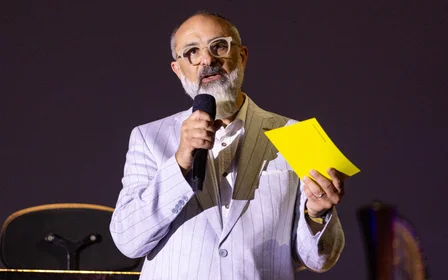
Accepting the Special Jury Prize in the same competition, Palestinian documentarian Mohanad Yaqubi recounted how database site IMDB has refused thus far to add Yasser Arafat and Nayef Hawatmeh to the cast sheet of his winning film, Revolutionaries Never Die.
'I ask all filmmakers, look at where you are getting your money, fight the complicity, fight the erasure'
- Mohanad Yaqubi, filmmaker
“This pattern has been repeating in almost every part of our industry,” Yaqubi said.
“This form of erasure, this form of silencing, has been happening for generations. We have to fight this complicity. I ask all filmmakers, look at where you are getting your money, fight the complicity, fight the erasure.”
The pro-Palestinian speeches were not limited to Arab artists.
In a powerful acceptance speech for the Best First Feature award, American photographer and filmmaker Alessandra Sanguinetti - whose debut feature, The Illusion of an Everlasting Summer, has been the undisputed hit of Locarno 79 - said: “I have been photographing and filming children in Palestine since 2003, and I’m seeing how all the trees they used to climb have been gone away…have been stolen. How the free spaces are not there anymore.
“I want to dedicate this to Palestine, to the children there, because we shouldn’t forget that adults are children who grew up.
“Not only for the children, but for all the men, all the women…everyone who is trapped there. I just hope that the United States and Israel stop killing children.”
Anti-revolutionary objections
If the closing speeches suggested a unified stance in support of Palestine, the fractious attitudes of the public toward the thorny politics of the region were fully exposed during the discussion of Yaqubi’s film.
An essay film composed largely of excerpts from documentaries and television reports made by the late, great Lebanese filmmaker Jocelyne Saab between 1973 and 1983, this archival work contains footage of the Lebanese Civil War, Palestinian refugee camps, Cairo’s City of the Dead, and post-Islamic Revolution Iran.
Apart from a brief and politically unassertive intervention by the director, Revolutionaries is Saab’s film through and through, reflecting her concerns, aesthetics, and worldview at a pivotal moment in the history of the Middle East.
Yet some audience members found the 40-year-old footage too objectionable, too subjective, or too misleading for the current political climate.
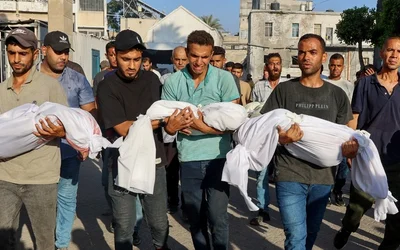
Speaking uninterrupted for nearly five minutes, an Israeli woman complained that the film did a disservice to the peace efforts undertaken by leftists of her ilk.
She insisted that what is happening in Gaza is horrific, but argued that 7 October remains an unacknowledged tragedy - the most devastating attack on Jews since the Holocaust, as she put it.
By focusing solely on the suffering of Palestinians while ignoring Israeli grievances, the Israeli woman implied, the film foreclosed the possibility of constructive dialogue and peaceful coexistence.
An Iranian woman and a man angrily voiced similar reservations about Saab’s sympathetic depiction of the Iranian Revolution.
By failing to show the persecution of secularists and non-Muslims under the Islamic Republic, the woman argued, the film offers a misleading portrait of the early years of the revolution.
The man echoed her sentiment, stressing that the rule of the Islamic Revolutionary Guard was nowhere near as rosy as Saab makes it appear.
All three audience members demanded an explicit historical context that runs counter to the form and nature of Yaqubi’s film.
All three were troubled by 40-year-old images that subjectively reflect the ideologies and sentiments of their makers at that particular moment in time.
All three displayed a pronounced intolerance toward political perspectives that contradicted their own equally subjective views.
And all three exhibited a degree of political rigidity that is often associated with conservative Arab circles.
The screening of Revolutionaries Never Die presented a rare instance of a film being shown to an audience that did not subscribe to its politics.
We often criticise films for questionable approaches to representation, subversion, or manipulation.
But the grievances voiced by the disgruntled viewers had little to do with cinema, or even with debatable political positions, and more to do with a very specific and tangible framework they demanded films of its ilk adhere to, lest they risk being shunned.
It is a palpably fascistic view of art and cinema, but it is also a sobering reminder of the oppressive culture that has emerged in the wake of 7 October and Trump, a culture that refuses to tolerate any voices but its own.
Revolutionaries Never Die
Patchy in quality and muddled in execution, Locarno’s Middle Eastern selection, on the other hand, left much to be desired.
Revolutionaries Never Die is a prime example. The project was initiated when Saab, who died in 2019, reached out to Yaqubi at the end of 2018 about a potential collaboration. Having recently moved to Brussels, Yaqubi never managed to respond to her before her untimely death.
He would eventually return to Saab’s restored films to construct what is best described as an introduction to her rich and varied filmography. But there is little more to the film than that.
Yaqubi’s intervention is feeble and quickly grows repetitive. He expresses his gratitude for the compassionate position Saab took toward Palestinians during the Lebanese Civil War, when anti-Palestinian sentiment was at its peak, through florid and overly sentimental text devoid of much perceptiveness.
Neither the selection of films and reports, which begins with Palestinians Keep On (1973) and concludes with The Ship of Exile (1982), with Beirut, My City (1983) serving as an introduction to what follows, nor the chronology of the selected segments is adequately justified.
Simply put, the film could have begun and ended with any of these works. Saab’s images carry an idealism refracted through a spotless political prism, untouched by the post-millennial cynicism and moral ambiguity that have since come to define the era.
It is her moral clarity that shines through despite her palpable political naivete. Yet she occasionally offers startlingly prescient prophecies, most notably in Iran: Utopia in Motion (1980), when she identifies the future of world peace as dependent on how Iran and the United States manage the Strait of Hormuz, a strategic flashpoint that was little understood at the time.
Revolutionaries Never Die is a solid piece of archival work, if not the brilliant political essay it aspires to be. One cannot help but wonder whether Saab’s footage might have been better served by a more academic treatment, one capable of bringing the various dimensions of her work to the fore.
Bakma
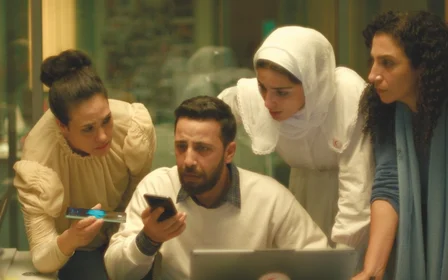
The film is certainly not without virtues, but the same cannot be said of Bakma, the fourth feature by popular Tunisian filmmaker Abdelhamid Bouchnak and the weakest work of his decade-long career.
This grisly slasher thriller centres on a serial killer who dismembers women, stitches their limbs together, and then grafts the severed heads of stray dogs onto the newly forged corpses.
As the clueless commissioners Ali and Khaled investigate the case, a series of clumsily inserted flashbacks reveals that the unnamed killer, who is hearing-impaired, was set on his murderous path by the neglect of his contemptuous mother and the bullying of his ruthless schoolmates.
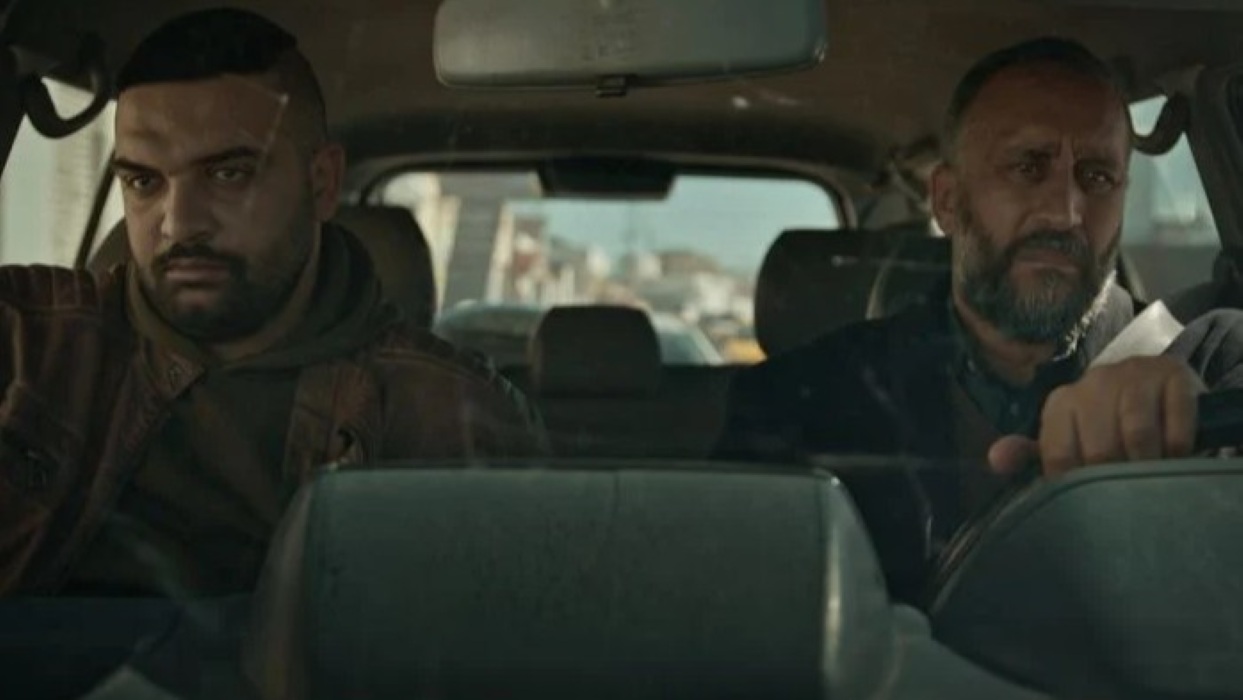

There’s little to the story beyond this exceedingly thin premise. Bouchnak has claimed that the film channels the anger and frustration he harbours toward contemporary Tunisian society, but the picture’s underdeveloped themes are too juvenile, superficial and one-note to translate into anything resembling robust political commentary.
The performances range from overblown to wooden; the serial killer’s monologues are unintentionally hilarious in their self-serious moroseness; and the daylight staging is awkward in its baffling amateurishness.
The icing on the cake is a ridiculous conclusion reminiscent of a self-pitying early Radiohead song, written by a self-absorbed teenager begging to be seen.
Bouchnak’s daring, grungy 2018 debut, Dachra, the first bona fide Tunisian horror film, was a breath of fresh air in a cinematic landscape dominated by social realism.
His latest effort is a cautionary tale about what happens when a filmmaker lacks a disciplined producer capable of telling him that his script is, frankly, turgid.
L’estive
Less ambitious but far more affecting and mature was L’estive (Summer Meadows), the debut narrative feature by Belgian-Palestinian director and cinematographer Nael Khleifi and Lisa Debauche.
Manal Issa plays Hana, a young Lebanese-French shepherdess who seeks solace from the chaos and destruction engulfing her native country in the tranquillity of the Alps.
Her solitude is broken by the arrival of a young herder, Lisa, who has been sent to assist her, and by a fleeting but illuminating encounter with a Moroccan undocumented immigrant.
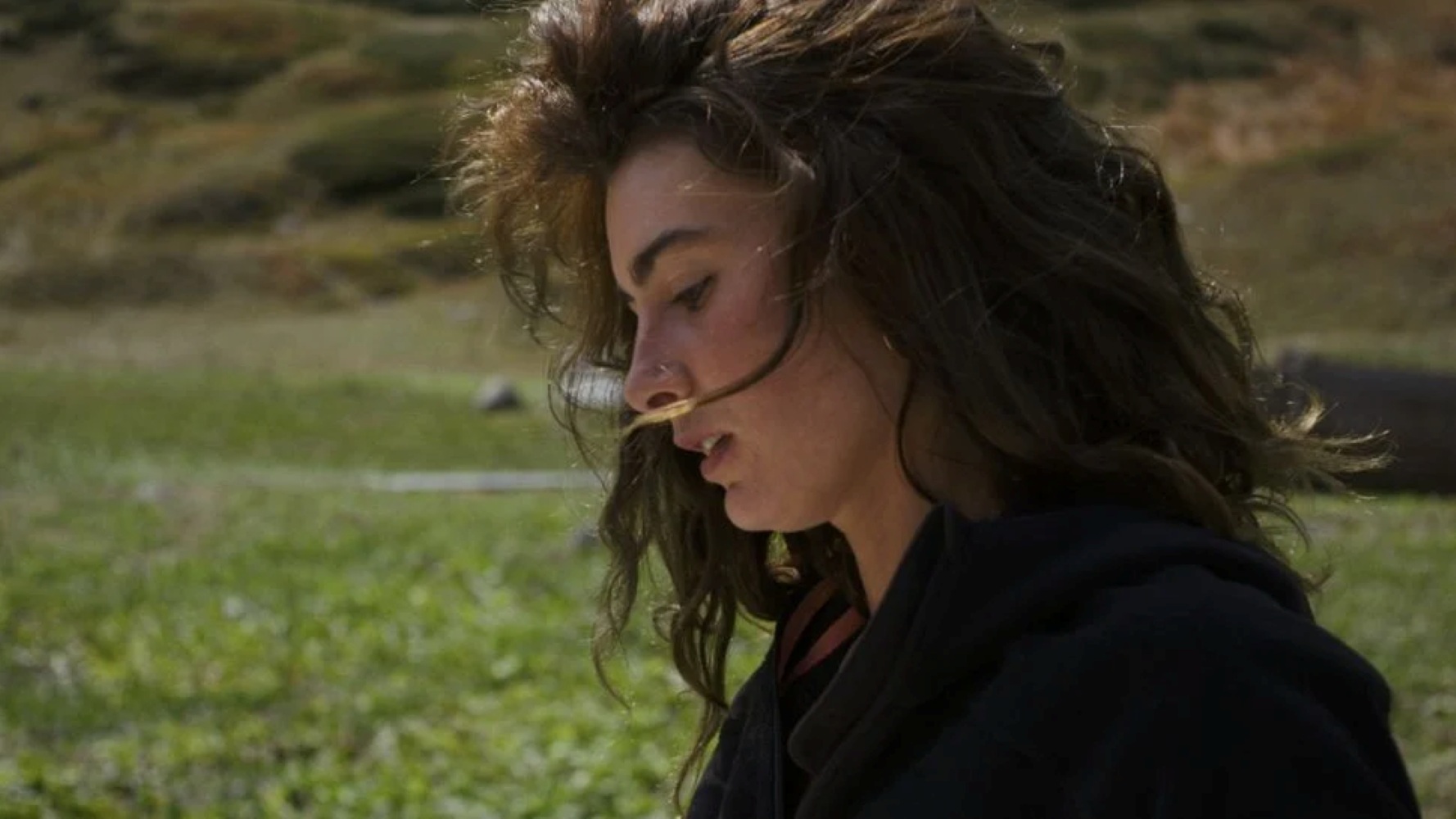
Khleifi and Debauche weave a simple tale about female bonding, the struggle to find meaning amid senseless and numbing violence, and the hefty yet worthwhile price of freedom and defying borders.
Some of the gorgeous vistas they capture would have benefited from steadier framing rather than the intrusive, out-of-character handheld camerawork, but this is a minor quibble with a film that steadily and subtly packs an emotional punch through minimal gestures.
The film’s biggest coup is Issa’s performance, the best of her career to date. Essentially playing a variation on herself, Issa delicately channels the latent guilt of leading a privileged, safe existence far away from home, as well as the simmering helplessness of being powerless to halt the sweeping death and displacement inflicted upon her people.
Hana is conscious of her privileges yet unable to enjoy them. Only when she aids the incoming migrants does she regain a sense of purpose: giving back to the place and culture with which she feels the deepest affinity, yet can never fully inhabit.
It is an effortless performance of remarkable nuance and gravitas - the comeback role of a supremely talented actress still searching for her place in a disarrayed cinematic landscape.
Concrete Land
Equally affecting, if less formally accomplished, is Concrete Land, the debut feature by Palestinian-Jordanian documentarian Asmahan Bkerat.
Shot over eight years, the film follows the Najar family, one of the last Afro-Palestinian Bedouin clans living in shabby tents on the outskirts of Amman. As agricultural land gives way to luxury villas, three generations of the Najars are thrust into a fruitless struggle to preserve their traditional way of life while grappling with racism, gentrification, and the seemingly inexorable forces of modernity.
Concrete Land is the first filmic document of Afro-Palestinian Bedouins. The Najars are among the last of these families, whose unique identity and semi-agrarian lifestyle have long put them at odds with a place that has never fully accepted them.

Their lives have been defined by a series of relentless struggles: discrimination based on the colour of their skin and disdain for their way of life; a state of constant uprootedness dating back to the mid-20th century; and the fervent desire of younger generations to assimilate and lead different lives - only to find that such aspirations remain largely out of reach.
Bkerat weaves a complex tale of alienation and togetherness, resilience and inevitable change, loss and new beginnings.
Alas, the film’s form underwhelms the drama unfolding before us.
Its familiar brand of cinema verite, relying exclusively on observation, is hampered by rudimentary photography, serviceable editing and a by-the-numbers narrative that only occasionally springs to life, most memorably during the confrontation with the racist wealthy neighbour.
Concrete Land is an important document of a people and a place on the brink of extinction. But like Revolutionaries Never Die, it is another case of a film whose valuable subject matter is undermined by a humdrum cinematic framework, ultimately diminishing both its intellectual and emotional impact.
Middle East Eye delivers independent and unrivalled coverage and analysis of the Middle East, North Africa and beyond. To learn more about republishing this content and the associated fees, please fill out this form. More about MEE can be found here.