Iran reports $7.5bn in oil revenues amid US naval blockade

Iran transferred $7.5bn in oil revenue from sales during the first four months of the current Iranian year to the central bank, the semi-official Fars News Agency reported on Saturday, as Tehran said it had continued to meet its budget targets despite a US naval blockade.
The funds would be sufficient to cover the government's foreign currency expenditures from July through December, Fars reported, quoting data from Iran's oil ministry.
Oil revenue between 21 March and 22 July, the first four months of the Iranian year, reached 99 percent of the amount projected in the budget for that period, Fars said.
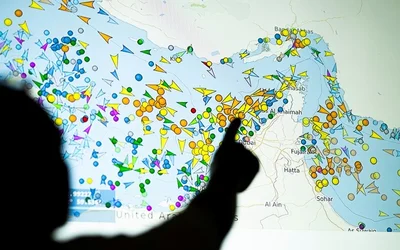
The figures come as the US naval blockade imposed on Iran has disrupted Tehran's oil exports and maritime trade, while the status of the Strait of Hormuz remains at the centre of the continuing dispute between Washington and Tehran.
Iran has restricted passage through the strategic waterway during the conflict, while the United States has demanded its reopening to allow free and unrestricted navigation.
New MEE newsletter: Jerusalem Dispatch
Sign up to get the latest insights and analysis on Israel-Palestine, alongside Turkey Unpacked and other MEE newsletters
Under a Memorandum of Understanding (MoU) reached in June to end the US-Israeli war on Iran, lifting the US naval blockade and reopening the Strait of Hormuz were among the key provisions.
Iranian officials have said Tehran will not fully reopen the waterway until Washington fulfils its commitments under the MoU, including ending the blockade, releasing frozen Iranian assets and lifting sanctions.
Iran’s President Masoud Pezeshkian said that US sanctions were hurting the country's economy.
“Some say sanctions have no effect at all; to those people, I really don’t know what to say,” Pezeshkian told state TV in an interview. “We are in a war situation, and we must accept these wartime conditions.”
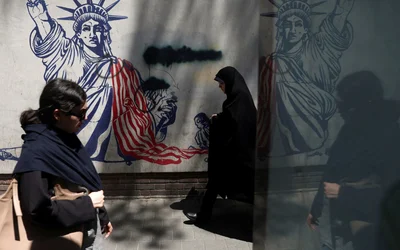
Tehran Governor Mohammad Sadeq Motamedian said on Saturday that the blockade had created “very exceptional and unique” conditions for running the country during the war.
Speaking on a television programme, Motamedian said Iran had faced intensified sanctions alongside attacks on infrastructure and the naval blockade, according to the Iranian Students' News Agency (ISNA).
“The blockade imposed on our country in the maritime domain meant that managing the country took place under truly exceptional and unique conditions,” he said.
Motamedian said infrastructure across Iran, particularly in Tehran, had come under attack during the war, with the capital becoming a major focus of US-Israeli strikes.
More than 1,200 electricity infrastructure sites across Tehran province were targeted, he said, adding that the authorities managed to restore services within a short period.
Water infrastructure was also damaged but quickly repaired, while telecommunications and gas facilities were affected, he added.
Motamedian said sanctions against Iran were intensified during the war, adding further pressure on the country's economy.
The US-Israeli war on Iran began on 28 February, with attacks targeting military, nuclear and infrastructure sites across the country. Tehran responded with missile and drone strikes against Israel and US military facilities in the region.
The MoU in June was meant to launch negotiations towards a final agreement. Those talks later stalled over disagreements concerning security guarantees and freedom of navigation through the Strait of Hormuz.
The International Maritime Organization said on Friday that 400 vessels and around 6,000 seafarers remain stranded in the Gulf six months after the conflict began.
“While some ships and their crews have been able to leave the Gulf, up to 400 ships carrying around 6,000 seafarers have been unable to depart safely since the conflict began,” IMO Secretary-General Arsenio Dominguez said.
Dominguez warned that the disruption of supply chains for fuel and fertiliser had “grave” consequences for communities and economies worldwide.
Middle East Eye delivers independent and unrivalled coverage and analysis of the Middle East, North Africa and beyond. To learn more about republishing this content and the associated fees, please fill out this form. More about MEE can be found here.