Xi’s Egypt visit tests Cairo’s balancing act

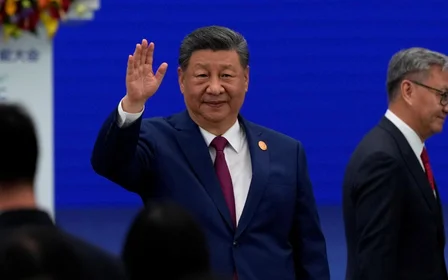
Chinese President Xi Jinping and President Abdel Fattah el-Sisi held talks in Cairo on Wednesday, closing out Xi’s first visit to Egypt in a decade with a series of signed agreements, memoranda of understanding, and a joint statement on bilateral ties.
The visit, timed to the 70th anniversary of diplomatic relations between the two countries, coincided with the joint Egyptian-Chinese “Eagles of Civilisation” air exercise, launched 22 August to strengthen military ties between the two countries’ air forces.
It also followed a report that Chinese tech giant Huawei had bid to supply Egypt with more than 2,000 artificial intelligence (AI) computing chips for a data centre.
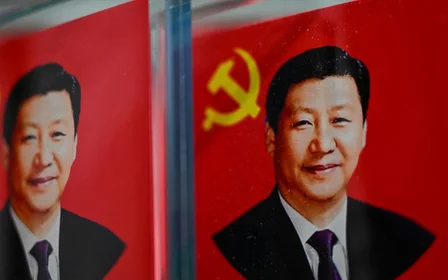
Xi touched down in Cairo on Tuesday, greeted by Sisi and an entourage of folk dancers and young Egyptians waving both countries’ flags and wearing shirts emblazoned with the Chinese leader’s face. Authorities temporarily closed several of the capital’s main roads as a security measure for Xi’s visits to Ittihadiya Palace and the the Grand Egyptian Museum.
Central to the agreements was Sisi’s announcement of a third phase of the Egyptian-Chinese Suez Canal Economic Zone (SCZone), expanding a project that already hosts roughly 200 companies and $4bn in investment.
New MEE newsletter: Jerusalem Dispatch
Sign up to get the latest insights and analysis on Israel-Palestine, alongside Turkey Unpacked and other MEE newsletters
Beyond trade, the agreements expanded cooperation on renewable energy, AI and Egypt’s digital transformation, and reaffirmed a commitment to aligning Egypt’s Vision 2030 with China’s Belt and Road Initiative.
“China is building these [economic zones] as a way of spreading the Chinese model of development,” Raphael Angieri, managing director and co-founder of the Sino-Arabica Project, told Middle East Eye.
Angieri added that the economic zones allow for easy exports, as well as China’s circumvention of tariffs and other obstacles to trade by expanding manufacturing capacity outside the country’s borders.
These plans come at a critical moment for Egypt. Suez Canal toll revenue plummeted to under $4bn in 2024, down from a record $10.3bn the year before, as attacks on cargo ships in the Red Sea by Yemen’s Houthis forced carriers to reroute around Africa amid the war on Gaza.
Iran’s closure of the Strait of Hormuz following the US-Israeli war is now pushing a growing number of oil tankers back toward Red Sea shipping lanes.

For Egypt, “these industrial clusters are much more efficient”, allowing for added capacity as Cairo forecasts increased Suez Canal traffic, Angieri said.
Islam Alhalawany, principal at QFLA Advisory and a specialist in Asia-Middle East relations, added that “Chinese investment in the SCZone will integrate with existing regional blueprints that try to bypass the Strait of Hormuz, like the Europe-Egypt-NEOM-GCC Corridor”.
The Saudi-backed land-and-sea route through Egypt and Neom port connects European and Gulf markets without transiting the Strait of Hormuz.
In the joint statement, Egypt reaffirmed the One China principle, calling Taiwan an “integral part of the territory of the People’s Republic of China”, and voiced support for China’s 2027 Brics presidency. Egypt also pledged not to interfere in “China’s internal affairs”.
China, in turn, addressed Egypt’s Nile water rights - central to Cairo’s protracted dispute with Addis Ababa over the Grand Ethiopian Renaissance Dam, which Egypt says threatens to limit water flow downstream - affirming its “awareness of the vital importance of the Nile River for Egypt as the main lifeline”.
Alhalawany emphasised that with Egypt and Ethiopia both being Brics member states, “China has a great opportunity to mediate and guarantee agreement over the Nile water”. He added that its mediation could also extend to other conflicts in the Horn of Africa.
The Huawei deal
On the technology front, Huawei’s tender offer for 2,008 of its Ascend-series chips, 1,408 of which are its top-tier Ascend 950-series processors, has tested Egypt’s relationship with the US. Washington is now scrambling to compel companies including Microsoft, Nvidia and Advanced Micro Devices Inc to put forward a counteroffer, according to Bloomberg.
But while Wednesday’s talks included discussion of AI, Huawei’s bid was unmentioned - or, at least, unnamed - in every government document published from the visit.
'Financially stressed Egypt will likely afford the Chinese option in light of the intensifying [AI] catch-up race'
- Islam Alhalawany, specialist in Asia-Middle East relations
Huawei’s bid also included a partnership with iFlytek Co, Bloomberg reported. The company has been on a US blacklist since 2019 for its role in surveilling Muslim minorities in Xinjiang. It remains unclear what applications of iFlytek’s technology the deal would involve in Egypt.
Notably, the computing power of Huawei’s chips pales in comparison to that of Nvidia and other American manufacturers, Bloomberg reported. Still, the offer would mark a significant move in the broader contest over global AI infrastructure.
A State Department spokesperson quoted by Bloomberg said Egypt is “one of dozens of countries” with whom Washington is discussing AI.
Alhalawany pushed back on the possibility of Egypt securing any offers from the US for AI data centres. “Financially stressed Egypt will likely afford the Chinese option in light of the intensifying catch-up race, especially that Beijing bundles digital infrastructure projects with lucrative financing packages,” Alhalawany told MEE.
He also cited the high cost of US AI offerings, which make Gulf countries a more likely customer than cost-strapped Egypt.
Yet as Africa’s second-largest economy, Egypt’s consideration of the bid was notable to US officials, according to Bloomberg.
That Huawei’s bid went unmentioned in Wednesday’s talks could reflect Cairo’s hesitance to publicly align with China on AI infrastructure. It could also mean that Egypt is still weighing other options, including a bid from an American company.
Cairo becoming ‘point of convergence’
Angieri said Egypt values its position receiving both US military support and security guarantees while also benefiting from China’s technology investments.
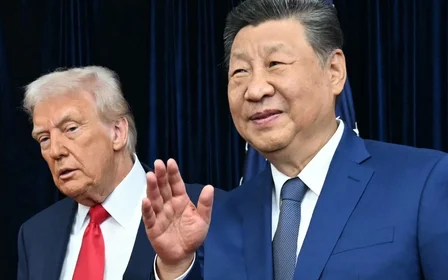
Alhalawany concurred, stating that “Cairo is emerging as one of a few points of convergence between Beijing and Washington”. He added that Wednesday’s “talks are significant but in ways that do not conflict with Egypt-US relations”.
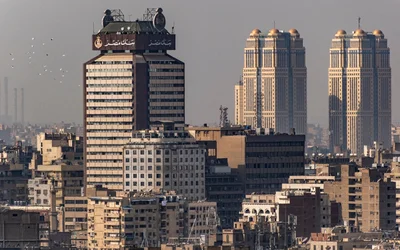
Cairo has balanced its position between Beijing and Washington before. Sisi has visited Beijing eight times since taking office in 2014, most recently in 2024. China was a major financier of the central business district in Egypt’s new administrative capital, as well as the light-rail line connecting it to Greater Cairo.
Bilateral trade between the two countries reached roughly $20.8 billion in 2025. The US, by comparison, provides Egypt roughly $1.4 billion in foreign assistance annually and recorded a bilateral trade volume exceeding $12 billion in 2025.
Wednesday’s joint statement also called for reform of “the international system and international financial institutions to make them fairer, more representative of developing countries”.
As Alhalawany sees it, “China favours change as an aspiring global power, and Egypt views that the current system is unfair to developing countries”.
How that tension shapes Cairo’s next move remains unresolved. Egypt has not announced a decision on Huawei’s bid, and no American company has confirmed a competing offer. As for the agreement that defined Wednesday’s visit, it is set to take shape along the Suez Canal.
Middle East Eye delivers independent and unrivalled coverage and analysis of the Middle East, North Africa and beyond. To learn more about republishing this content and the associated fees, please fill out this form. More about MEE can be found here.