UAE-linked networks supplying weapons and fighters for Sudan atrocities, UN finds

Foreign weapons, military technology and mercenaries are sustaining Sudan’s war and enabling attacks that may amount to war crimes, a United Nations investigation has found.
A report by the Independent International Fact-Finding Mission for the Sudan made public on Thursday found “reasonable grounds to believe” that a transnational network supplied the paramilitary Rapid Support Forces (RSF) with weapons, logistical assistance, training and foreign personnel.
The network included companies, intermediaries and individuals operating in or through the United Arab Emirates, Colombia, Chad, Libya and Somalia.
Though it denies the accusation, there is widespread evidence, including extensive reporting by Middle East Eye, linking the UAE with the supply of arms and other goods to the RSF.
Rights groups have recently filed two communications with the International Criminal Court requesting it to investigate the role of foreign actors, particularly senior officials from the UAE, in allegedly aiding and abetting RSF atrocities.
New MEE newsletter: Jerusalem Dispatch
Sign up to get the latest insights and analysis on Israel-Palestine, alongside Turkey Unpacked and other MEE newsletters
In their report this week, UN investigators also found preliminary evidence that foreign-supplied drones had expanded the long-range capabilities of the Sudanese Armed Forces (SAF), allowing it to strike targets deep inside RSF-controlled territory.
“The consequences of this external support are being felt most acutely by civilians,” Mohamed Chande Othman, chair of the fact-finding mission, said.
“This external support has not brought greater protection for civilians. Instead, civilians are paying the price through attacks on homes, hospitals, schools, markets and places of refuge.”
'The consequences of this external support are being felt most acutely by civilians'
– Mohamed Chande Othman, UN investigator
More than 1,000 civilians were killed in drone attacks between January and May 2026 alone, according to figures cited in the report.
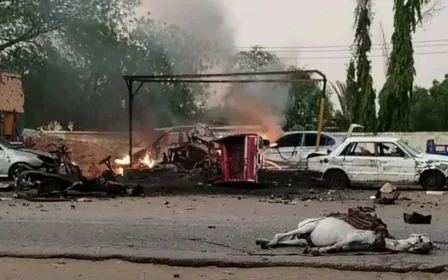
The mission documented RSF strikes on a kindergarten, hospital and displacement shelter, as well as attacks by the Sudanese army on hospitals, markets, a wedding and a court session.
In Kalogi, South Kordofan, successive RSF drone strikes hit Nabaa al-Hanan kindergarten, people responding to the initial attack, and a nearby hospital on 4 December 2025.
The assault killed 114 people, including about 60 children, and wounded 35 others. Investigators found no evidence that either the kindergarten or Kalogi Rural Hospital was being used for military purposes.
The RSF also struck a former International Organization for Migration building sheltering displaced families in Kulba, killing at least five civilians, including children.
The report said the attacks failed to meet international humanitarian law requirements governing the verification of targets, distinction between civilian and military objects and precautions during attacks.
Directing attacks against civilians, hospitals and educational facilities may constitute war crimes, it added.
The army was meanwhile found to have carried out successive strikes on Ad-Da’ein Teaching Hospital in East Darfur on the first day of Eid al-Fitr in March.
At least 70 people were killed and 146 injured, while the hospital – the principal referral facility for more than two million people – was rendered inoperable.
The mission examined claims that wounded RSF fighters had been treated there, but said caring for injured combatants did not strip the hospital of its protected status.
It also attributed strikes on Abu Zaima market in North Kordofan and Yabus market in Blue Nile to the army, finding no identifiable military targets at the points of impact. If civilian sites were deliberately targeted, the attacks may amount to war crimes, investigators said.
‘Hallmarks of genocide’
The report devoted particular attention to external assistance received by the RSF during its operations in Darfur.
It found that weapons, personnel and supplies were transported through interconnected air, maritime and land routes involving Bosaso in Somalia’s Puntland region, southeastern Libya and Chad.
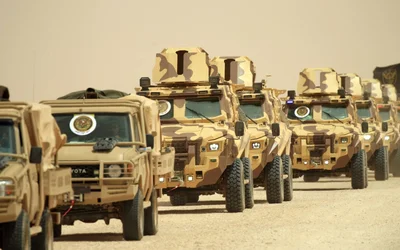
The equipment included Chinese-made NORINCO AH-4 howitzers, FK-2000 air defence systems and CH-95 reconnaissance and strike drones. Some of the materiel was consistent with equipment previously exported to the UAE, the mission said.
Witnesses described recurring cargo flights originating in the UAE and travelling through Chad, after which supplies and foreign contractors were moved into RSF-controlled territory.
The investigators stopped short of attributing the network’s conduct to the Emirati state. However, they concluded that individuals and entities operating from, registered in or linked to the UAE played a “significant role” in recruiting, financing and transporting military contractors and providing other support to the RSF.
The UAE rejected allegations that it supplied arms or facilitated foreign fighters, telling investigators that it had remained neutral and that its own inquiries found no evidence connecting entities under its jurisdiction to mercenary activity.
The mission nevertheless urged Abu Dhabi to undertake stronger investigations and enforcement action against companies and individuals allegedly operating from its territory.
Colombian contractors played a particularly important role in the RSF’s drone, artillery and air defence operations, the report found.
Up to 2,000 former Colombian military personnel may have been recruited since August 2024. Some were reportedly trained at a military-style facility in Ghayathi, in the UAE, before travelling to Sudan through Somalia, Libya or Chad.
Contractors belonging to a unit known as the “Desert Wolves” were present around el-Fasher before, during and after its takeover by the RSF, operating drones, artillery and other advanced systems.
“This support fed into RSF operations in Zamzam camp and later during the takeover of el-Fasher, where the mission documented grave violations and international crimes, including conduct displaying hallmarks of genocide,” Mona Rishmawi, a member of the mission, said.
The mission has previously found that RSF forces and their allies committed war crimes and crimes against humanity in el-Fasher, while their conduct towards non-Arab communities displayed hallmarks of genocide.
Recruiters named
Although investigators identified several foreign individuals and entities, the report publicly named only people already designated by the UN Security Council’s Sudan sanctions committee.
They included retired Colombian colonel Alvaro Andres Quijano Becerra, the founder of one of the principal companies involved in the recruitment network, who was based in Abu Dhabi.
'Accountability cannot stop with those who carry out the attacks'
– Joy Ngozi Ezeilo, UN expert
His wife, Claudia Viviana Oliveros Forero, allegedly coordinated recruitment inside Colombia. Both were sanctioned by the Security Council in April for recruiting and deploying former Colombian soldiers to Sudan.
The mission said it was retaining confidential dossiers on other suspects and could share them with judicial and accountability bodies.
Colombia acknowledged that Colombian companies and individuals had recruited contractors for deployment to Sudan but said the state had neither directed nor supported their activities.
The mission made no finding of Colombian state responsibility.

Under international criminal law, individuals who knowingly provide practical assistance that substantially contributes to crimes may be held responsible for aiding and abetting, even where their assistance was not indispensable to the offence.
“Accountability cannot stop with those who carry out the attacks,” mission member Joy Ngozi Ezeilo said.
Investigators called for inquiries covering the entire chain of responsibility, including people who order, finance, supply or otherwise facilitate international crimes.
The mission also urged the Security Council to expand the existing Darfur arms embargo to cover the whole of Sudan, and called on states to halt weapons, drone and technology transfers where there was a substantial risk they could facilitate serious violations.
Sudan’s war began in April 2023, following a power struggle between army chief Abdel Fattah al-Burhan and RSF commander Mohamed Hamdan Dagalo, also known as Hemedti.
The war has killed at least tens of thousands of people, displaced more than 13 million, and driven more than 19.5 million people to the brink of famine, prompting what the UN and European Union have described as the world's largest humanitarian and displacement crisis.
Both parties to the conflict have been accused of widespread atrocities, while repeated international efforts to secure a ceasefire have failed.
Middle East Eye delivers independent and unrivalled coverage and analysis of the Middle East, North Africa and beyond. To learn more about republishing this content and the associated fees, please fill out this form. More about MEE can be found here.