Iranian press review: Cheers erupt as US warships come under fire

Ultra-conservatives praise attacks on US warships
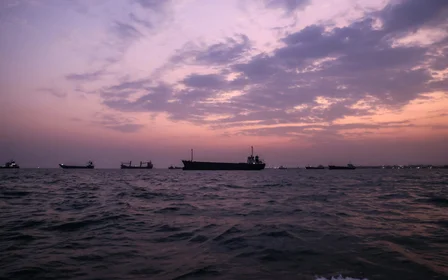
A missile attack by the Islamic Revolutionary Guard Corps targeting an American aircraft carrier and a destroyer on Saturday has triggered a wave of celebration among ultra-conservative factions inside Iran.
Despite official reports indicating that the attacks were repelled, confirmation of the strikes by US Central Command prompted a strong reaction in Tehran among supporters of continuing the war with the US, who viewed the escalation as a victory.
The Hamshahri daily praised the attack, framing it as "only a warning" that would lead to missiles "striking" US vessels if the US military and economic pressures persist.
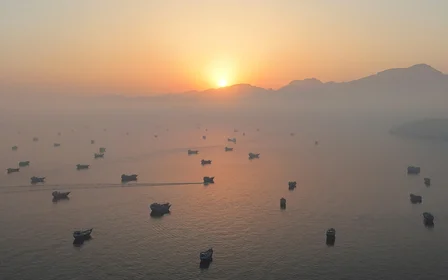
"With the deepening of tensions in the Strait of Hormuz, the US naval fleet is more exposed to being hit by Iranian missiles than ever before; an issue that increases the risk of a devastating blow to the US military," Hamshahri wrote about the incident.
New MEE newsletter: Jerusalem Dispatch
Sign up to get the latest insights and analysis on Israel-Palestine, alongside Turkey Unpacked and other MEE newsletters
The Qods daily also lauded the attacks under the headline: "Warships in the Crosshairs of Missiles".
Qods said this phase of escalating military tension between the two countries demonstrated that commercial vessels and oil and gas tankers would no longer be the only targets of Iranian forces.
"Iran is showing that it does not view the US military warships enforcing the blockade as elements outside the battlefield. If this logic becomes established, the 'Tanker War' will not just be a war over tankers," the daily added.
Scores of people, including six women, executed in August
At least 82 people were executed in Iran in August, including six women, according to Iran Human Rights, a Norway-based rights group.
Three of those executed had been arrested during nationwide anti-establishment protests in January, the group said.
Six women were among those executed, marking the highest monthly number of executions of women in 2026, according to the report.

Mahmood Amiry-Moghaddam, director of Iran Human Rights, said executed women in Iran were victims of more than the death penalty itself.
"Women who are executed in Iran are not only victims of the inhumane death penalty; many of them have been victims of structural discrimination, violence and a lack of legal protection for years before reaching the gallows," he said.
In recent months, numerous political and human rights activists in Iran have condemned the rise in executions and warned that the authorities are using the execution of political protesters as a tool to consolidate their power while facing military attacks by the US and Israel.
The latest report from Iran Human Rights suggests that those warnings have been borne out. According to the group's data, at least 528 people were executed in Iran during the first eight months of 2026. Of them, 29 were arrested during the January protests, while two were detained during the 2022 "Women, Life, Freedom" protests.
The report said 13 political prisoners were also executed in 2026 because of their alleged affiliation with banned political groups, while 14 others were hanged on espionage charges.
The remaining executions were related to crimes including murder and drug offences, according to the report.
US wedding strike survivors raise concerns over lack of medical facilities
The Etemad daily has reported on the fate of people who lost family members in the US missile strike at a wedding on 1 September, highlighting their request to address a lack of medical equipment and facilities in southern Iran.
Ali Taheri, whose 43-year-old wife was killed in the strike, told Etemad that the local clinic lacked basic equipment needed to treat those wounded in the attack.
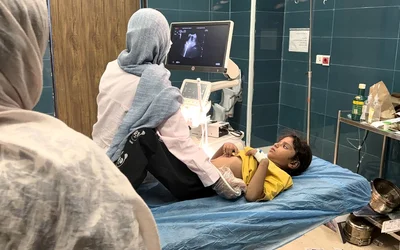
"The clinic, which is supposed to serve 50,000 to 60,000 people, cannot provide proper services and does not have oxygen. If there had been oxygen there, my wife would not have died," he said.
"My wife was killed and is gone, and she will not come back, even if her story is written about a thousand times. We must think about the condition and pain of those who are still alive."
Behrouz Mallahi, another resident of Kuhestak, also highlighted a lack of emergency responders during the attack.
He said rescuers had to travel to Kuhestak from the neighbouring cities of Sirik and Minab, forcing local residents to transport the wounded to medical facilities themselves.
Etemad also reported the lack of psychological support for those affected by the attack.
Mallahi said his 12-year-old daughter, Ayesha, who was wounded in the US strike, was discharged from hospital after spending several days in intensive care but had not mentally recovered.
According to her father, after returning home from hospital, Ayesha said she no longer wanted to go back to Kuhestak because she was afraid of being attacked again. Her younger brother also preferred to "remain in hospital" because he feared another attack.
Rouhani's call for strategy referendum triggers backlash
Former President Hassan Rouhani has sparked political debate after calling for a public vote on whether Iran should continue its confrontation with the US. His remarks have drawn fierce backlash from conservatives.
Speaking to a group of former provincial governors, Rouhani suggested holding a public vote to determine the country's strategic direction.
"If we say to the people that our plan is to fight the world's big powers for another 20 years, and they accept it, then very good, let's continue. But if the people do not accept it and show us another way, do we not want to accept their opinion?" he was quoted as saying.
His remarks angered ultra-conservative factions, who accused Rouhani of promoting surrender.
On Tuesday, Hossein Shariatmadari, editor-in-chief of the Kayhan daily, criticised Rouhani's position and called for a judicial investigation into his comments.
Similarly, conservative lawmaker Mahmoud Nabavian rejected the idea of holding a referendum on defence issues, accusing Rouhani of serving US interests.
In a post on X, Nabavian wrote: "The cowardly opportunists who seek to create a false dichotomy of war and peace in the country are, in truth, aiming to surrender the great and powerful Iran to their [American] masters."
Middle East Eye delivers independent and unrivalled coverage and analysis of the Middle East, North Africa and beyond. To learn more about republishing this content and the associated fees, please fill out this form. More about MEE can be found here.