Sahel instability pushes Algeria to rethink its long-standing non‑intervention doctrine

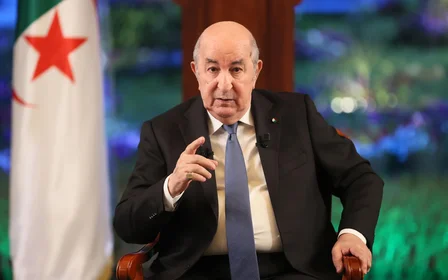
At the request of Nigerien authorities and on the instruction of President Abdelmadjid Tebboune, Algeria announced on 30 August that it had deployed four Su-30 fighter jets, a refuelling aircraft and a military transport plane to help its African neighbour respond to a destabilisation attempt.
The support mission came the day after an aborted coup attempt in Niger, a country led by General Abdourahamane Tiani since he came to power through a military putsch in July 2023.
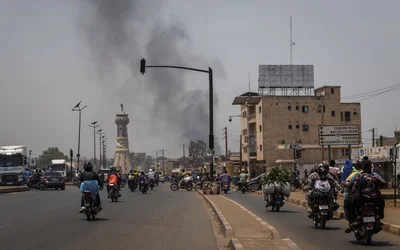
Niger, which shares 950km of border with southern Algeria, is experiencing a new surge in tensions. On 28 and 29 August, a mutiny targeted several strategic sites in the capital, Niamey, including the presidential palace, Diori-Hamani International Airport and Military Base 101.
According to a senior investigator at The Sentry, a non-profit investigative and policy organisation, the mutineers’ “grievances are mainly military and institutional”.
“These are soldiers who have watched their units take heavy losses while the Presidential Guard, Tiani’s own force, remains concentrated around the capital, with better equipment and much better treatment,” the researcher, who wished to remain anonymous, told Middle East Eye.
New MEE newsletter: Jerusalem Dispatch
Sign up to get the latest insights and analysis on Israel-Palestine, alongside Turkey Unpacked and other MEE newsletters
“Around 18 soldiers were killed near Dosso the week before the mutiny, and this has been taking place in Niger since the start of the many insurgencies, sometimes with traumatic results for entire army units,” they added.
In December 2019, 71 Nigerien soldiers were killed in an attack on the Inates military base, while 89 others were killed in an attack on the Chinagodrar military post a month later. Both attacks, carried out near the Malian border, were claimed by Islamic State in the Greater Sahara.
General Tiani faces a two-fold pressure: the threat of armed militant groups such as Islamic State, and tensions within his own forces. An attack claimed by IS struck Niamey in January.
For Algiers, this deteriorating security situation raises a strategic question: how long can it remain on the sidelines while chaos spreads along its borders and armed groups, trafficking networks and political instability take root in the Sahel?
The Sahel, Algeria’s ‘strategic depth’
Analysts view Algeria’s public deployment of military assets to Niger as a sign that it may be moving away from its long‑standing doctrine of non‑intervention abroad, a principle upheld since its independence from France in 1962.
“For Algeria, it is no longer possible to defend its security and national interests solely by protecting its borders. It has to defend its strategic depth,” explains Riccardo Fabiani, North Africa project director at the International Crisis Group.
In a sign of a notable shift, Algiers chose to communicate openly about the operation.
The official press agency reported it, while a video showed Algerian aircraft arriving on Nigerien soil. A press conference was then held with Nigerien officials and members of the Algerian military delegation led by Major General Rachid Cheblaoui.
‘This is part of a new, more pragmatic foreign policy in which Algeria is ready to play a security and military role, and no longer exclusively a diplomatic one’
- Riccardo Fabiani, International Crisis Group
“This is part of a new, more pragmatic foreign policy in which Algeria is ready to play a security and military role, and no longer exclusively a diplomatic one, in order to pursue its objectives in an environment that is changing very rapidly,” Fabiani told MEE.
This show of force also serves another purpose: asserting Algeria’s presence in the face of foreign powers seeking to strengthen their influence in the region.
“There are traditional and historical ties between Algerian and Nigerien societies. There is also an interest in protecting the sovereignty of Sahel countries against certain interference from states such as Morocco, Israel or the UAE,” Fabiani added.
“Algeria does not want foreign interference, either official or unofficial, in Niger’s political and security affairs.”
The Sahel has become an area of interest for several states. Morocco has strengthened its cooperation with Niger since the 2023 military coup; Turkey supplies combat drones to the Nigerien army; more than 300 Italian soldiers are deployed at Base 101; and Russia is present through the Africa Corps paramilitaries, who helped foil the August coup attempt.
Algiers views these foreign involvements with suspicion, particularly those of the United Arab Emirates, which it accuses of indirectly financing armed and separatist groups in the Sahel, including through multimillion-dollar ransom payments for hostage releases.
After months of political tensions, Algiers officially severed diplomatic ties with Abu Dhabi on 10 September.
Human, security and economic interests
While the porous Algerian-Nigerien border allows ties to be maintained between local populations, it also represents a major security challenge for Algiers.
“From a sociological standpoint, we have transhumant populations on our southern front. The military approach is only a palliative; we must move toward strengthening and integrating these states to turn them into zones of prosperity,” said Mourad Preure, an Algerian energy expert and strategy consultant.
Economically, Algiers and Niamey have strengthened cooperation in recent years, particularly in the energy sector.
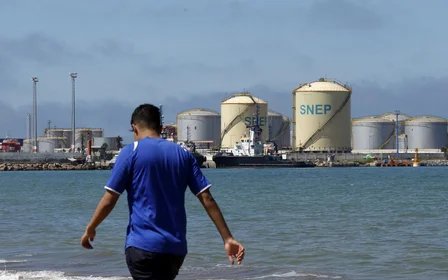
“The two countries have been rebuilding cooperation around the Bilma oil block in northeastern Niger and the Trans-Saharan Gas Pipeline, the proposed 4,200km route from Nigeria through Niger to Algeria,” explains the senior investigator from The Sentry.
“Morocco is backing an alternative project - the roughly 5,600km Nigeria-Morocco Atlantic Gas Pipeline - and has argued that Niger’s instability makes the trans-Saharan route unworkable. Keeping Tiani in place therefore has an economic dimension as well as a security one, and all of this is in the making, not just words, as Algeria just began building its own section in the Adrar region in June,” they added.
According to Preure, military support is only one component of a broader strategy aimed at stabilising Niger through development.
“Algeria supports electricity production in Niger and has provided it with small power plants. The gas pipeline will generate passage fees, creating a source of energy and revenue for Niger,” he told MEE.
“Algeria is also developing a corridor, with a trans-Saharan road and railway, that will allow the transit of goods and passengers for better integration,” he added.
For Algiers, Niger’s stability thus becomes both a security and economic issue: protecting its border, but also its investments and structuring projects in the region.
First cracks in Algerian non-interventionism
The question now is whether this military deployment in Niger marks a genuine break with Algeria’s doctrine of non-intervention.
Algeria did deploy troops and aircraft as part of an Arab coalition in support of Egypt and Syria during the 1967 and 1973 wars against Israel.
But these episodes were exceptions to its principle of refraining from military action beyond its borders - an implicit pillar of Algerian foreign policy since gaining independence in 1962, rooted in its stance of non‑alignment and non‑interference in the internal affairs of other states.
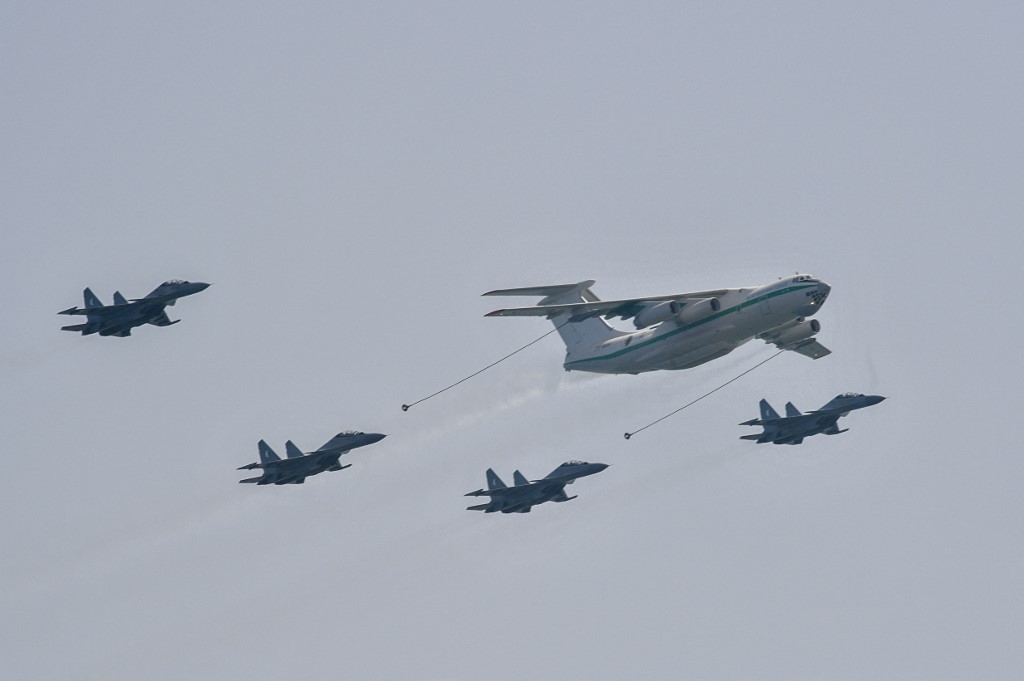

This military and strategic posture was never formalised in the constitution, so legal ambiguity has always surrounded the issue. Nonetheless, in practice, non-interventionism remained one of the cardinal principles of Algerian foreign policy.
Algiers thus favoured discretion, relying on diplomacy and mediation. The 2015 Algiers Accord - concluded between Malian authorities and northern Tuareg rebel groups, then repudiated in January 2024 by Mali’s junta - is a notable example.
But a turning point began in 2020.
A year into his presidency, Tebboune pushed through a constitutional revision, amid the Hirak pro‑democracy movement that toppled Abdelaziz Bouteflika in 2019 and persisted until 2021.
Article 91 of the new constitution grants the president the authority to decide on “sending units of the National People’s Army abroad after approval by a two-thirds majority of each chamber of Parliament”.
Article 31 authorises participation in peacekeeping operations “within the framework of respecting the principles and objectives of the United Nations, the African Union and the Arab League”, while ensuring that Algeria does not “resort to war to undermine the legitimate sovereignty and freedom of other peoples”.
At the time, this amendment sparked debate within civil society, particularly among Hirak protesters, who strongly opposed any potential deployment of Algerian soldiers abroad.
Yet the deployment of military reinforcements to Niger - which, for now, does not involve sending troops other than the staff that was dispatched to operate the aircraft - has not been approved by either chamber of parliament.
“From the Algerian point of view, it is not really a question of sending troops or maintaining a military presence that could become directly involved in operations in these countries,” Fabiani said.
“That would be problematic, rather difficult to manage politically, even domestically. But sending equipment, yes.”
Before this deployment, Algiers had already strengthened its military support to Niamey, including donating four helicopters and military equipment in early August.
But the change lies elsewhere: for the first time, Algiers seems to be publicly assuming its involvement, turning it into an official communication effort - and thereby sending a political signal as much as a military one.
A strategic turn or a one‑off?
Whether this operation is an isolated episode or the first sign of a deeper transformation of Algeria’s security doctrine remains to be seen.
No analyst contacted by MEE is willing to make predictions, as everything depends on how the regional security situation evolves. Observers wonder whether this is simply a show of force.
According to Preure, “when Algeria is asked, it provides assistance as a neighbouring state, but it is not its role to ensure the national defence and security of these countries”.
The senior researcher at The Sentry similarly argues that Algerian intervention will not automatically extend to neighbouring states, but will be decided on a case-by-case basis.
‘When Algeria is asked, it provides assistance as a neighbouring state, but it is not its role to ensure the national defence and security of these countries’
- Mourad Preure, energy expert and strategy consultant
Mali, its other main southern neighbour, is a good case in point.
Although relations between Algiers and Bamako have recently warmed after years of diplomatic tension - largely due to disputes over the Tuareg question and the deteriorating security situation in northern Mali - this rapprochement does not necessarily imply readiness for military intervention.
“A deployment to Mali on the Niger model doesn’t look close,” the researcher said.
“Relations with Niger are much easier, as the Tuareg issue does not have the same weight in the Algeria-Niger relationship. This means that Algeria can send aircraft and helicopters without stepping directly into the conflict that has poisoned its relationship with Bamako.”
In other words, Algeria can provide limited military support to Niger without being drawn into the highly sensitive Tuareg-related tensions that have long complicated its relationship with Mali.
However, faced with the continued deterioration of the Sahel, Algiers appears to consider that it can no longer simply defend its border: it must now act on its strategic environment.
After Egypt, Algeria is the second-largest military power in Africa and has the continent’s biggest defence budget. If it becomes more involved, it could reshape the security dynamics in the Sahel.
Middle East Eye delivers independent and unrivalled coverage and analysis of the Middle East, North Africa and beyond. To learn more about republishing this content and the associated fees, please fill out this form. More about MEE can be found here.