Gaza students take Ireland to court over visa refusals

When Hazem Faris, 19, received a full scholarship to study Computer Science at Ireland’s South East Technological University, it felt like he had the opportunity to “achieve a dream”, he said.
Faris lives in Gaza, and since 2023 he and his family have been forced to evacuate their homes eight times. However, when the Irish government denied Faris’s visa, his dreams became impossible.
Faris is one of the at least 103 Palestinian students who have had their visas rejected in Ireland this year, with visa approval rates dropping from 83.8 percent in 2025 to just 27.5 percent this year.
Last week, a team of lawyers challenged Minister of Justice Jim O’Callaghan’s refusal, asking him to reverse the decision.
The instructed barristers are Blinne Ni Ghralaigh, who represented South Africa at the International Court of Justice in its genocide case against Israel, and Eamonn Dornan. The solicitors include Sinead Marmion and Alannah Faulkner, alongside several junior counsel.
New MEE newsletter: Jerusalem Dispatch
Sign up to get the latest insights and analysis on Israel-Palestine, alongside Turkey Unpacked and other MEE newsletters
The legal action was launched last week, beginning with the case of Palestinian student Hafez Alrayyes, from Gaza.
Marmion said a further 26 cases are in the pipeline. “I think the other side is worried about the size and speed of [the case],” Marmion told Middle East Eye.
Marmion and her colleagues made an administrative appearance in the High Court on Tuesday, confirming that evidence and legal submissions will be with the court this week.
“We are back in court to see how ready the other side is with a view to expedite a hearing next week, probably Monday,” she said.
“The significance of today is they hope to get our cases running very soon,” Marmion told MEE following the hearing. “The court recognised the urgency of the case and it’s willing to make allowances and give time to the cases.”
The case is “grounded in our view that the minister’s position is irrational, unreasonable, and fails to react to the necessary urgency of our client’s situation and is discriminatory”, Phoenix Law said in a press release.
“The Minister is asked to simply reverse his position and allow the visa for our client who is highly motivated to learn skills to be able to rebuild his life and his country with those necessary skills.”
'I never stopped learning'
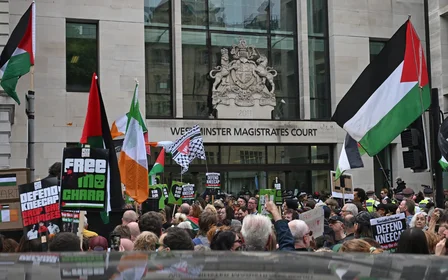
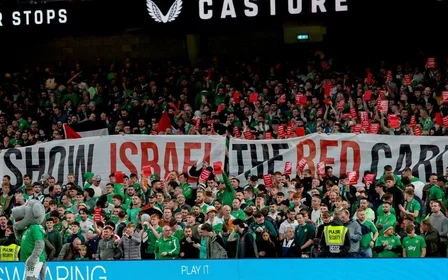
The Let Them Study movement has gained traction online, but also on Ireland's streets and in the Dail, the lower house of the Irish parliament.
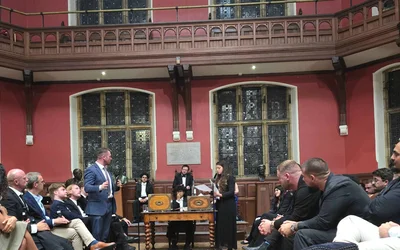
“[The Department of Justice] are asking people to access documents when most of the buildings in Gaza have been razed to the ground, and 70,000 people or more are now dead,” Sinead Gibney, Social Democrat MP for Dublin Rathdown, told O’Callaghan in the Dáil last week, adding: “When, Minister, is your government going to read the room and reverse your decision to block these students from studying here in Ireland?”
In Faris's case, for instance, his rejection letter states that “the Visa Officer is not satisfied that the finances shown are sufficient for the purposes of the visa”, despite Faris having a full scholarship.
The letter goes on to say that Faris has “insufficient evidence of strong obligations to return to your country” and that there are “gaps in education and employment not accounted for”.
For Faris, the decision was as heartbreaking as it was confusing. “I lost my home and all my belongings, including my books and study materials. I tried to study amid severe shortages of food and water, power cuts, and the constant fear of bombardment,” he told MEE, with the sound of drones in the background.
“I never stopped learning,” he said, adding that he still finished his studies with a grade of 94.4 percent.
His rejection letter appears to echo those received by other Palestinian students.
“There is an unignorable irony in the fact that Ireland intervened in South Africa’s genocide case against Israel at the International Court of Justice, but cannot recognise the issues that a genocide would pose for students providing original documents in a visa application,” Phoenix Law said in its statement.
'All I want is an opportunity to learn, build my future, and one day use what I have learned to serve my people and my community'
- Hazem Faris, Gaza student
O’Callaghan told Gibney in the Dail that there was a “well-established process” for issuing student visas.
On the streets, the Let Them Study movement and the case are being supported by students who had hoped Palestinian students like Alrayyes and Faris would join their communities this autumn.
“They deserve to be starting universities as I speak, in my classes, sat next to me, developing their skills to one day rebuild Gaza,” said Sean Radcliffe, chair of Trinity BDS, an affiliate of the Boycott, Divestment, Sanctions (BDS) movement at Trinity College Dublin.
Radcliffe was one of five students who chained themselves to the Department of Justice after the visas were rejected, and he is now volunteering to support the students' legal cases.
Similar student protests featuring “empty chairs” took place last week.
For students like Faris, the legal challenge is a final avenue of hope.
“There is now a legal challenge relating to this case, and I hope the judge will consider our case fairly and that we will receive a real opportunity to continue our education. I hope the outcome will be fair for all Palestinian students facing similar circumstances,” he told MEE.
“All I want is an opportunity to learn, build my future, and one day use what I have learned to serve my people and my community.”
Middle East Eye delivers independent and unrivalled coverage and analysis of the Middle East, North Africa and beyond. To learn more about republishing this content and the associated fees, please fill out this form. More about MEE can be found here.