Chin up, Zack! It was never going to be plain sailing for the new-look Greens


In the end, for all the sound and fury, Labour held Holborn and St Pancras with relative ease. Sagal Abdi-Wali’s majority of just under 3,400 was down from Sir Keir Starmer’s 11,000 margin at the last general election in 2024, but on a substantially lower turnout of 38 percent.
The Green Party in England and Wales’ hopes of making a major breakthrough in another Labour heartland, as with Gorton and Denton in February, were dashed on this occasion.
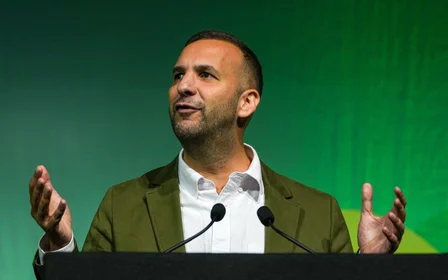
No doubt the result will come as something of a disappointment for the Greens, and for their leader and by-election candidate Zack Polanski. However, the Labour Party has held the constituency ever since its creation in 1983 and, with Starmer gone and Andy Burnham still enjoying something of a honeymoon period, winning in Holborn and St Pancras was always a lot to ask of the Greens, although they did manage to increase their share of the vote by 22.3 percent.
Even if this is something of a setback in the near term, the Greens’ showing in Holborn and St Pancras isn’t necessarily a verdict on their longer-term prospects. But with some of the party’s old guard visibly uncomfortable with its left-populist direction under Polanski and now making their discontent increasingly public, the party faces a choice between panicking and retreating, or holding firm and building on its very real recent gains.
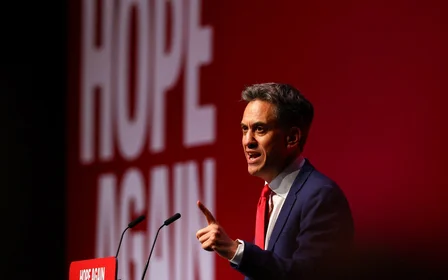
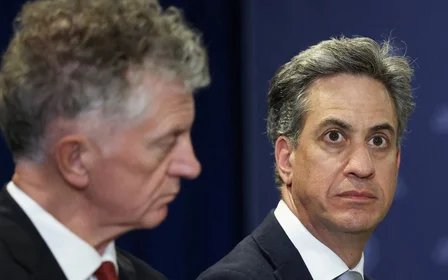
What is clear is that Burnham’s rise to the leadership of Labour, and the premiership, has changed the political calculations considerably. Burnham is a far more capable and skilled politician than Starmer ever was; much more personable, better able to read changes in the political winds and adjust to them.
New MEE newsletter: Jerusalem Dispatch
Sign up to get the latest insights and analysis on Israel-Palestine, alongside Turkey Unpacked and other MEE newsletters
Starmer, meanwhile, is now free to do what he probably always wanted: flatter his way into the top job at Nato, where he can deal solely with other elites and not have to bother with the little people.
Altering course
Owen Jones, among others, has argued that the Greens can already take much of the credit for changing the political landscape, and for making Labour change direction. Not only was Starmer forced out, but Burnham himself has felt it necessary to make some policy and rhetorical concessions to the left.
It is still early days for Burnham, and many voters remain prepared to give him the benefit of the doubt. Compared to Starmer’s intransigence and inflexibility, even modest concessions can look more significant than they really are.
The Greens made headway under Polanski precisely because the party has offered a more radical, outspoken alternative to Labour
However, this should not be confused with any fundamental alteration in Labour’s political orientation. The Greens would do well to remember that a Labour bounce was always likely, but also that such bounces are usually only temporary.
The fact that the Labour Party has enjoyed a modest revival under Burnham does not mean that the underlying grievances people held against it have vanished.
Predictably, the mainstream media have seized on the result in Holborn and St Pancras to push a crisis narrative, to imply that Polanski’s leadership of the Greens might be under threat and to frame the by-election result as a personal repudiation of him. Polanski is beginning to receive the Jeremy Corbyn treatment: his legitimacy continually questioned, every issue personalised regardless of the particular circumstances.
Caroline Lucas, who cuts an increasingly embittered figure, provided further ammunition in her appearance on Newsnight on Thursday night, shortly after polls had closed. When asked whether Polanski should resign, Lucas pointedly refused to defend him.
She then stepped up her attacks in a subsequent New Statesman article, arguing that the Zionism is Racism motion passed at the party’s conference last weekend “crosses a very significant red line”.
Lucas bemoans the fact that the motion “effectively denies Israel’s right to exist”, insisting that “Zionism is not a clearly defined, singular ideology”, but one that “means different things to different people, whether we like it or not”. These abstract theoretical distinctions, however, are worthless. In the real world, Zionism’s actual track record is one of ethnic cleansing, racism and genocide from the Nakba in 1948 to the present day. The burden is not on Palestinians or their supporters to sugarcoat it.
Some of the Green Party’s old guard, including Lucas, mutter darkly about “entryism” - as did the Labour right under Corbyn. But the party’s shift to the left is the product of a legitimate groundswell, not a clandestine takeover.
Polanski, of course, won the Greens’ leadership election last year with a colossal 84.1 percent of the vote. His support within the party remains very strong and, at present, there are no obvious rivals for the leadership. Anyone who attempted to challenge Polanski from his right would likely be humiliated.
The risk for the Greens is that they interpret every disappointment or hostile headline as evidence that they need to tone things down. But the party has made headway under Polanski precisely because it has offered a more radical, outspoken alternative to Labour, and it has, to an extent, forced Labour to steal its clothes. Retreating from this position back to a more innocuous, left-liberal stance would only take the Greens back to the margins.
As good as it gets
Furthermore, this is about as good as things are likely to get for Burnham. The structural conditions that fuelled the Greens’ earlier rise remain. A new analysis from the Joseph Rowntree Foundation warns that this Labour government is set to preside over the worst parliament for living standards in modern times, with average household incomes forecast to be lower in 2029-30 than when the party assumed office two years ago.
Burnham has insisted that he will not call an early general election before 2029. But Gordon Brown lived to regret not doing the same when he had the chance in 2007: a reminder that the political outlook can easily turn on a dime, and that no new prime minister is guaranteed a lasting honeymoon.
The Greens should therefore not allow the Holborn and St Pancras by-election to become a referendum on their entire project. They have time to develop their policies on living standards, including housing and public services, and to build a firmer presence in communities beyond their existing strongholds.
The Green Party has come a long way in a short space of time, but it was never going to be entirely plain sailing. It can emerge from this relatively minor setback more confident and better prepared for the next opening.
But the party must also learn to be steadfast against the growing media hostility it faces; it should articulate its position on Palestine clearly and consistently, resisting the temptation to flap whenever opponents and internal critics invoke one supposed red line or another.
It should ignore the siren song of the media and the political establishment, and reject any cynical efforts to hype up a single by-election defeat into a mandate for ditching entire planks of either its domestic or foreign policy.
The views expressed in this article belong to the author and do not necessarily reflect the editorial policy of Middle East Eye.
Middle East Eye delivers independent and unrivalled coverage and analysis of the Middle East, North Africa and beyond. To learn more about republishing this content and the associated fees, please fill out this form. More about MEE can be found here.