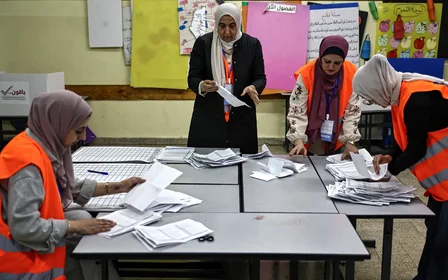
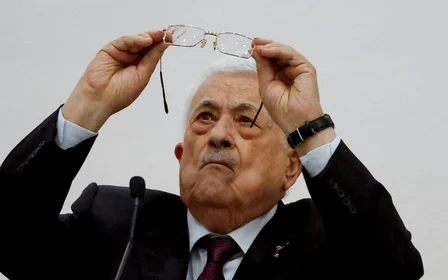
Hamas, Dahlan and Barghouti: Palestinian hopes fade as elections cancelled

Last week marked three years since 7 October 2023.
Over the years of covering Israel’s occupation of Palestine, I have developed an aversion to anniversaries. Almost every day in Palestine marks one of some sort: Nakba Day, Prisoners’ Day, the First Intifada, the Second Intifada. The list is long.
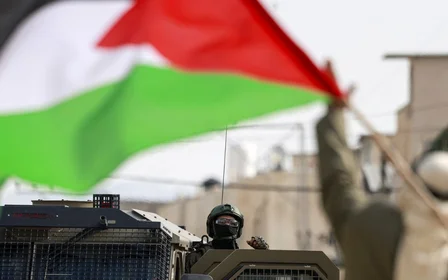
For this anniversary, Israel announced a shutdown of the West Bank, tightening the siege on Palestinians even further.
A senior contact in Fatah, the ruling party, called me. He wanted to tell me about the forthcoming Palestinian elections and how Mohammed Dahlan, the Gaza-born aide to UAE President Mohammed bin Zayed, was trying to return to Palestinian politics. Dahlan is living in exile in Abu Dhabi.
“I have news for you about the electoral coalition between Mohammed Dahlan and Hamas. They may run for the next election on one list,” the Fatah contact said.
New MEE newsletter: Jerusalem Dispatch
Sign up to get the latest insights and analysis on Israel-Palestine, alongside Turkey Unpacked and other MEE newsletters
So I went to see him in Bethlehem. We were the only customers in a restaurant that normally seats 1,500 people. The economy is dead in the city of Jesus.
My contact told me that 40 of Bethlehem’s hotels were closed and that a friend of his, who owns one of them, could not find a buyer - even at half its value.
Movement throttled
Like anyone trying to drive around the occupied West Bank, I checked different apps to see which roads and checkpoints were open or closed before heading to the meeting. These apps rely on information volunteered by Palestinian drivers, who update the situation on the roads to help one another navigate the occupation and get to work or school.
Last month, during the Jewish holidays, Israel shut all the checkpoints and gates into towns and villages.
A Middle East Eye reporter travelling from Ramallah to a small nearby village had to spend the night in her car with her husband and two children, after being stranded on the road.
Two days after my meeting with the optimistic Fatah contact, the PA announced that the elections had been cancelled
Hundreds of Palestinians faced the same ordeal, as Israeli military closures made every available route impossible. Meanwhile, Israelis enjoyed celebrating the holidays with their families.
To get to Bethlehem, I drove past the Har Gilo settlement, with its orderly rows of houses, green trees and paved streets, surrounded by a security wall and CCTV cameras to ensure that no Palestinian could get close to the Jewish colony.
As I approached Bethlehem, I reached a gate across the road, manned by a female Israeli soldier sitting in a bunker and pointing her gun at everyone who passed. On the left was a military base built on top of a Palestinian home confiscated from a local family.
Bethlehem is empty. The Covid-19 pandemic shut down its tourism industry, and it never had the chance to recover, as Israel’s occupation grew ever more brutal, and the genocide in Gaza raged just a short distance away.
Formidable challenge
I wanted to find out what Palestinian leadership had to offer at a time when everything was collapsing around us. So here we were: two Palestinians in an empty restaurant, clutching at straws.
My contact told me that the talks between Dahlan’s representatives and Hamas officials in Cairo were serious and going well. If successful, the coalition could bring together Hamas, Dahlan and Marwan Barghouti, the Fatah figure sometimes dubbed Palestine’s Nelson Mandela.
Barghouti has spent the past 24 years in an Israeli prison, but he consistently tops the polls.
In other words, these are three of the most popular forces in Palestinian politics. A joint electoral list bringing them together would pose a formidable challenge to the ageing Fatah leader, Mahmoud Abbas, and his increasingly moribund Palestinian Authority (PA).
My contact was animated. He seemed excited by the prospect of a Hamas-Dahlan electoral list and said he had even attended some of the talks in Cairo.
But Palestinians do not believe the election will ever go ahead. Abbas always finds an excuse to postpone or cancel it. That is why there has not been an election for 20 years.
And for as long as I can remember, there have been rounds of talks in Cairo between Hamas, Fatah and other Palestinian factions.
Why, I asked my contact, should I, as a Palestinian journalist, take these talks seriously or treat them any differently from those that came before?
He looked at me and said: “You are right.”
And the meeting ended.
Father separated from son
Across the road from the restaurant, I met Saleem, a disabled Palestinian man. We spoke about the collapse of Palestine’s economy and the poverty into which it has plunged people. He told me that his nine-year-old son, Akram, was all alone in an Israeli hospital.
The little boy had been hit by a car and transferred to a children’s hospital in Israel because hospitals in the West Bank could not provide the treatment he desperately needed. But for more than a month, Israel refused to grant Akram’s parents the permits to visit their son, leaving him alone and surrounded by strangers.
I asked Saleem whether the authorities had given any explanation for refusing to let the child see his family. At first, he said the permits were refused because Israel had closed the West Bank during the Jewish holidays.
Later, a social worker told him that the man responsible for issuing permits simply did not like Palestinians.

I left Bethlehem and went to visit Akram in the hospital, which sits in the heart of an exclusively Jewish neighbourhood of Jerusalem, just 10km from where his father and I had been talking.
Akram was the only Palestinian boy in the room. He had taught himself English and some Hebrew to navigate life in this Israeli world.
“Speak Arabic with me,” he asked.
Akram misses speaking his own language. The accident has left him almost completely disabled, with tubes delivering oxygen to keep him alive. He smiled as he told me about a machine that allows him to call his father using only his eyes.
On the wall near his bed are photographs of his parents holding him when he was younger, alongside pictures of him with his little sister.
I had asked Saleem whether I could tell my friends at Haaretz about Akram’s case, to see if they could speak to the authorities to help secure a visitor’s permit. But Saleem was afraid that doing so would only provoke the Israelis, leaving him punished and with no chance of obtaining permission to visit his suffering son.
“Maybe after the 7 October anniversary, they will consider my request for a permit,” Saleem said.
On the way back from the hospital, public buses rolled past. The words “If someone comes to kill you, rise up to kill him first” were written down the side of one.
Another simply said: “Occupation. Expulsion. Settlement.”
Two days after my meeting with the optimistic Fatah contact, the PA announced that the elections had been cancelled.
The views expressed in this article belong to the author and do not necessarily reflect the editorial policy of Middle East Eye.
Middle East Eye delivers independent and unrivalled coverage and analysis of the Middle East, North Africa and beyond. To learn more about republishing this content and the associated fees, please fill out this form. More about MEE can be found here.