The Rohingya case that could redefine the law on genocide
In the first week of September 2017, Antonia Mulvey was on the Bangladesh-Myanmar border, interviewing women and children who had fled across it days earlier.
“Women waited all day to talk to me and they'd had horrific things happen to them,” she told Middle East Eye. “What struck me when I listened to their stories was that they were asking me for justice.”
Mulvey was one of the first three investigators deployed by a UN fact-finding mission. Her brief was sexual violence and crimes against children.
Nine years later, the case that grew out of those accounts is nearing its end, with the International Court of Justice (ICJ) expected to rule in the coming weeks on whether Myanmar committed genocide against the Rohingya.
Mulvey, now executive director of Legal Action Worldwide (LAW), which represents Rohingya witnesses in the case, said that if the judges rule against Myanmar, it will be the first time the court has found a state responsible for committing genocide.
New MEE newsletter: Jerusalem Dispatch
Sign up to get the latest insights and analysis on Israel-Palestine, alongside Turkey Unpacked and other MEE newsletters
For many Rohingya, the ruling is about more than the past. “We need to fix the root cause,” one refugee told LAW researchers. “The best justice for us is to fix the root cause of the problem.”
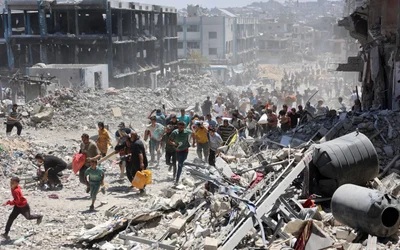
Legal experts say they also expect the outcome to have consequences for other ICJ cases involving allegations of genocide, most pressingly South Africa's case against Israel over its war against Palestinians in Gaza, where the confirmed death toll has reached almost 75,000 people.
Michael Becker, a professor of international law at Trinity College Dublin, described the case as a "crucial opportunity for the ICJ to clarify and develop the law on genocide” which, he said, would have "major repercussions" for the South African case.
Decades of persecution
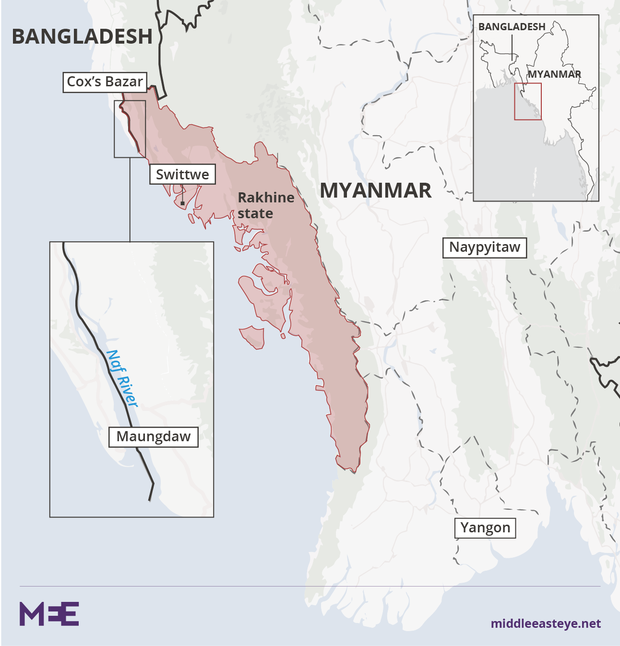
The Rohingya, a mostly Muslim minority, have lived for generations in western Myanmar’s Rakhine State. Northern Rakhine was the only part of the country where they formed a majority.
Myanmar's 1982 Citizenship Law left the Rohingya off the list of the country's officially recognised ethnic groups, leaving most of them stateless.
The state and its lawyers refer to the Rohingya as “Bengalis”, a term that casts them as migrants from Bangladesh.
For decades, restrictions on the Rohingya’s movement, marriage rights, education and access to healthcare have been documented. Hundreds of thousands fled to Bangladesh in waves of violence in 1978, and again in 1991 and 1992.
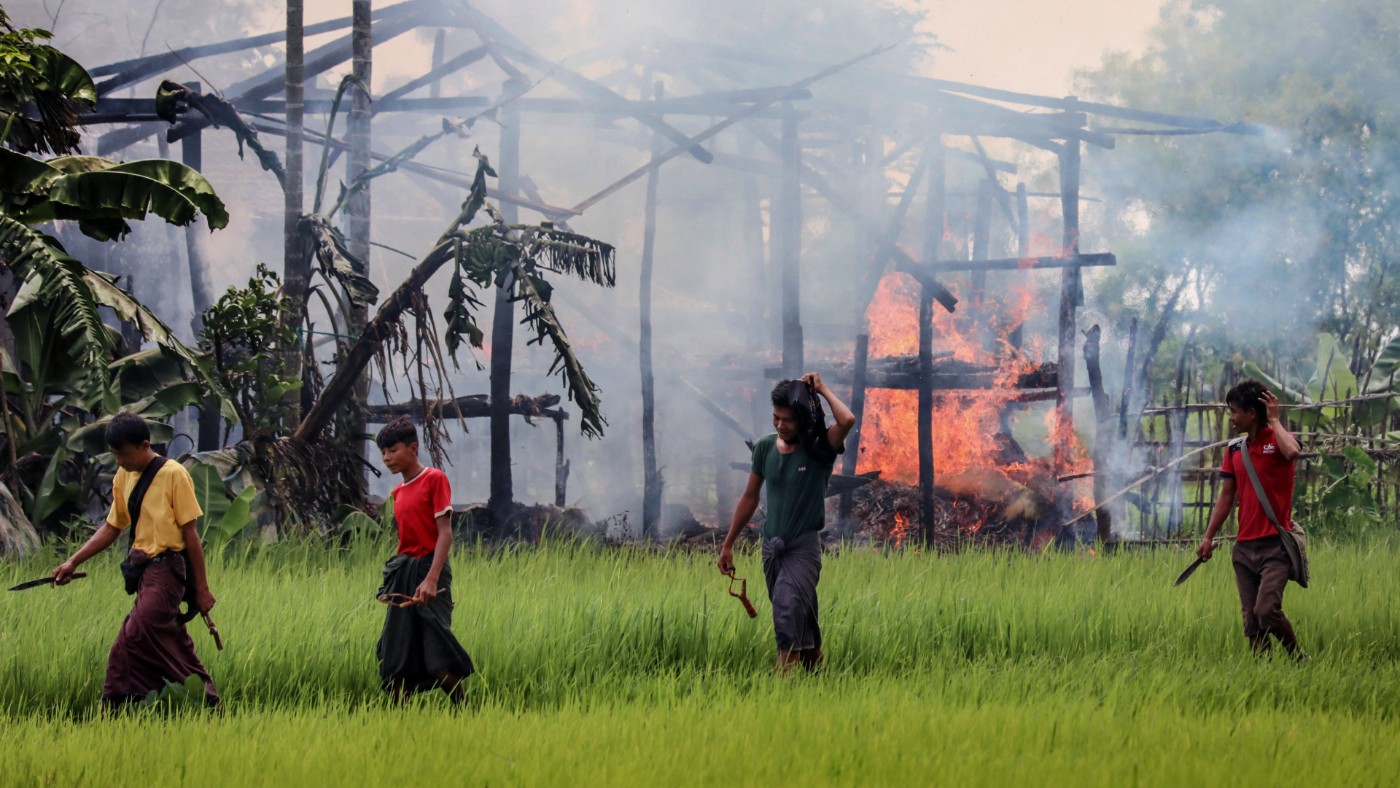

In 2012, clashes in Rakhine displaced about 140,000 people, most of them Rohingya. Many remain confined to camps around the state capital, Sittwe.
“Rohingya have been persecuted in Myanmar for decades,” said Salma, a Rohingya survivor who attended the ICJ hearings in January, in comments shared by LAW. She asked that only her first name be used.
For many refugees, justice now means one thing above all: citizenship. In a survey conducted by LAW of just under 500 refugees in the Cox's Bazar camps in Bangladesh, 86 percent of participants said citizenship and the right to identify as Rohingya were necessary for justice.
“We want [the] international community to destroy the 1982 law, and we hope they will do it,” one participant said. “We had Myanmar citizenship, and we were living there for a long time, and our citizenship should be restored. If they provide these two things, we will get everything.”
“They want justice, but they want citizenship,” Mulvey said. “They want to be acknowledged for what happened, and they want that land and property back.”
'Clearance operations'
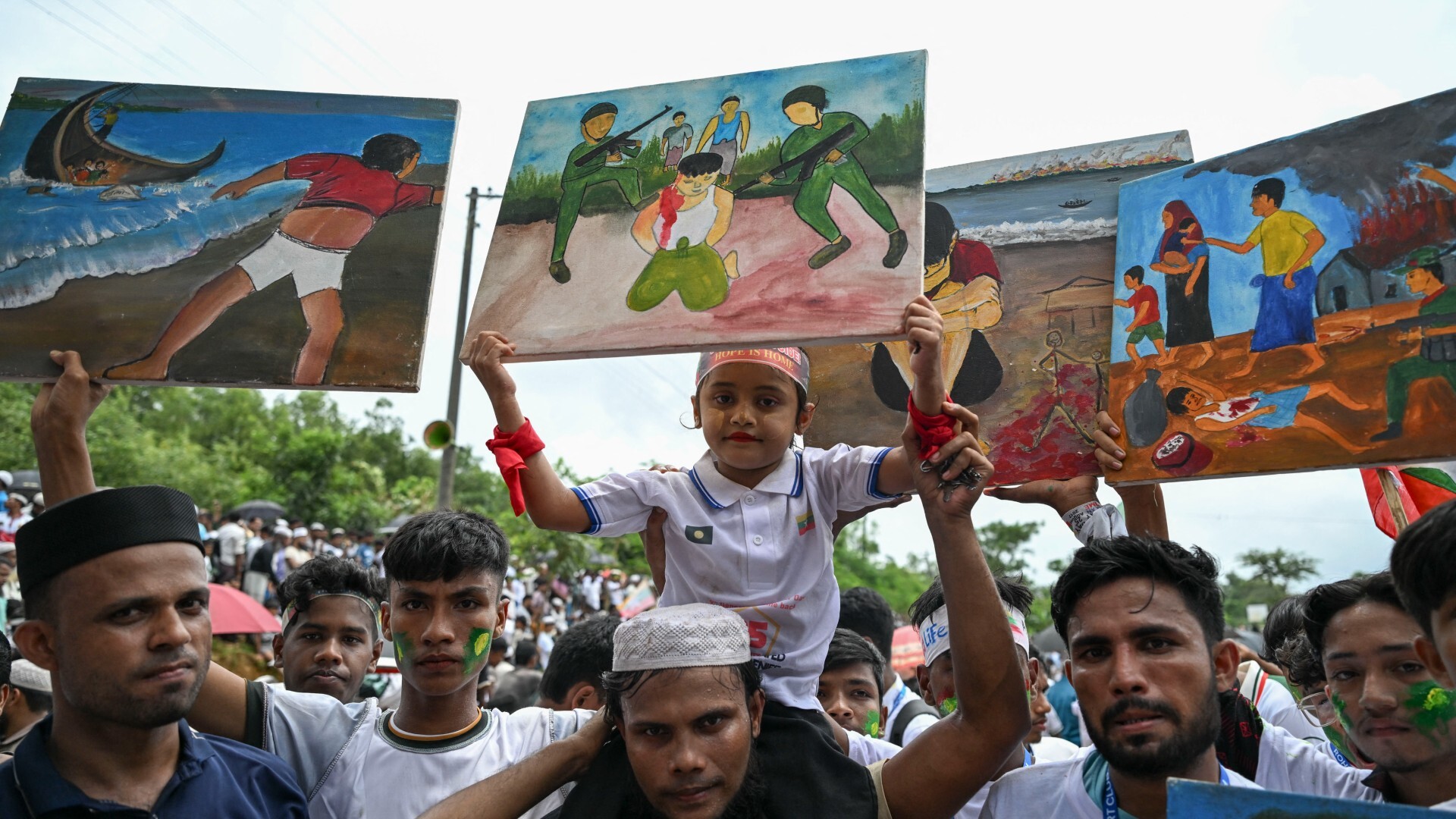
On 25 August 2017, Myanmar's military launched what it called “clearance operations” in northern Rakhine State, after the Arakan Rohingya Salvation Army (Arsa) attacked police posts.
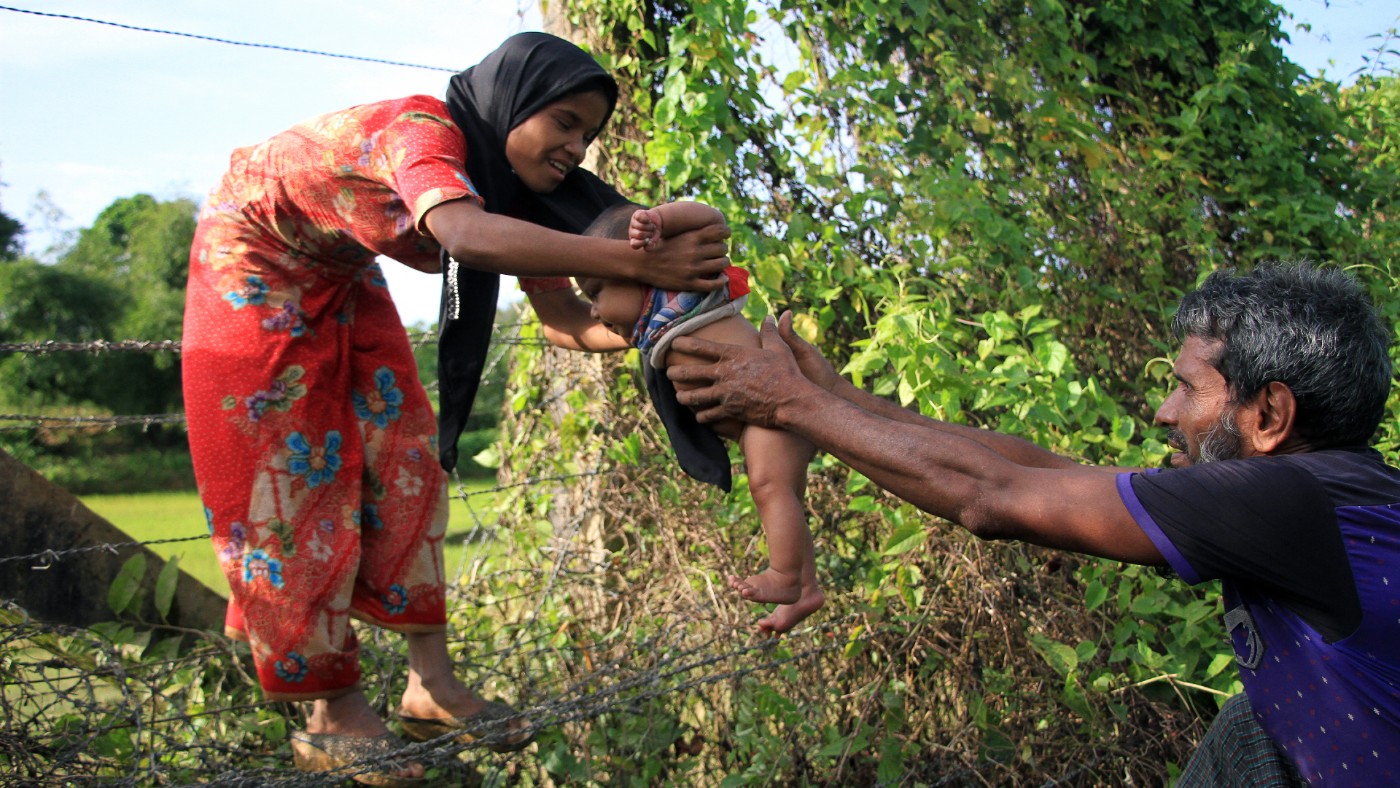
More than 700,000 Rohingya fled to Bangladesh in the months that followed. About 1.2 million Rohingya refugees now live in the camps of Cox's Bazar.
In 2018, the UN fact-finding mission concluded that there was enough information to infer genocidal intent. It called for senior generals - including then-army chief Min Aung Hlaing, who is now president - to be investigated and prosecuted.
Mulvey said she drafted the report's sections on sexual violence and crimes against children.
“It was the UN fact-finding mission report that Gambia relied upon in order to initiate proceedings at the ICJ,” she said.
Abubacarr Tambadou, the Gambia's then justice minister, had spent years as a prosecutor at the International Criminal Tribunal for Rwanda. He visited the Cox's Bazar camps in 2018.
In November 2019, backed by the Organisation of Islamic Cooperation, the Gambia filed its case.
The West African country had no direct link to the violence. It relied on the principle, accepted by the court in 2022, that every state party to the 1948 Genocide Convention has a common interest in seeing it upheld.
In January 2020, the court unanimously ordered Myanmar to take all measures within its power to prevent genocidal acts.
A year later, the military seized power.
In July 2022, the judges rejected Myanmar's objections to the court's jurisdiction, clearing the way for the hearings that took place in January this year.
'It was very silent'
Over three weeks of hearings, the court heard from three Rohingya witnesses in closed session: two men and a woman. They were identified in court only by their initials, and each came from one of three villages at the centre of The Gambia's case: Min Gyi, Maung Nu and Chut Pyin.
Mulvey, their lawyer, said they spoke about the killing of their family members, the sexual violence they had been subjected to and their flight from Rakhine. Two travelled to the Hague from Cox's Bazar and one from Canada, where they had been resettled.
“It was very silent. You could also hear crying. It was extraordinarily powerful testimony,” Mulvey said. “Of course we have to wait to see what the judgment is, but you could feel the weight of it.”
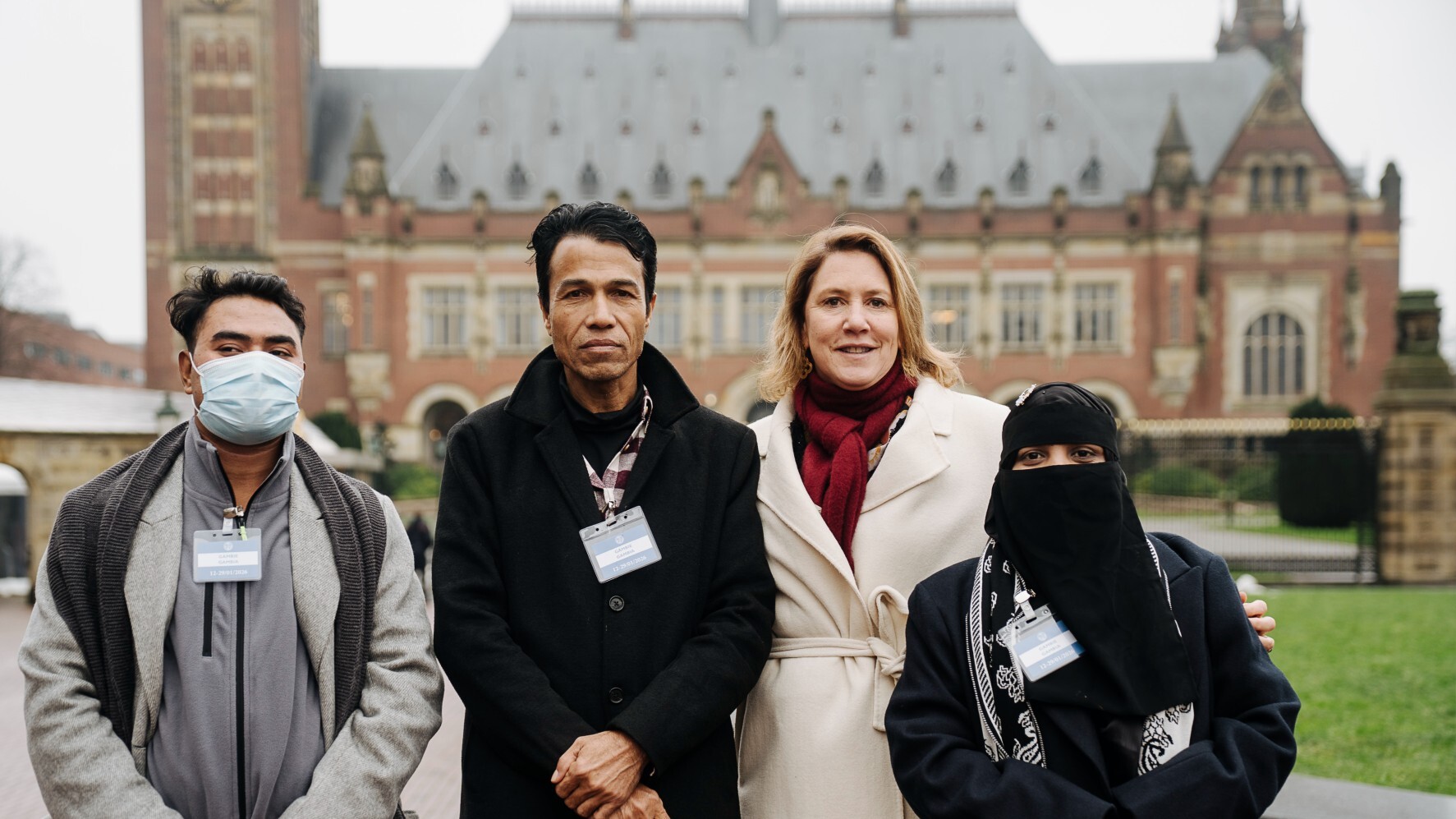
LAW also brought a victims' delegation of three Rohingya survivors to sit in the courtroom: a man, a woman and a hijra, a term used in South Asia for transgender and intersex people.
Mulvey said it was the first time a transgender survivor had been part of a delegation in the court.
“We did not know that legal proceedings existed, and we could fight for our rights,” Salma, who part of the delegation, said. “But this time, we have the tools to defend ourselves and demand accountability and reparation for what happened to us.”
Rehana, the delegation's hijra member, who also asked to be identified by her first name only, said she hoped a ruling would include the whole community. “If the genocide is recognised, we hope that we will be getting our justice. Justice for our entire community, including hijra,” she said.
LAW also submitted hundreds of pages of written witness evidence, which Mulvey said The Gambia relied on heavily.
Rape and sexual violence were central to The Gambia's case. “They selected, particularly, women and girls of reproductive age. They gang raped them. That was the method of choice,” Mulvey said, of army soldiers.
She said investigators found “a pattern of biting, to leave an indelible mark on them”. She said rape in front of the community reflected “the intent to destroy the very social fabric of the community”.
The ICJ has accepted before that rape can be an act of genocide, in Bosnia v Serbia and Croatia v Serbia. But in neither case did it find the intent required to classify those acts as genocide.
A ruling against Myanmar on this point would mark “the first time the ICJ has actually found sexual violence itself to constitute genocide in a merits judgment”, Mulvey said.
What is genocide?
In deciding the case, the judges will draw on the Genocide Convention itself, the court’s own earlier rulings, and the case law of the international criminal tribunals for the former Yugoslavia and Rwanda.
The Genocide Convention, adopted by the UN General Assembly in 1948, defines genocide as any of five acts “committed with intent to destroy, in whole or in part, a national, ethnical, racial or religious group, as such”.
In Bosnia v Serbia in 2007, the court held that the intent must be to destroy at least a substantial part of the group, and that it must be physical or biological destruction rather than cultural destruction.
It also ruled that charges of such exceptional gravity against a state must be proved by evidence that is “fully conclusive”.
Intent can be shown by “particular circumstances” or inferred from a pattern of conduct. But in Croatia v Serbia in 2015, the court set a high bar for inference.
To infer genocidal intent from a pattern of conduct, it said, “it is necessary and sufficient that this is the only inference that could reasonably be drawn from the acts in question”.
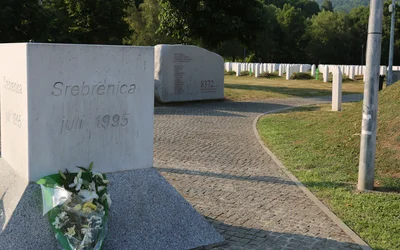
Furthermore, applying those tests, the court found in the Bosnia v Serbia case in 2007 that genocide had been committed only at Srebrenica, and that Serbia was responsible for failing to prevent and punish it, not for committing it.
The Gambia's case
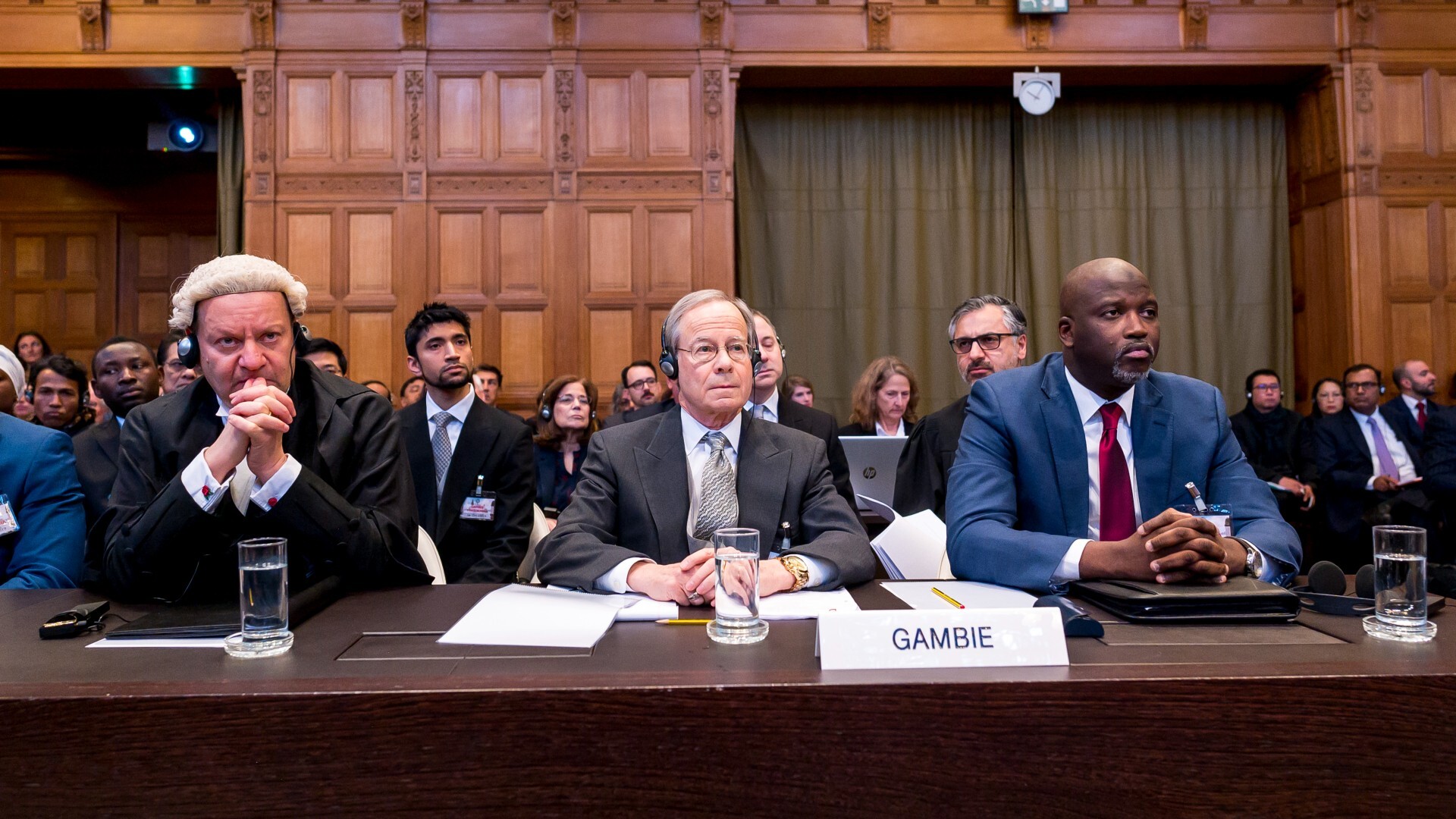
Philippe Sands and Paul Reichler, two lawyers representing the Gambia, argued that Myanmar’s military operations in northern Rakhine State targeted a substantial part of the Rohingya population and that the evidence pointed to an intent to destroy the group.
Sands used Myanmar's own figures from its written pleadings to address whether Myanmar had targeted a “substantial” part of the Rohingya.
'They selected, particularly, women and girls of reproductive age. They gang raped them. That was the method of choice'
- Antonia Mulvey, lawyer
He calculated that 815,459 Rohingya lived in northern Rakhine's three townships, Maungdaw, Buthidaung and Rathedaung, before the 2017 operations. About 700,000 of them, nearly nine in 10, fled to Bangladesh. The military “targeted tens of thousands of homes, and over 800,000 human beings”, Sands said.
Myanmar had argued that the estimated 10,000 to 25,000 people killed did not amount to a substantial part of the group. Sands said those figures were “likely to be an underestimate”.
Myanmar “has gone out of its way to destroy the evidence, including the evidence of the burial of large numbers of bodies in mass graves”, he said.
“Genocide is not a numbers game,” Sands said, explaining that “there is no magical number of victims which turns one kind of crime into another kind of crime.”
“The 700,000 who fled to Bangladesh for their lives were no less targeted than their murdered brothers and sisters,” the British lawyer said.
Sands also argued that northern Rakhine mattered because it was the one region where Rohingya were the majority.
Turning to intent, he said that it was proved both by “particular circumstances” and by a pattern of conduct. He pointed first to the three witnesses' villages.
“There is no world in which the shooting of Witness MS's daughter, as she waded across a river to escape, was not genocidal; or the intentional burning of his wife and four other children inside a house,” Sands told the court.
“There is no world in which the gang rape of Witness NJ, the murder of her infant child in front of her, was not genocidal.”
Myanmar acted with genocidal intent, Sands said, because “its discriminatory policies, its hate speech, its pre-planning and organisation, its extreme brutality, its sexual violence, its targeting of children, its destruction of evidence, its impunity for the perpetrators, its failure to co-operate with the UN, cannot reasonably be understood in any other way”.
The counter-terrorism defence
Reichler addressed what is known as the “only reasonable inference” test, which in this case would require proving whether any explanation other than genocide could reasonably account for what happened in Rakhine.
Myanmar's answer was counter-terrorism. “They have put all their eggs in the counter-terrorism basket,” Reichler said.
He told the court that Myanmar's lead counsel, Christopher Staker, had conceded that genocide can take place during a counter-terrorism operation.
Even if Myanmar was responding to Arsa, he argued, “the fact that there was a counter-terrorism operation in progress … is pure context. It is not intent.”
The question, Reichler said, was what the state intended “at the time its authorised agents began firing their weapons deliberately at Rohingya civilians, including women and children”.
Reichler then dealt with the other possible explanation: that Myanmar meant to drive the Rohingya out, not destroy them. That was the conclusion the court reached about Serbia and Croatia in 2015.
Reichler cited the testimony of the Gambia’s military expert, who was asked whether the operations could have been ethnic cleansing, rather than genocide. The expert said they could not, because ethnic cleansing does not involve killing a group’s children.
He added that a force seeking only to drive a population out would not keep shooting at people as they fled, or station troops on the river to sink their boats as they were about to reach Bangladesh.
Soldiers also laid landmines at border crossings after 25 August 2017. The fact finding mission said this showed the mines were “intended to target fleeing Rohingya civilians and to prevent those who had already left from returning”.
Russia, Georgia and forced displacement
Reichler contrasted Rakhine with Georgia v Russia, a case in which he had acted for Georgia.
In this case, Russian forces ordered ethnic Georgians to leave South Ossetia. Those who complied were not harmed. Fleeing refugees were not shot at and there was no systematic sexual violence. “On those facts, if proven, this was forced displacement, or ethnic cleansing. It was not genocide,” Reichler said.
The wars in the former Yugoslavia were “essentially about the control of territory,” he argued. The Tatmadaw, Myanmar's military, “were not seeking to enlarge Myanmar's territory”.
He warned that Myanmar might “change its narrative in the second round, after we have finished speaking and there is no opportunity for us to respond further”.
Mulvey said that is what happened. Myanmar “did not argue deportation or forcible transfer until the very end of their oral hearings”, she told MEE.
In Myanmar’s final session on 29 January, counsel Stefan Talmon quoted one of The Gambia’s own witnesses, identified as MN, telling the court: “We knew that the military did this to force us out of the country.” From such accounts, Talmon argued, the court could conclude that “the intention of the military was not to destroy them as a people as such but to force them out of the country”.
“There is thus at least one other inference that can reasonably be drawn from the conduct,” he said.
But even if expulsion had been the aim, Reichler argued that the court's own judgments allowed for a genocide finding if the displacement was carried out “with a view to the destruction of the group, as distinct from its removal from the region”.
Reichler argued that other motives, such as fighting Arsa, would not rule out genocidal intent. He noted that in Bosnia the court found genocide at Srebrenica even though the Bosnian Serb leadership's “essential motive” was to create a larger Serb state.
What mattered was the intent at the moment Myanmar soldiers were “segregating and executing men and boys, raping and gang raping women and girls, killing children and infants – tossing them into fires”.
He said the destruction continued well into 2018, including in more than 180 villages where Myanmar admits there was no Arsa activity, and was followed by bulldozing, resettlement by ethnic Rakhine and the building of military bases.
Mulvey described the same pattern from her own investigations.
“They would surround the village. Then often in the early hours of the morning when people were asleep, they would fire mortars into the village. They would then proceed by shooting indiscriminately at civilians,” she told MEE.
She said soldiers continued to shoot at people as they fled towards Bangladesh. “What they did was to ensure that they were killed along the way,” she said.
Myanmar rejected all the allegations. It argued that the operations were a lawful response to attacks by Arsa.
What western nations argued
In November 2023, Canada, Denmark, France, Germany, the Netherlands and the UK filed a joint submission to the court in support of the Gambia.
They were among 11 states that intervened in the case. States that intervene in this way do not comment on the facts, only on how the Genocide Convention should be read.
The six states warned that the “only reasonable inference” test should not be applied so strictly that genocide becomes “near-impossible” to prove, since states rarely put an intent to destroy a group in writing.
They also argued that the number of people killed should not decide whether genocide took place. Rape, sexual violence and the targeting of children serve no military purpose, so such acts can point strongly to an intent to destroy a group, they wrote.
The six states added that UN fact-finding reports deserve particular weight as the work of independent investigators.
Both Sands and Reichler cited the submission in their closing arguments.
'Major repercussions for Israel case'
Becker, a professor of international law at Trinity College Dublin, said this was the first time a court would rule on mass human rights violations in a case brought by “a non-injured state acting to uphold international law”.
“Cases like The Gambia v Myanmar have arguably sought to transform the role and function of the ICJ in contemporary affairs. The outcome here may determine whether that trend will continue,” Becker told MEE.
'Whether the ICJ accepts or rejects that view of genocidal intent will have major repercussions for South Africa's case against Israel'
- Michael Becker, law professor
He said the judgment would be “a crucial opportunity for the ICJ to clarify and develop the law on genocide”, particularly on how intent can be established by inference.
“The core of Myanmar's argument is that actions that can reasonably be characterised as a counter-terrorism operation cannot simultaneously be treated as acts of genocide,” he said.
"Whether the ICJ accepts or rejects that view of genocidal intent will have major repercussions for South Africa's case against Israel at the ICJ," Becker explained, "where Israel has similarly claimed that an armed conflict with Hamas precludes a finding that Israel has simultaneously undertaken actions aimed at the physical destruction of the Palestinian population of Gaza.”
Becker said “recent claims that the ICJ may end up 'lowering the standard' to establish genocidal intent are misguided because they fail to acknowledge the ambiguities in the ICJ's pronouncements on genocidal intent”.
He added that the ruling would show how the court treats cases built largely on UN inquiry reports. Myanmar made attacks on the reliability of the fact-finding mission’s reports a central part of its defence, while the Gambia relied on the same reports extensively.
“If the ICJ shows a reluctance to credit the findings of such reports, this will send a strong signal to South Africa, and potential litigants in other future cases, about the need to find other ways to support their claims,” he said.
A major UN inquiry last year already concluded that Israel was responsible for genocide in Gaza. Its chief investigator, Navi Pillay, told MEE at the time that her report used the same legal standard used by the ICJ in determining a finding of genocide and that it would "bear particular probative value and can be relied upon" by the court.
Israel submitted its response to South Africa's case in March. South Africa's reply is due in November 2027.
What the victims want
Mulvey said she is often asked what a ruling would mean for people in Cox's Bazar “who barely have $1 a day”.
“The short answer is yes, it makes a difference to the community,” she said. “It's important for them that the world's highest court recognises what happened to them.”
Many refugees told LAW researchers that compensation and punishment alone would not be enough. “What is the reason for the issue that happened to us? We need to fix the root cause,” one participant in the survey said. “If we want compensation, their punishment, and such things, I don't think we get our justice.
'For me, justice means truth. It means that perpetrators must be held accountable'
- Samir Sadaf, young Rohingya
“Justice [meaning citizenship] is important for our children and grandchildren,” one woman who took part in the survey said. “If it prevails, they will have access to education and they will be able to become successful… in Myanmar.”
The Gambia's final submissions reflected some of these demands. It asked the court to order Myanmar to prosecute those responsible and to provide reparations to the victims.
These include safe and dignified return, the restoration of property, the right to identify as Rohingya, and “full and equal citizenship”.
LAW has called for a trust fund for the Rohingya that would be linked to any reparations the court orders.
Samir Sadaf, a young Rohingya man who fled Rakhine as a child, described what justice would mean beyond a court ruling.
“For me, justice means truth. It means that perpetrators must be held accountable,” he wrote in an article published by LAW. “Where there is justice, there should be safety, equal rights, freedom of movement, and dignity.”
Enforcing the law
ICJ judgments are binding and cannot be appealed, but the court has no means of enforcing them. If a state refuses to comply, the matter can go to the UN Security Council, where China and Russia, both partners of Myanmar's military government, hold vetoes.
Min Aung Hlaing, who led the 2017 operations, named himself president in April after contested elections.
“While it may prove impossible to enforce such a judgment while Myanmar continues to operate under military rule, compliance with the ICJ judgment may become the price of readmission to the international community,” Becker said.
A ruling that Myanmar breached the convention “can also increase the pressure on third states to disengage from Myanmar until it demonstrates genuine reform”, he said.
Mulvey said LAW's victims' delegation will be in the courtroom when the judgment is read.
Salma, who sat in the court through the January hearings, said the Rohingya would not give up. “We won't go back without justice,” she said.
Middle East Eye delivers independent and unrivalled coverage and analysis of the Middle East, North Africa and beyond. To learn more about republishing this content and the associated fees, please fill out this form. More about MEE can be found here.