UAE nominates diplomat to lead UN amid criticism over Sudan and Israel policy

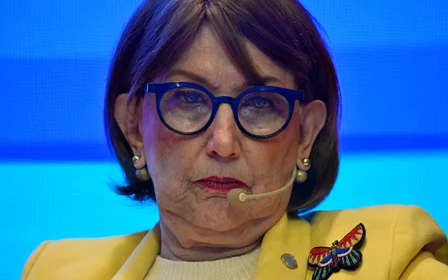
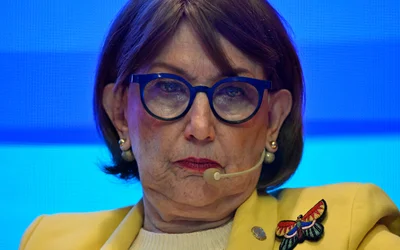
The United Arab Emirates on Wednesday formally nominated Lana Nusseibeh, its former ambassador to the United Nations, to succeed Antonio Guterres as UN secretary-general, adding a new contender to a deadlocked race.
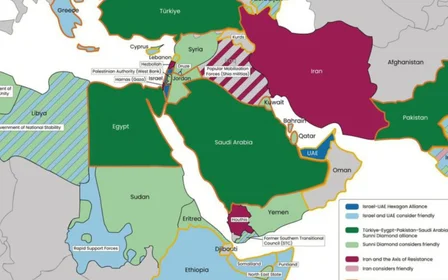
Her candidacy has drawn immediate criticism due to the UAE's controversial foreign policy, in particular its support for parties accused of genocide.
They include the Sudanese Rapid Support Forces paramilitary group and Israel, which is carrying out a genocide of Palestinians in Gaza.
No candidate has emerged as a favourite for the Trump administration, so the UAE's close ties with Washington and the other permanent members could open a path for Nusseibeh.
Ahead of the official nomination, several outlets reported that her supporters were sounding out UN missions to gauge backing.
New MEE newsletter: Jerusalem Dispatch
Sign up to get the latest insights and analysis on Israel-Palestine, alongside Turkey Unpacked and other MEE newsletters
President Mohamed bin Zayed submitted her candidacy in a letter to the presidents of the General Assembly and Security Council, the state news agency WAM reported.
"I am standing to be Secretary-General because I believe this is a moment to act with greater urgency: to act earlier, bring people together across difference, and drive the work forward until it produces concrete results," Nusseibeh said in a statement launching her campaign.
She has taken leave from her post as a minister of state at the UAE foreign ministry.
If selected, she would be the first woman to lead the UN and its second Arab secretary-general, after Egypt's Boutros Boutros-Ghali.
Nusseibeh's entry follows six informal straw polls in which no candidate secured the backing of all five veto-wielding permanent members: the US, Russia, China, Britain and France.
In the first colour-coded poll on 16 October, which separates the permanent members' votes from those of the 10 elected members, frontrunner Rebeca Grynspan of Costa Rica received nine "encourage" votes but two "discourage" votes from permanent members.
Guyana's Carolyn Rodrigues Birkett and Argentina's Rafael Grossi also each drew two discouragements from the permanent five. Senegal's Macky Sall withdrew after the vote.
Grynspan has topped most rounds since the first poll in July.
Nusseibeh's entry unsettles expectations that the post would go to Latin America and the Caribbean under informal regional rotation.
The selection process opened about a year ago with General Assembly dialogues, followed by Security Council straw polls from 30 July.
A seventh poll expected on Friday has been postponed, possibly until next week, to give the UAE time to submit its nomination, sources told PassBlue. The General Assembly president's office said any new candidate would be introduced to the wider membership.
Guterres's term ends on 31 December.
The Council must agree a candidate for the 193-member General Assembly to approve, but it remains unclear whether the council will do so before then.
Palestinian roots
Born in 1978, Nusseibeh worked as a Unesco consultant and an analyst at the Gulf Research Centre before becoming founding director of the UAE foreign ministry's policy planning department.
She became the UAE's first female permanent representative to the UN in 2013 and served until 2024, during which time she was a vice-president of the General Assembly, president of the UN Women executive board and twice president of the Security Council.
Her family hails from Jerusalem. Her grandfather, Anwar Nusseibeh, was a prominent Palestinian politician who held ministerial posts in Jordan's government when it controlled the West Bank and East Jerusalem, and served as Jordan's ambassador to Britain.
Her candidacy, however, has drawn criticism due to her government’s close ties with Israel after the normalisation agreements of 2020.
Colin Shindler, an emeritus professor of Israel studies at Soas who taught her, wrote in a 2020 Jewish Chronicle column that she had completed a master's in Israeli studies there, writing essays on Zionism and Israeli history, and described her as "instrumental" in the normalisation deal, known as the Arabram accords.
In September 2025, as Israel weighed annexing parts of the occupied West Bank, she said the UAE had always seen the accords as a way to support Palestinians, and called on the Israeli government to suspend its plans.
Criticism over Sudan
Nusseibeh's candidacy has drawn criticism over Abu Dhabi's foreign policy, particularly in Sudan, where UN sanctions monitors have described as credible allegations that the UAE provided military support to the paramilitary Rapid Support Forces (RSF). The UAE denies the allegations.
But UN experts and rights groups have concluded in several authoritative reports that the RSF has committed genocide and other international crimes against non-Arab communities in Darfur.
There is also widespread public evidence, including extensive reporting by Middle East Eye, linking the UAE with the supply of arms and other goods to the RSF.
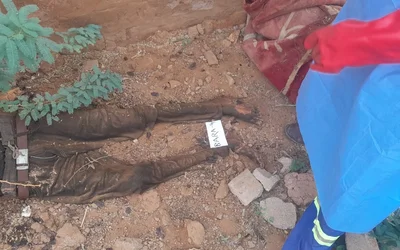
“Nusseibeh is extremely intelligent,” Adil Haque, an international law expert, wrote on X. “She also currently works for a state that has spent the last few years supplying arms to the RSF in Sudan as they've massacred civilians,” he added.
Nathaniel Raymond, executive director of the Humanitarian Research Lab at the Yale School of Public Health, said her selection could be a "catastrophe" for the UN's work in Sudan, Yemen and across the region.
“She has a dual loyalty, conflict of interest, between the United Nations and a state which is credibly accused by the UN itself of directly aiding and abetting the massacre of El Fasher, which the UN itself has determined has the ‘hallmarks of genocide’,” Raymond, whose centre extensively documents atrocities in Darfur, told Pass Blue.
“Next week is the one year anniversary of El Fasher,” Raymond added. “The UN should not celebrate it by making a government official of the country that made the massacre militarily possible the SG of the United Nations.”
Middle East Eye delivers independent and unrivalled coverage and analysis of the Middle East, North Africa and beyond. To learn more about republishing this content and the associated fees, please fill out this form. More about MEE can be found here.