In Israel, calls for 'unity' are a code for Jewish tribal supremacy


The saying “when fascism comes to America, it will be wrapped in a flag and carrying a cross” is commonly attributed to American novelist and playwright Sinclair Lewis.
German writer Thomas Mann, himself a Nobel laureate in literature, had a slightly different version: “If ever fascism should come to America, it will come in the name of freedom.”
Former Republican President Ronald Reagan, meanwhile, offered his own version: “If fascism ever comes to America, it will come in the name of liberalism.”
Whatever form fascism may take when it arrives in the US, one thing can be said with certainty: in Israel, it arrived in the name of unity.
It is hard to think of a word in the Hebrew language that has been more shamelessly abused than “unity” by Prime Minister Benjamin Netanyahu’s inciting, divisive gang.
New MEE newsletter: Jerusalem Dispatch
Sign up to get the latest insights and analysis on Israel-Palestine, alongside Turkey Unpacked and other MEE newsletters
Take, for example, Elisha Madan, the newly elected Likud MK who has set up a “Unity Tent” outside the Knesset. “I intend to sit in the tent day and night, in the cold and rain, to give voice to the many people who keep reaching out to me, yearning for unity,” he declared poetically.
This great champion of unity, it is worth recalling, helped establish the settlement of Avigail. He was also filmed hurling vile slurs at the late human rights activist Ezra Nawi, who had come to the area to protect Palestinian residents from settler violence.
Common ground
Finance Minister Bezalel Smotrich, the man who warned before the election that a left-wing government would pose an existential threat to the state of Israel, suddenly remembered after the vote to reach out to his “Jewish brothers” with a call for unity.
Amir Ohana - the former Knesset speaker who boycotted the swearing-in ceremony of Supreme Court president Yitzhak Amit, and who refused to allow bereaved families into the Knesset gallery during a Netanyahu speech about the 7 October attacks, instead having them forcibly removed - also professes to see unity as a cherished goal, with the 26th Knesset holding the means to achieve it.
The use of the term 'the people of Israel' is no accident. It is a code word, an effective shortcut for establishing a shared sense of tribal belonging
And this week, comedian Guy Hochman shoved a camera rudely into MK Ahmad Tibi’s face, shouting at him: “Ahmad, unity? Unity?” This knight of unity is the same man who found the genocide in Gaza particularly amusing, and a fitting backdrop for a stand-up performance intended to boost the morale of the forces of destruction and annihilation.
He is also the same comedian who attended a left-wing demonstration and declared that its participants were "scarier than Qatar". Now, he too wants unity.
It is easy to dismiss the unity tantrum gripping Netanyahu’s camp as a cynical ploy, designed to neutralise the meaning of its electoral defeat and spare its members the prospect of being banished to the opposition benches.
But the truth is that it rests on something much deeper, rooted in the anomaly of Israeli politics: a political landscape divided not primarily along ideological lines, but above all, over the question of support for Netanyahu.
Remove Netanyahu himself from the equation, and the common ground between the two blocs is far greater than it might appear; on many issues, their areas of agreement actually outweigh their differences.
A call for unity between two blocs that stood firmly together around the most defining event in Israel’s history since its founding - the perpetration of genocide against a besieged and defenceless Palestinian population - is not entirely baseless.
But the foundation of this call for unity runs even deeper than a consensus on any particular policy. It concerns the most instinctive sense of belonging shared by members of both blocs: who they mean when they say “we”.
Dangerous distinction
The Israeli right long ago replaced the concept of “Israeli citizens” with the tribal notion of “the people of Israel” - a term that clearly refers exclusively to the Jewish collective. This dangerous substitution is no longer confined to the right.
“The people of Israel cannot trust Netanyahu when he claims his motives are not political … We must not allow him to exploit Israel’s security to disrupt the elections,” Yair Golan, leader of the Democrats, tweeted about a month before the election.
The distinction between “the people of Israel” and “Israeli citizens” is anything but semantic. It reflects two fundamentally different conceptions of the Israeli collective, only one of which includes Palestinian citizens of Israel.
Why did Golan choose to invoke “the people of Israel” rather than “Israeli citizens”? Are Arab citizens of Israel not equally affected by security concerns? Do they not flee to bomb shelters - when such shelters are available to them - during wartime?
The use of the term “the people of Israel” is no accident. It is a code word, an effective shortcut for establishing a shared sense of tribal belonging and manufacturing intimacy.
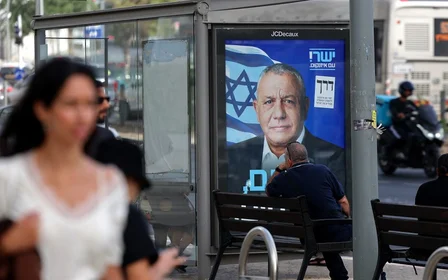
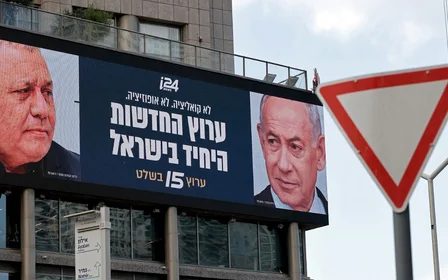
When Yashar leader Gadi Eisenkot tells a former Likud voter, disillusioned with Netanyahu, during an election campaign that “as far as I’m concerned, there is no way the people of Israel will not prevail,” he knows exactly what he is doing: building a sense of tribal intimacy whose boundaries are perfectly clear to both men.
It is within those boundaries that the right is now calling on him to gather under its unity campaign - boundaries that necessarily leave Arabs on the outside.
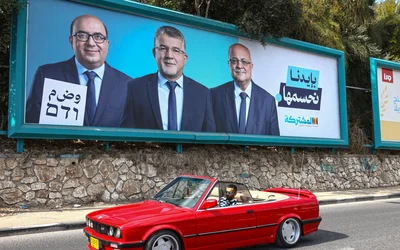
It is hardly surprising, then, that the Arab parties are the only ones presenting a civic discourse as a substantive alternative to the Jewish tribal discourse embodied in the phrase “the people of Israel”.
Here lies one of the great paradoxes of the Zionist state. Since its founding, Israel has relentlessly sought to sever the connection between Arab citizens and their Palestinian national identity, subjecting them to a process of forced “Israelisation”.
Yet the moment Arab citizens seek to give real substance to the citizenship imposed upon them after the Nakba, “the people of Israel” are quick to reclassify them as Palestinians and push them back beyond the boundaries of the Israeli collective. This is the declared position of at least two of the four parties that make up the so-called change bloc.
The choice now facing Eisenkot is not merely between two different governing coalitions. It is a choice between two fundamentally different conceptions of the boundaries of Israeli citizenship: between “the people of Israel” and the citizens of Israel. If he chooses the former, he will become, under cover of the “unity” discourse, a pale appendage of a fully fledged Jewish-supremacist coalition.
If he chooses the latter, he will have to accept Arab citizens as full partners in Israeli citizenship, with an equal and legitimate stake in shaping the country’s character - rather than as people whose struggle is limited to securing whatever crumbs the state is willing to throw their way.
The views expressed in this article belong to the author and do not necessarily reflect the editorial policy of Middle East Eye.
Middle East Eye delivers independent and unrivalled coverage and analysis of the Middle East, North Africa and beyond. To learn more about republishing this content and the associated fees, please fill out this form. More about MEE can be found here.