BBC bias: Attack on watchdog that skewered Gaza coverage is a feeble hit job

Reporters are supposed to hold power to account. To challenge official lies. To stand up for the underdog.
Though there have been important exceptions - such as the Financial Times and, in recent months, the Guardian - in general the British media has failed to do its job during Israel’s war on Gaza.
This lack of scrutiny has made it much easier for prime ministers Rishi Sunak and later Keir Starmer as they have failed to challenge Israeli atrocities.
Much of the reporting - especially in right wing papers like the Daily Telegraph, the Times and Daily Mail - has been twisted in favour of Israel.
We believe that in due course the British media will be held to account for its role in enabling Israel’s slaughter of Palestinians in Gaza, seen by many experts as a genocide.
New MEE newsletter: Jerusalem Dispatch
Sign up to get the latest insights and analysis on Israel-Palestine, alongside Turkey Unpacked and other MEE newsletters
Throughout this period one small organisation has played a vital role in calling journalists to account.
This is the Centre for Media Monitoring (CfMM), which was set up by the Muslim Council of Britain but is now independent. It has produced three landmark reports that skewer British reporting on Gaza.
The first, published early last year, exposed the general collapse in standards across the written and broadcast press in the early months after 7 October. Last spring a second report showed how media outlets largely confined emotive language to Israeli rather than Palestinian victims.
Then two weeks ago a third report shone a merciless spotlight on BBC bias.
These reports compelled attention. Surprising figures such as Tony Blair’s press secretary Alastair Campbell and the acclaimed former Today programme presenter Mishal Husain endorsed the BBC analysis.
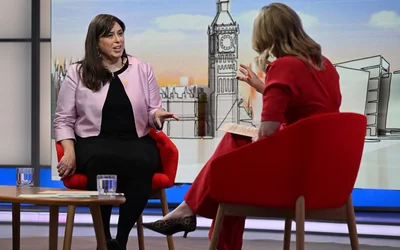
To its considerable credit the BBC dispatched a senior editorial figure, Richard Burgess, to answer questions at the launch.
For Israel’s cheerleaders in the British media, all this may have been too much to bear.
A counter attack on CfMM has been in the offing for months, and yesterday night Policy Exchange struck with an 86-page report.
Better known by Fleet Street old-timers as a hatchet job.
Policy Exchange calls itself a think tank - but has impeccable media connections on the right of British politics. The founding chairman was Michael Gove, now editor of the pro-Israel Spectator magazine and a former Tory minister.
He was succeeded by Charles Moore of the Telegraph, a newspaper whose coverage of Gaza has been skewed.
Another former chair was Danny Finkelstein of the Times. David Frum, notorious for coining the phrase “axis of evil” as George W Bush’s speechwriter, is yet another.
Andrew Gilligan, a former Telegraph and Sunday Times journalist whose own reporting on British Muslims has been a subject of contention, is a senior fellow, and joint author of this Policy Exchange document.
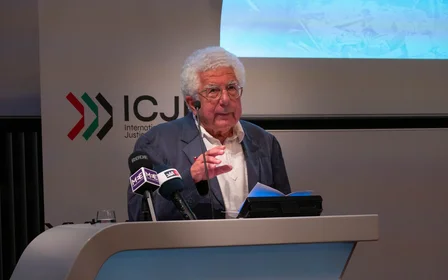
One of us, Peter Oborne, wrote a foreword for the CfMM report on the BBC which Policy Exchange quotes from in its report, as well as speaking at a parliamentary event to mark its launch.
We have studied Policy Exchange's report. It is riddled with falsehoods and distortions.
Every accusation a confession
Andrew Neil, whose journalistic career includes spells as editor at the Sunday Times and as the long-time chairman of The Spectator, claims in the foreword that CfMM is engaged in enforcing a “tendentious view of Islam and, sometimes, seeking to suppress truthful, factual reporting which happens to contradict that view”.
As they say, every accusation is a confession.
Neil might as well be describing some of The Spectator’s reporting on Muslims during the years he was in charge.
The report provides no evidence of CfMM seeking to 'suppress truthful, factual reporting'
He asserts that the report proves “CfMM is part of a wider campaign for legal restrictions on what you can say about Islam, with fundamental implications for free speech".
These are sensational claims. They are also absurd.
The report provides no evidence of CfMM seeking to “suppress truthful, factual reporting”.
CfMM says it supports the All-Party Parliamentary Group’s definition of Islamophobia.
The report that accompanied the creation of that definition insisted it was not “intended to curtail free speech or criticism of Islam as a religion”.
Policy Exchange accuses CfMM of saying that 60 percent of news stories about Muslims are Islamophobic.
But the organisation has never said that.
Policy Exchange further claims that CfMM “has openly taken the side of intimidating mobs staging banned anti-gay demonstrations outside primary schools”.
This is a deeply serious accusation. But there is no record of CfMM endorsing any such demonstrations.
Failures of omission
More important by far is what Policy Exchange omits.
We had expected that the think tank would challenge the central thrust of the CfMM analysis of British media coverage of Gaza. This amounts to a serious body of work exposing one set of reporting rules for Israelis and another for Palestinians.
Policy Exchange did not even try.
Let’s take as an example the recent CfMM finding that the BBC employed the word “massacre” almost 18 times more often about Israeli than Palestinian victims - and never used the term in headlines about Israeli atrocities.
No rebuttal from Policy Exchange.
The finding that BBC correspondents or presenters applied the term “butcher” 220 times for actions against Israelis; just once for actions against Palestinians.
No rebuttal.
That Israeli deaths were reported in more emotive terms, with victims far more likely to be humanised with details about the names, family backgrounds and jobs.
No rebuttal.
That just six percent of the deaths of Palestinian journalists had been reported by the BBC.
No rebuttal.
The failure of the BBC (and wider media) to cover Israel’s Hannibal directive, or the Dahiya doctrine, or statements of genocidal intent by Israeli politicians from Prime Minister Benjamin Netanyahu down.
Again, no rebuttal.
Rather than confront these serious allegations made against British media reporting which lie at the heart of the CfMM argument, Policy Exchange has chosen to ignore them.
One can only suppose that’s because they are accurate.
Unable to challenge the substance of CfMM’s work, it has tried to discredit it with smears. In footballing terms, Policy Exchange has played the man and not the ball.
One last point needs to be made.
CfMM’s researchers have done an important job, and exposed appalling failings by British mainstream media. Yet its reports have been largely ignored in mainstream press and media.
By contrast, the Policy Exchange attack on CfMM has been noisily amplified in the Mail, the Telegraph, The Times and GB News.
We rest our case M’lord.
Middle East Eye delivers independent and unrivalled coverage and analysis of the Middle East, North Africa and beyond. To learn more about republishing this content and the associated fees, please fill out this form. More about MEE can be found here.