How the UK's new antisemitism guidelines for schools will stigmatise Muslim pupils


The idea that young people, who have been observing and witnessing a live genocide before them, cannot raise questions or protest what they are seeing should be of concern to everyone.
Last week, the UK’s Department of Education conducted an independent review of antisemitism in schools and colleges.
Following its publication, the government accepted all 27 recommendations proposed by former schools inspector Sir David Bell to end antisemitism in schools and colleges.
These included: strengthening political impartiality guidance, such as limits on teachers wearing pro-Palestine badges; including antisemitism explicitly in schools' safeguarding policies; encouraging schools to adopt the International Holocaust Remembrance Alliance (IHRA) working definition of antisemitism; and working with the Home Office and the Prevent programme to help schools identify when antisemitism may be linked to radicalisation.
Sweeping moves like this one to police speech and attempt to control political rhetoric in schools are not new.
New MEE newsletter: Jerusalem Dispatch
Sign up to get the latest insights and analysis on Israel-Palestine, alongside Turkey Unpacked and other MEE newsletters
In the past, the British government imposed a statutory duty on schools to teach British values: democracy, the rule of law, individual liberty and tolerance. These were integrated into the UK Prevent Strategy to challenge radicalisation. The government insisted this includes safeguarding all pupils who may be groomed into any form of radicalisation; however, data shows that Muslims are still disproportionately affected by Prevent referrals.
This is an important point to keep in mind to understand why it is sinister to link antisemitism to the Prevent programme, because the underlying assumption is that those school children usually explicitly associated with Palestine-related activism are Muslims.
If we value the rule of law, then young people deserve space to question or discuss the legal dimensions of, for example, the genocide case brought forward by South Africa in the International Court of Justice. If schools are supposed to follow these recommendations, will they discipline young people for taking an interest in the rule of law? Would this constitute antisemitism?
Geopolitical angst
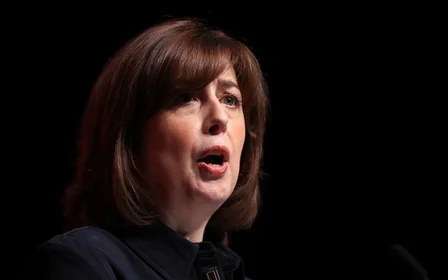
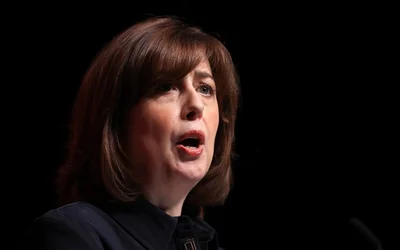
Lucy Powell, the education secretary, gave an interview on Sky News where she said the government would accept the recommendations, and that she would email all schools and colleges across the country to encourage them to adopt the IHRA definition of antisemitism. She argued that, "schools should not be a place where it’s about making protests and statements about geopolitical events around the world".
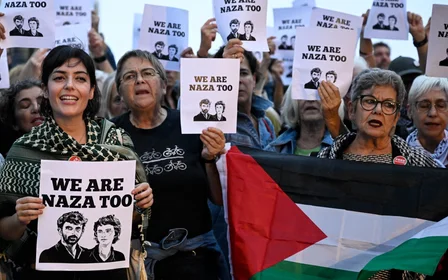
As a former secondary school teacher, I know young people take an interest in what they see happening around them. Indeed, during the last three years, students and young people across the UK have taken to the streets and social media to protest the UK government and their institution’s potential complicity in Israel’s genocide in Gaza.
Teachers, ultimately, should be encouraged to foster these discussions in the classroom, and develop young people's curiosity about the world they live in - and will one day work in.
Young people around the world are rising up and demanding change through good teaching, ethics, values, and protest. We are witnessing this in the student uprising in France where young people are proudly standing up because they have been inspired by school readings of writers such as French-Algerian Albert Camus.
Schools have a duty of care to include conversations about good citizenship, usually in Personal, Social, Health and Economics education (PSHE) lessons. Teachers and schools already have a legal duty to present political issues impartially. However, being impartial does not mean silence.
We already see schools organising bake sales for charities or local food banks. These activities are inherently political, and respond directly to questions of poverty and inequality. School teachers and leaders campaign openly on funding and pay. None of these issues has been treated as safeguarding issues.
In recent years, schools have even taken part in fundraising activities for Ukraine. So, to respond to Powell: why is geopolitics allowed to enter the classrooms and school assembly halls when it involves Ukraine but not Palestine?
While young pupils are permitted to run breakfast clubs and participate in politics, this reframing in the report simply moves away from a commitment to impartiality by singling out one issue: discussing Palestine in classrooms. By framing discussion of Palestine and Israel in the language of safeguarding and Prevent, the government signals that this topic carries a risk that others do not.
In practice, cautious schools will simply avoid it, and pupils will learn that some questions about international law are safer left unasked. This is wrong. Rather than forcing our children to look elsewhere, namely social media, which can be rife with disinformation, why not allow for them to discuss and debate these issues in the classroom and the confines of our schools.
Academic freedom
Powell's push for schools to adopt the IHRA definition is alarming and should be challenged. It will stifle debate about Israel’s current ongoing atrocities and war crimes across Palestine. In 2020, a year-long study of the IHRA definition at University College London concluded that it would raise concerns about academic freedom.
The definition purports that to be antisemitic is to hold all Jews "collectively responsible for actions of the state of Israel", yet Bell’s report does the very same thing by stating that "anti-Jewish attitudes are less prevalent and have remained more stable, whereas anti-Israel sentiments are more prevalent and have been increasing".
It suggests that criticism of the policies or actions of the government of Israel is not, in itself, antisemitic; Bell states that pupils should be able to discuss the "conflict" between Israel and Hamas openly without experiencing prejudice.
However, we know this is farcical because, in reality, this safeguard is weak in practice due to how the IHRA examples are applied and that, even to discuss Israel and Hamas is assumed to be antisemitic.
In effect, this gives the illusion of facilitating a "debate" or "discussion", but if schools adopt the IHRA definition, it will create avenues to dismiss such discussions regardless of what the official guidance says.
As such, it creates a harmful effect, constraining young people’s freedom of thought and expression. It would treat pro-Palestine expression, and by extension Muslim pupils who have already been marked as the "usual suspects", as coming under the panopticon as a suspected safeguarding risk.
So, this report, whilst couching its language under the framework of impartiality, is further solidifying anti-Palestinian racism. Schools should absolutely push back and not be cornered into accepting the state's diktat while ensuring they support all pupils and meet their needs accordingly.
The views expressed in this article belong to the author and do not necessarily reflect the editorial policy of Middle East Eye.
Middle East Eye delivers independent and unrivalled coverage and analysis of the Middle East, North Africa and beyond. To learn more about republishing this content and the associated fees, please fill out this form. More about MEE can be found here.