How UK 'wudu-gate' avoids naming the real culprit for the climate crisis

In mid-August, as the UK grappled with its fourth heatwave of the year, news headlines decried the water regulator’s allegedly wasteful use of public funds in its campaign advising Muslims to use less water for wudu (an ablution or cleansing ritual before prayer), and Asians to reduce water usage when washing rice.
It turns out that ferocious heatwaves offer up valuable opportunities for flagging media outlets on slow news days.
As is the norm with other manufactured hysterias, “wudu-gate” recycled a years-old initiative to viral effect, through the use of dramatic headlines, head-turning stock images and hyperbolic openers.
Language and visuals are powerful tools wielded by the media in shaping and stoking public opinion. When the Telegraph uses phrases like “religious and cultural practices” to inform us that “Asian and Muslim communities have been told to wash their rice and feet less” in a “bizarre” water-saving push, it marks these groups out as separatist offenders, thoughtlessly and selfishly indulging at the expense of others during a time of national crisis.
It is unsurprising, then, that in the current climate of rising Islamophobia, this news (non-)story was met with weary suspicion from many, as yet another attempt by the media to frame Muslims as the perpetrators of the UK’s drought.
New MEE newsletter: Jerusalem Dispatch
Sign up to get the latest insights and analysis on Israel-Palestine, alongside Turkey Unpacked and other MEE newsletters
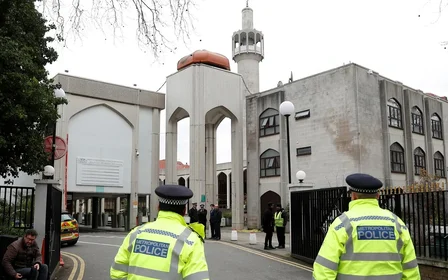
Perhaps it could be argued that the water regulator’s recent community outreach campaign, in collaboration with the Cambridge Central Mosque and funded under its broader “water efficiency in faith and diverse communities” project, was DEI overkill - but it was hardly front-page news.
Yet from moral panics about halal meat, to fear-mongering about mega-mosques, our media outlets are primed to magnify moments like these. They delight in creating otherising caricatures out of minoritised communities.
Theatrics and deflection
Just days after having hounded Jason Arday to death, the critics of “woke nonsense” moved on to a new target. We were, predictably, treated to images of Muslim feet in the sink, along with headlines slamming the waste of £270,000 ($364,000) of taxpayers’ money - thus linking a broader project that worked with a wide range of communities across the country, directly and primarily with Muslims and their implied thoughtless, wasteful lifestyles.
Here we are enduring hosepipe bans, while the Muslims are sloshing their feet about in the sink with abandon five times a day! It is a theatrical performance, of course - because at its core, it is a deflection from the real culprit.
It is a deflection from the extortionate use of AI, and the government’s active investment in its infrastructural growth, amid plans to increase the number of data centres in the UK - facilities that have been described as “data heat islands”, driving up surrounding temperatures by an average of 2C.
Wudu-gate is simply another panel in an interminable comic strip, which just like AI, seems destined to continue regenerating warped permutations of itself
The London Assembly recently released a stark report noting that the construction of data centres will significantly delay the construction of housing, a crisis that has engulfed the city for years.
The Save Brick Lane campaign has ardently protested against the construction of a data centre on the site of the iconic Truman Brewery, and as a councillor for Tower Hamlets reminded us, there are more than 30,000 people waiting for social housing, which will be further delayed by the construction of this data centre.
If the environmental costs of AI and related infrastructure do not concern our communities, we can examine how generative AI in particular is increasing Islamophobia globally.
Think back to the 2024 riots in the UK, where AI and algorithms played a violent role in orchestrating hate towards Muslims and other racialised groups, as social media sites like X (formerly Twitter) amplified misinformation targeting Muslim and immigrant communities.
If that’s not enough, we can look at how autonomous weapons were used indiscriminately in Gaza, or how generative AI is currently being used by Israeli politicians to dehumanise Palestinians and legitimise the occupation.
The evidence against the use of AI is enormous, and just these two examples show the urgent need for leadership by mosques on this matter. As noble as it is to focus on the conservation of water in wudu, mosques should also address the more pressing issue of AI usage in our communities.
Dizzying political ramifications
We need our mosques to address the unethical uses and practices of AI, from the environmental consequences to the dizzying political ramifications that are driving unprecedented levels of Islamophobia. Muslim leadership is desperately needed to resist the tentacles of AI.
At a time when Muslim institutions are facing intense and unforgiving public scrutiny, it is understandable that many will welcome opportunities to partner with public agencies and local governments for good causes.
In this regard, campaigns on reducing water wastage are low-hanging fruit - a photogenic display of active citizenship, the spirit of which is perfectly aligned with Islamic injunctions condemning wastage and mandating responsible use of resources. What’s not to love?

In fact, many Muslim organisations and mosques have been running no-waste wudu campaigns for years, including by installing auto-shut taps and raising awareness among their congregations. For mosque administrations that operate in a climate of suspicion and demonisation, it is an easy and non-divisive cause to sign up to; a great way to engender and demonstrate good citizenship and positive messaging about their beleaguered communities.
But as others have noted, viewed in context, this civic participation renders Muslims agents of responsibilisation, and absolves politicians and media outlets alike from accountability for structural inequalities and injustices.
Over the past few days, several Muslim civic voices have registered their objection to wudu-gate, recognising the cynical deflection that is embedded in its hyperbole.
But if Muslim institutions and leadership have learned anything from the past 25 years of dog-whistle Islamophobia, they will know that conscientious civic engagement in this moment should go further than simply calling out prejudice.
Not only should we seek to redirect our attention towards properly holding our political and media classes to account, we would also do well to engage in a timely introspection and interrogate the extent of our own complicity with the harmful aspects of AI infrastructure and AI-creep in our everyday lives.
We need our mosques and leadership to become much more serious about environmental degradation and its intersection with other structural harms
In recent years, the uncritical use of generative AI has become ubiquitous in our community spaces with remarkable ease. We have seen our institutions reach for AI tools to generate text for khutbas, with embarrassing repercussions, potentially undermining trust in religious leadership.
Imagery and publicity for religious and social events as well as material for teaching and learning all routinely rely on AI generated text and visuals, to the point that notions of ‘AI-inevitability’ have almost become justifications for a growing passive reliance.
The unreflexive use of this technology poses serious ethical questions which can have lasting impacts, not only on our sense of who we are, but also on our safety and security, and that of other communities across the world.
Returning to the question of how much water to use for rice-washing and wudu, by all means let us stick to two rinses and one litre. But public campaigns, and the outcries that thrive on misrepresenting them, can tell us far more about a nation’s political climate than they can about the state of its kitchen and bathroom sinks.
The environment is inherently political. While the increasingly stark impacts of our overheating planet envelop our daily realities, the nativist populism that dominates our political discourse routinely holds up Muslims and other minoritised groups as scapegoats and sacrificial lambs, aiming to obscure the exposure of political and corporate corruption and incompetence.
Wudu-gate is simply another panel in an interminable comic strip, which just like AI, seems destined to continue regenerating warped permutations of itself until its subjects - Muslim communities - develop the resolve to proactively name structural harms, and interrogate and address their potential complicity in them.
We need our mosques and leadership to become much more serious about environmental degradation and its intersection with other structural harms.
The views expressed in this article belong to the author and do not necessarily reflect the editorial policy of Middle East Eye.
Middle East Eye delivers independent and unrivalled coverage and analysis of the Middle East, North Africa and beyond. To learn more about republishing this content and the associated fees, please fill out this form. More about MEE can be found here.