Is Iran the new regional superpower?


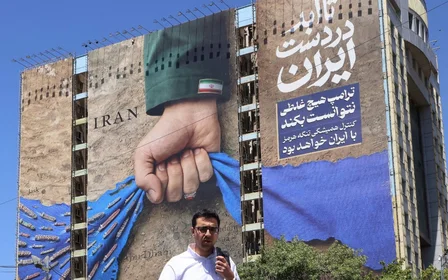
The Iran war, which began in February with a joint Israeli-US attack, has seen Tehran combine its trans-regional deterrence strategy with its domestic defence doctrine.
The strong national and social solidarity that emerged after the war broke out - a clear public rejection of foreign interference - also provided the Iranian state with a significant advantage.
This situation has challenged the aggressors’ superior military technology. Today, the line of defence begins in the Iranian homeland and spreads across the broader region.
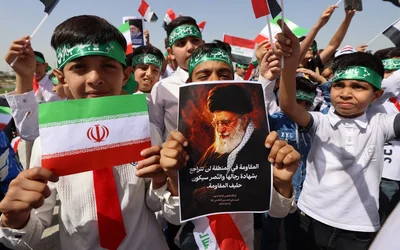
Before both the current war and the 12-day war in June 2025, Iran’s deterrence strategy was based largely on an “offensive defence” approach, comprising a network outside of its national borders: the “axis of resistance” across Lebanon, Syria, Iraq and Yemen.
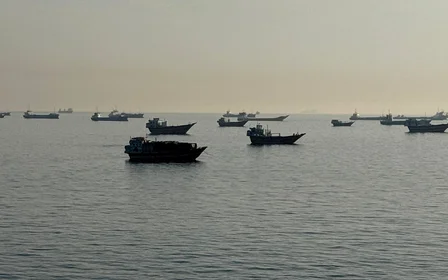
But the US-Israeli war showed Iran that it has even more cards to play: its ability to implement full control over the Strait of Hormuz, and by extension much of the global oil supply, constitutes a massive bargaining chip.
New MEE newsletter: Jerusalem Dispatch
Sign up to get the latest insights and analysis on Israel-Palestine, alongside Turkey Unpacked and other MEE newsletters
The war had thus led Iran to better appreciate the significance of its geography and superior geopolitics. By expanding the war across the region and attacking US assets in the Gulf, Tehran has further highlighted the vulnerability of the global economy.
Iran’s strategy combines territorial defence with external forward defence, but unlike in the past, the first layer of deterrence starts in the mainland, with the second complementary layer leveraging the support of regional allied forces when needed.
Homegrown defence
Indeed, Iran’s effective mainland deterrence has emboldened its allies to restore their operational capabilities and continue the fight against the US and Israel.
For years, the West and its regional allies sought to convey the message that the “axis of resistance” countries were merely instruments of Iran, used by the latter to pursue its own national objectives.
Perhaps this war was ultimately necessary to reveal the true strengths, capabilities and positions of all involved actors
But Iran’s homegrown defence in the current war, along with its backing for Hezbollah in the context of ongoing ceasefire talks between Israel and Lebanon, have shown how much Iran genuinely values its regional allies.
The latest manifestation of this was on Monday when Iran threatened to withdraw from the ceasefire talks with the US if Israel strikes Beirut and its southern Dahia suburb, meaning that a ceasefire must include all fronts.
The situation has effectively “levelled up” Iran, imbuing its regional role with a global dimension. Concurrently, new questions are emerging about the actual value of hosting US military bases on the soil of the Gulf countries.
Israel’s position in the regional power equation has also changed. Before the war, and especially in the wake of 7 October 2023, Tel Aviv was angling to become the regional hegemon. Its arbitrary attacks on neighbouring states across the Middle East were launched with impunity and western support.
Iran’s military resistance and economic resilience, however, have placed a major obstacle in Israel’s path. One might even argue that Iran, rather than Israel, has emerged from this conflict as a regional superpower.
Collective security
The war has also undermined traditional notions about a “collective security system” in the Gulf. Before the war, the prevailing view was that stability could only be achieved in the context of establishing such a system. The war revealed a contradiction in this view.
Arab countries of the region now face a new security dilemma: despite the heavy costs they have paid over the years to host US forces and to amass military equipment, the Americans failed to guarantee their security as Iranian drones and missiles rained down.
The Gulf states are now working to balance their relations with Iran and the US. As a result, the regional political-security equation is deeply dependent on what happens next in the confrontation between Iran and the US.
The Gulf states are inevitably inclined towards helping the two sides reach a sustainable peace, thus avoiding further regional instability. This has been clearly evidenced in repeated requests from Arab leaders, who have urged US President Donald Trump to accept a peace deal that includes concessions to Iran.
Perhaps this war was ultimately necessary to reveal the true strengths, capabilities and positions of all involved actors in the context of the regional power balance. Certainly, it has enabled Iran to recognise its military strengths and strategic constraints.
Most significantly, this conflict has shifted the fulcrum of Iran’s foreign policy, at least in the short term, from the nuclear issue to its geopolitical advantages in deterrence strategy.
The views expressed in this article belong to the author and do not necessarily reflect the editorial policy of Middle East Eye.
Middle East Eye delivers independent and unrivalled coverage and analysis of the Middle East, North Africa and beyond. To learn more about republishing this content and the associated fees, please fill out this form. More about MEE can be found here.