
Iran war: Trump can continue the same failed policies - or shape a historic legacy


In recent days, several high-level regional diplomatic initiatives have signalled an effort to revive US-Iran negotiations.
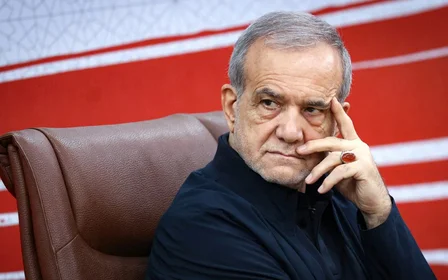
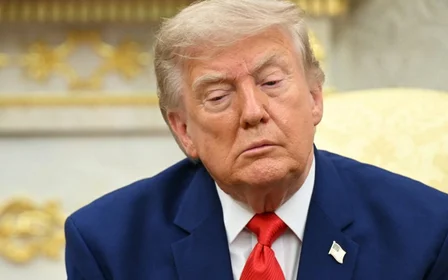
Pakistan’s army chief, Field Marshal Asim Munir, travelled to Tehran last month, followed by the foreign ministers of Oman and Qatar, each seeking to preserve the Islamabad memorandum of understanding signed by US President Donald Trump and his Iranian counterpart, Masoud Pezeshkian, in June.
According to Iranian officials, Tehran delivered a consistent message to all three mediators: Washington should return to the Islamabad memorandum and work towards ending the wars across all regional fronts as the basis for renewed negotiations.
Yet while Iran and Oman have reached an agreement to open a temporary new shipping route through the Strait of Hormuz, Washington rejected Tehran’s proposal to return to the Islamabad agreement, and resumed military escalation by striking rocket launchers on Larak Island.
Iran responded with missile attacks on US bases in Jordan, reinforcing the cycle of confrontation, and signalling that the US remains more committed to coercion than diplomacy.
New MEE newsletter: Jerusalem Dispatch
Sign up to get the latest insights and analysis on Israel-Palestine, alongside Turkey Unpacked and other MEE newsletters
Eight years ago, Trump abandoned the 2015 Iran nuclear deal, widely regarded as former President Barack Obama’s signature diplomatic legacy. But the Islamabad memorandum is Trump’s own diplomatic legacy.
If Washington is now prepared to walk away from an agreement that bears the signature of its own president, it sends a far broader message: the US is no longer merely abandoning the legacy of previous administrations - it is also abandoning its own. That is a strong indication that Washington has reached the end of its Iran playbook.
Conflicting calculations
Trump’s decision to launch “Economic D-Day” against Iran thus marks a final, decisive economic offensive, which aims to achieve through financial coercion what diplomacy, sanctions, covert action and military force have all failed to accomplish.
The current impasse is sustained not only by conflicting interests, but also by conflicting strategic calculations.
Washington appears to believe that, after several rounds of military confrontation and the extensive damage inflicted on Iran’s nuclear, missile, military and economic infrastructure, the imposition of the most comprehensive financial and commercial embargo in the history of US-Iran relations will ultimately compel Tehran to accept American terms.
Tehran appears determined to withstand the current economic offensive and, if necessary, escalate militarily rather than accept another temporary arrangement
This assumption was reflected in recent remarks by US Treasury Secretary Scott Bessent, who declared: “We are going to collapse this regime. It is time for our allies and the rest of the world to make a decision. You are either with us or against us.”
Tehran’s strategic assessment is markedly different. Based on an analysis I recently heard from an Iranian strategist, Iran’s leadership now views the confrontation with the US as an “existential war” that will shape not only Iran’s future, but also the regional order.
In this assessment, the Iran war has weakened US military readiness, depleted critical weapons stockpiles, exposed the vulnerability of the global energy system through the Strait of Hormuz, and imposed growing political costs on both Trump and Israeli Prime Minister Benjamin Netanyahu.
Consequently, Tehran appears determined to withstand the current economic offensive and, if necessary, escalate militarily rather than accept another temporary arrangement.
Washington might be underestimating the most significant shift in Tehran’s strategic thinking. Many within Iran’s current leadership appear to have reached what Persians describe as “death once, moan once” - a mindset best captured by the English proverb: “A man can die but once.”
They increasingly believe it is better to resolve the fundamental confrontation with the US once and for all, rather than endure another generation of sanctions, military threats and recurring crises.
Strategic outlook
The Islamabad memorandum was widely seen in Tehran as a potential turning point, but renewed US military operations, followed by an unprecedented campaign of economic warfare and public calls for regime change, have reinforced the conviction that Washington remains committed to overthrowing the Islamic Republic, regardless of diplomacy.
This mindset is also reflected in the composition of Iran’s current leadership. The new supreme leader belongs to the generation forged by the Iran-Iraq War, having served as a young soldier on the frontlines. He also carries a legacy of the recent conflict, in which his father, wife and son were killed in US-Israeli military operations.
Meanwhile, influential figures shaping Iran’s postwar strategy - including parliament speaker and chief negotiator Mohammad Bagher Ghalibaf, and Supreme National Security Council Secretary Mohsen Rezaei - are veteran commanders of the Iran-Iraq War, whose wartime experiences continue to shape Tehran’s strategic outlook.
The critical issue is that Washington may now be confronting an Iranian leadership that calculates risk very differently than in years past.
The current crisis has reached what military strategists would describe as a strategic deadlock. Neither Washington nor Tehran possesses a politically acceptable pathway to victory. Although the US can sustain economic warfare far longer than Iran may withstand it economically, such coercion alone is unlikely to achieve Washington’s political objectives or compel Tehran’s surrender.
Iran, meanwhile, retains the ability to impose disproportionate costs on regional stability through maritime security in the Strait of Hormuz, regional military escalation, and disruptions to global energy markets.
In short, both sides retain the capacity to inflict pain, but neither possesses the ability to impose a durable political settlement by force.
Defining choice
Trump now faces a defining strategic choice. Across his two presidencies, he has left three distinct legacies in US-Iran relations: “maximum pressure”, several military confrontations, and the Islamabad memorandum of understanding. He cannot preserve all three.
A train cannot run on three different tracks at the same time. If Trump wants history to remember him as the American president who achieved peace with Iran rather than prolonged conflict, he should choose his own diplomatic legacy - the Islamabad memorandum - and transform it into a comprehensive settlement capable of ending nearly five decades of hostility.
Such a grand bargain should concentrate initially on the two issues driving today’s confrontation. The first is the Strait of Hormuz. Rather than allowing the waterway to remain a recurring flashpoint, Washington, Tehran, Muscat and the Arab states in the Gulf should negotiate a permanent maritime security arrangement guaranteeing freedom of navigation, ending maritime confrontation, and recognising the responsibilities of the littoral states under international law.
The second is the nuclear issue. Instead of another temporary political understanding vulnerable to changing administrations, both governments should negotiate a bilateral treaty under which Iran would permanently renounce nuclear weapons while preserving its legal and internationally recognised rights to peaceful nuclear technology under the Non-Proliferation Treaty, and the US would permanently remove nuclear-related sanctions. Ratification by both the US Congress and the Iranian parliament would provide a degree of political durability that previous agreements lacked.
Virtually every major strategy pursued over the past five decades- engagement, sanctions, maximum pressure, covert operations, targeted assassinations, regime-change policies, and ultimately three wars - has failed to produce a stable peace.
The only major strategy that has never been seriously tested is comprehensive diplomacy aimed at building a durable and healthy US–Iran relationship.
The real question is no longer whether coercion has reached its limits - it has.
The alternative is not victory, but a prolonged war of attrition that risks devastating the critical infrastructure of Iran, Israel, and the wider Middle East, deepening regional instability, disrupting global energy markets and international commerce, and further undermining international security.
The question now is whether Washington and Tehran possess the strategic vision and political courage to seize what may be their last opportunity to replace perpetual confrontation with sustainable peace.
Trump has a rare opportunity to shape a historic legacy. He could help to establish a comprehensive regional security and cooperation framework between Iran and the Arab states of the Gulf, transforming one of the world’s most volatile regions into a more stable foundation for global energy security.
He also has a unique opportunity to facilitate a strategic understanding between Iran and Israel - not necessarily diplomatic normalisation, but a durable arrangement under which both sides would end their mutual military, security and existential threats, replacing “permanent deterrence by crisis” with “stable deterrence by agreement”.
Such achievements would constitute not merely a diplomatic breakthrough, but a fundamental restructuring of the Middle East’s security architecture - one with lasting benefits for regional stability, global commerce and American strategic interests.
The views expressed in this article belong to the author and do not necessarily reflect the editorial policy of Middle East Eye.
Middle East Eye delivers independent and unrivalled coverage and analysis of the Middle East, North Africa and beyond. To learn more about republishing this content and the associated fees, please fill out this form. More about MEE can be found here.