World Cup 2026: Bosnia advances to next round surrounded by 'Free Palestine' chants

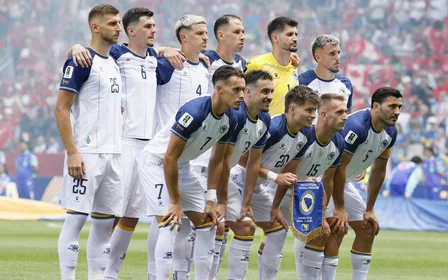
Bosnia and Herzegovina's historic run to the Fifa World Cup knockout stage has reignited online attention not only for the team's performances, but also for the pro-Palestine chants that have followed Bosnian supporters throughout the tournament.
After a 3-1 victory over Qatar secured Bosnia's place in the Round of 32, videos of fans chanting "Free Palestine" once again spread widely across social media, with many users drawing connections between Bosnia's own experience of war and genocide in the 1990s and Israel's ongoing genocide in Gaza.
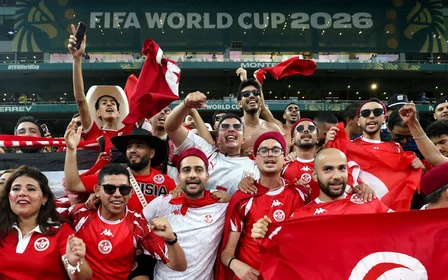
Ahead of the match between Bosnia & Herzegovina and Qatar in Seattle yesterday, Bosnian fans chanted “Palestine” both before kickoff and inside the stadium during the game, showing solidarity with Palestinians at the World Cup.
— The New Arab (@The_NewArab) June 25, 2026
Bosnia and Herzegovina went on to win the match… pic.twitter.com/kecbtpZvLI
The chants have become a recurring feature of Bosnia's World Cup campaign, with supporters heard chanting "Free Palestine" inside stadiums and during fan marches in host cities, earning praise from pro-Palestine audiences online.
For many Bosnians, the solidarity is deeply personal.
Captain Edin Dzeko, widely regarded as the country's greatest-ever footballer, spent his childhood living through the Siege of Sarajevo during the Bosnian War.
New MEE newsletter: Jerusalem Dispatch
Sign up to get the latest insights and analysis on Israel-Palestine, alongside Turkey Unpacked and other MEE newsletters
Born in Sarajevo in 1986, Dzeko was just six years old when the siege began. In a recent letter published in The Players' Tribune, he recalled growing up surrounded by shelling and sniper fire, making dangerous trips to collect water because his family had none, and finding moments to play football whenever the violence briefly subsided.
His family's apartment was destroyed during the war, forcing 15 members of his extended family to live together in his grandparents' small apartment for years.
Perhaps the most haunting memory Dzeko has shared is of the day his mother refused to let him go and play football with other children. Minutes later, a shell struck the pitch, killing several youngsters. Years later, Dzeko reflected simply: "My mother saved my life."
The 40-year-old made his 150th appearance for Bosnia against Qatar on Wednesday, continuing a career that has become symbolic of the country's journey from war to the world stage.
🥹 Sobrevivió a las bombas de pequeño.
— Jonay Amaro (@AmaroJonay) June 24, 2026
🤱 Su madre evitó que le mataran como a sus amigos, diciendo que no fuera a la plaza de su ciudad, donde iba a jugar al fútbol.
💪 Tiene 40 años, pero ha liderado a Bosnia para volver a un Mundial 12 años después.
🇧🇦 EDIN DZEKO, LEYENDA pic.twitter.com/dhU0mayq3o
The Bosnian War, which lasted from 1992 to 1995, claimed around 100,000 lives and displaced more than two million people. Its final months saw the Srebrenica genocide, in which more than 8,000 Bosniak Muslim men and boys were murdered by Bosnian Serb forces after the UN-declared "safe area" fell.
Bosnians view the country's wartime experience as inseparable from their solidarity with Palestinians.
Comparisons between Bosnia in the 1990s and Gaza have been common in public discourse since Israel launched its military assault on the enclave in October 2023.
Supporters on social media echoed that sentiment following Bosnia's victory, describing the team's success as carrying significance beyond football. Many shared clips of the "Free Palestine" chants alongside images from the Bosnian War, saying a nation that experienced ethnic cleansing and mass atrocities had chosen to stand publicly with Palestinians.
Bosnia fans’ chant for Palestine echoed through the whole stadium as Bosnia and Herzegovina booked their place in the next round of the WC.
— Leyla Hamed (@leylahamed) June 24, 2026
Whatever attempts are made to silence it, solidarity with Palestine keeps finding its way into football’s biggest stages. Even in the U.S. pic.twitter.com/1Ky4ibN4Pm
Bosnia's qualification means those chants are likely to be heard again.
Middle East Eye delivers independent and unrivalled coverage and analysis of the Middle East, North Africa and beyond. To learn more about republishing this content and the associated fees, please fill out this form. More about MEE can be found here.