Mecca agreement: Why Saudi Arabia, Turkey and Pakistan teamed up
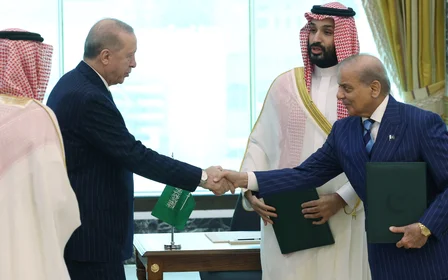
The signing of the Mecca Joint Defence Agreement by Saudi Arabia, Pakistan and Turkey this month was not the product of Riyadh’s reaction to a specific, immediate threat, as many have assumed.
A deeper reading reveals a convergence of strategic interests among the three signatory countries, which differ in their geography, their sources of power, and the imminent threats and challenges faced by each.
Yet they share a growing realisation that the security order that governed the Middle East and Southwest Asia for decades is no longer capable of providing the same guarantees it once did.
Three regional powers with exceptional characteristics came together to sign this deal in Mecca: Saudi Arabia, with its religious, economic, energy and geopolitical weight; Turkey, with its military power, defence industries and geographical position, linking the Middle East with Europe, the Black Sea and the Eastern Mediterranean; and Pakistan, with its scientific and research capabilities, military power, nuclear armament, and strategic depth in South Asia.
The agreement should thus be understood as the beginning of a transformation in the region’s security philosophy: from reliance on the umbrella of a single external power, to a network of regional partnerships capable of distributing risks and maximising deterrence.
New MEE newsletter: Jerusalem Dispatch
Sign up to get the latest insights and analysis on Israel-Palestine, alongside Turkey Unpacked and other MEE newsletters
The agreement stipulates that an armed attack against any of the three countries shall be regarded as an attack against all three, in a formula approaching the collective defence logic of major military alliances, while the three countries have emphasised that the pact is defensive in nature and is not directed against any particular state.
Herein lies the significance of the agreement. The question is not who the three countries seek to deter. Rather, the question is: why did each country need the other two at this particular historical moment?
Saudi influence
Naturally, Saudi Arabia is the country most prominently featured in discussions about the agreement. But it would be a mistake to view the nation’s security from a single perspective.
Saudi Arabia faces an exceptionally complex strategic environment, positioned at the heart of a region where numerous international and regional projects and powers intersect.
Saudi security is thus not merely about protecting borders; it encompasses the Gulf, the Red Sea, the Bab el-Mandeb Strait, energy routes, critical infrastructure, airspace, cybersecurity, supply chains, major economic projects, and much more.
It could create a regional defence-industrial base capable of transforming the arms market, particularly in the Muslim world - and ultimately around the globe
All of this gives cooperation with Turkey and Pakistan a distinct strategic value. Turkey provides highly advanced military, industrial and technological capabilities, while Pakistan provides military depth, operational experience, and longstanding defence relations with the kingdom.
Saudi Arabia, for its part, possesses religious and political influence, economic resources, and the capacity to invest in defence industries, markets, energy and infrastructure. This complementarity is one of the most important keys to understanding the Mecca agreement.
Bolstering the official line that the defence pact is not designed to target any individual state, Saudi-Iranian relations have thawed in recent years, amid efforts to reduce tensions and maintain channels of communication. It would thus be a strategic mistake for Riyadh to use the Mecca agreement as an instrument for initiating a fresh confrontation with Tehran.
The more logical interpretation is that Saudi Arabia wants to convey to all regional and international powers that the costs of attacking the kingdom can no longer be calculated on the basis of Saudi power alone, but must also take into account a broader network of capabilities and alliances.
That is the essence of deterrence: it does not mean that a state wants war. Rather, it is about making war sufficiently costly, so that an adversary will think long and hard before launching attacks.
Turkish foreign policy
One might ask why Ankara needs a defence agreement with Saudi Arabia and Pakistan. Turkey is a member of Nato and possesses one of the largest militaries in the alliance, while its defence industry has been developing rapidly.
The answer is that Turkey has become increasingly independent in shaping its own foreign policy in recent years, coming to regard its regional surroundings as a direct sphere of its security interests - spanning Syria, Iraq, Lebanon, Libya, the Eastern Mediterranean, the Black Sea, the Caucasus, Russia, Iran and Europe.
At the same time, Turkey’s role in Syria, alongside Ankara’s criticism of Israeli policies, particularly with regards to the war on Gaza, have fuelled increased tensions with Tel Aviv.
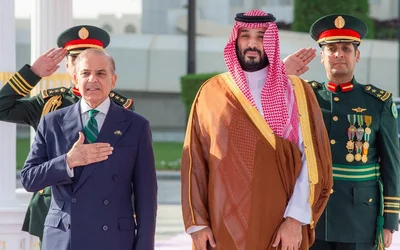
One of the most important recent developments in the region is that relations between Turkey and Israel are no longer merely a political disagreement over Palestine. They have rapidly evolved into a series of strategic clashes, particularly over Syria and the Eastern Mediterranean.
Israel has deepened its security and military relations with Greece and Cyprus. Last December, the three nations held their tenth trilateral summit. Greece, Israel and Cyprus have also developed military cooperation programmes involving joint exercises.
From the Turkish perspective, it is impossible to ignore the fact that Israel, Greece and Cyprus constitute a network of military and political cooperation in an area where their interests directly conflict with Turkey’s.
This helps to explain one of the benefits for Turkey of the partnership with Saudi Arabia and Pakistan. Turkey does not want its strategic capabilities to remain confined within the framework of its relationship with the United States, Europe and Nato. Rather, it seeks a broader network to reduce its vulnerability to pressure from any single axis.
Numerous analyses have made clear that the agreement between Saudi Arabia and Pakistan was not born overnight. Rather, it was constructed upon a longstanding foundation of military cooperation, training and defence relations. Turkey’s entry into this equation thus builds upon a network that has already existed for decades.
Pakistani calculations
As for Pakistan, it would be a major mistake to interpret its participation in the agreement solely through the lens of the Middle East.
Since the establishment of the Pakistani state, its security has been deeply connected to its conflict with India. Even when the India-Pakistan front is relatively calm, the Kashmir issue, border disputes and military competition between the two nuclear powers continue to affect their strategic calculations.
Last year witnessed a dangerous escalation between India and Pakistan, reaching the point of military mobilisation and direct confrontation. Islamabad thus does not view the deal with Ankara and Riyadh solely through the prism of the Gulf. It sees it as part of a larger question: how can Pakistan build a network of strategic partnerships to enhance its ability to deal with a multi-front security environment?
From this perspective, Riyadh becomes an exceptionally important partner. Saudi Arabia is not just a Gulf or Arab country; it is an economic, energy, religious and political centre - both regionally and globally.
Turkey, meanwhile, brings considerable military and industrial power, alongside its extensive relations with Central Asia, the Middle East, Europe, Russia and China, as well as the US. The trilateral relationship therefore provides Pakistan with a broader strategic space.
It is important to emphasise that Saudi Arabia is not seeking a “foreign army”, so much as it is seeking to diversify the sources of power available to it. It would be a serious mistake to interpret the agreement as evidence of the kingdom’s inability to defend itself. In recent decades, Saudi Arabia has devoted enormous resources to developing its armed forces, air and missile defence systems, and air and naval forces.
Modern military power, however, is not simply a matter of purchasing weapons. It encompasses training, operational experience, intelligence capabilities, command and control, satellites, artificial intelligence, electronic warfare, arms manufacturing and maintenance, and the sustainability of military operations during a prolonged war.
This is why the partnership with Turkey and Pakistan will be valuable to the kingdom not only in the event of aggression, but also in building more independent national deterrence capabilities over the long term. The best defence alliance is not one that makes a state dependent on its allies forever, but one that makes it more capable of relying on itself.
Vast network
Geography gives the Mecca agreement a value that traditional alliances do not necessarily possess. Turkey lies at the northern edge of the region, on the frontiers of Europe, the Black Sea and the Middle East. Saudi Arabia lies at the region’s heart, between the Gulf and the Red Sea. Pakistan lies east of Iran, on the frontiers of India and Central Asia, and on the Arabian Sea.
The three countries thus form a vast triangle stretching from Anatolia, through the Arabian Peninsula, to South Asia. This geographic reach gives the Mecca Agreement a significance that extends beyond the defence of national borders, connecting three strategic regions: the Eastern Mediterranean, the Gulf and the Indian Ocean.
These regions are already linked by energy, trade and maritime routes. Consequently, Turkish security is not entirely separate from Saudi security, which itself is not entirely separate from Pakistani security. It is a network of interests.
The Mecca agreement should therefore not be interpreted as a declaration of war, but rather as an investment in preventing wars
One of the most important reasons why Saudi Arabia, Turkey and Pakistan are significant collectively, is that all three have access to strategic maritime spaces. Turkey controls the straits connecting the Black Sea to the Mediterranean. Saudi Arabia overlooks the Red Sea and the Gulf. Pakistan overlooks the Arabian Sea and the Indian Ocean.
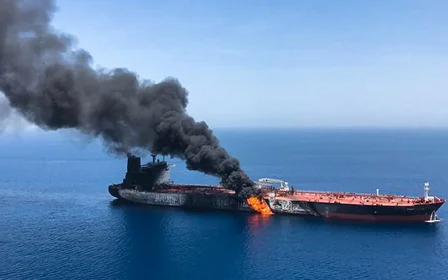
This makes maritime and intelligence cooperation, along with the protection of navigation, natural areas for collaboration. In light of the recent disruptions affecting Bab el-Mandeb and the Strait of Hormuz, protecting trade and energy routes has become an essential component of national security for every country possessing a strategic maritime position.
The Mecca agreement could therefore develop in the future into cooperation in maritime surveillance, combating drones, protecting shipping, cybersecurity at ports, naval intelligence, mine countermeasures, protection of coastal infrastructure, and search and rescue. These areas may ultimately prove more important than simply deploying troops in the event of war.
Another important dimension concerns the defence industry. Turkey has become one of the leading countries in the production of drones, unmanned systems, missiles, ships, armoured vehicles and military electronics. Pakistan also has longstanding experience in military industries, and extensive operational expertise.
Saudi Arabia, for its part, has made significant progress in recent years in developing its own defence industries. It also possesses capital, a large market, and a need to localise a substantial portion of its defence production.
Defence integration
Here, a highly important strategic possibility emerges: the Mecca agreement could evolve from a joint defence deal into a broader framework for defence integration.
If this happens, the result would not merely be an increase in the military strength of the three countries. It could create a regional defence-industrial base capable of transforming the arms market, particularly in the Muslim world - and ultimately around the globe.
Pakistan’s nuclear dimension is one of the most sensitive elements of the agreement. This does not, of course, mean that the pact automatically provides Saudi Arabia or Turkey with a nuclear umbrella, or that Pakistan’s nuclear weapons are officially part of the agreement.
Nevertheless, the presence of a nuclear-armed state in any defence alliance changes deterrence calculations. A potential adversary does not only look at the forces deployed on the battlefield; it also considers the strategic depth upon which the alliance may rely. From this perspective, the mere presence of Pakistan in the agreement raises the stakes for any hostile power contemplating a large-scale war.
It would also be a mistake to interpret the agreement as an announcement that Saudi Arabia, Turkey and Pakistan are abandoning their previous relationships and alliances.
Saudi Arabia remains a leading member of the Gulf Cooperation Council, the Arab League and the Organisation of Islamic Cooperation (OIC), while maintaining extensive relations with the US and Europe. Turkey is a member of Nato and the OIC. Pakistan is also part of the OIC, while maintaining longstanding and complex relationships with the US, the West and China.
The agreement is therefore better understood as a diversification of options, rather than an abandonment of existing relationships and alliances.
This policy has become increasingly common in today’s world. States do not necessarily want to choose between Washington, Beijing and Moscow; they want to deal with all of them. This can be described as “strategic hedging”: maintaining multiple relationships to avoid becoming captive to a single direction.
The real test
The most distinctive feature of the Mecca agreement, as compared with previous alliances, is that it is not based on a high degree of similarity among the three countries. Instead, it is based on the complementarity of their differences.
Each country has its own calculations, interests, and varying relationships with Iran, India, Israel, the US, Russia and China. Yet the three nations have determined that there is sufficient common ground among their interests to sign a defence agreement.
That in itself is significant. In international relations, states do not need to agree on everything in order to form an alliance. It is sufficient for them to conclude that cooperation in certain areas serves their interests better than acting alone.
Needless to say, the real test begins when the agreement is put into practice. All defence pacts appear powerful on the day they are signed, but history teaches us that paper does not create power.
The success of the Mecca agreement will depend on many practical questions whose answers will become clearer in the coming days. Yet it is essential to emphasise that more important than the agreement itself is the idea behind the agreement.
Even if the pact does not develop into a full military alliance, it has achieved something extremely important: it has shifted the concept of regional security from being merely an issue managed by great powers, to one that regional states themselves can reshape.
This is an intellectual transformation before it is a military one. For decades, the security map of the Middle East was largely drawn from outside the region. Today, regional powers appear increasingly determined to take the initiative themselves.
The Mecca agreement has caused a political earthquake, whose repercussions continue to unfold. Most, if not all, of the world’s respected research centres have made it a major subject of discussion, appearing almost unanimous in the conclusion that it represents a strategic transformation in the Middle East’s security and security-alliance architecture.
Symbolic significance
Last week, the Council on Foreign Relations, one of the most prominent American research institutions specialising in Middle Eastern studies, published a front-page analysis titled “The U.S.-Led Middle East Order Is Over. The Mecca Agreement Proves It.” The piece noted that the pact demonstrates “how far U.S. influence in the Middle East has eroded - and how regional powers are now shaping their own security order”.
Australia’s Lowy Institute published a piece by researcher Saira Bano, arguing that the agreement “redraws the Indo-Pacific’s western edge”. The article further noted that India “faces the most immediate and politically sensitive implications”.
And an analysis from the Jerusalem Institute for Strategy and Security suggested that the trilateral agreement poses serious challenges, constraining grand western visions for a regional security architecture centred around Israel.
How were three countries, each facing their own threats and divergent interests, able to begin building a regional security order whose rules were no longer determined solely by external powers?
For Saudi Arabia, the fundamental message of the Mecca agreement is that while Riyadh does not seek war, it will not leave the nation’s security hostage to uncertainty. This is consistent with a broader Saudi policy based on diplomacy, de-escalation, and building relationships with different powers.
Diplomacy does not conflict with deterrence. Indeed, the strongest diplomacy is that which rests upon sufficient strength, to ensure the other side understands that negotiations are not the result of weakness.
The Mecca agreement should therefore not be interpreted as a declaration of war, but rather as an investment in preventing wars - and as a guarantee of security and stability for the region as a whole.
The choice of Mecca as the venue for signing the deal carries profound political and symbolic significance. Mecca is not merely one of the cities of Saudi Arabia. It is the qibla, the place towards which Muslims turn their hearts, and the greatest symbol of their unity.
It is anticipated that the agreement will expand to include other Arab and Muslim countries. If this experiment succeeds, the question years from now may no longer be: why did Saudi Arabia, Turkey and Pakistan form an alliance? Instead, it may be: how were three countries, each facing their own threats and divergent interests, able to begin building a regional security order whose rules were no longer determined solely by external powers?
In my view, this is the real question that should occupy scholars of strategy and international politics.
The views expressed in this article belong to the author and do not necessarily reflect the editorial policy of Middle East Eye.
Middle East Eye delivers independent and unrivalled coverage and analysis of the Middle East, North Africa and beyond. To learn more about republishing this content and the associated fees, please fill out this form. More about MEE can be found here.