Live: Israel says it will control bridges and area south of Lebanon’s Litani River

Live Updates
Since the start of the US-Israeli war on Iran, Iranian authorities have sharply restricted access to the internet.
According to NetBlocks, a group that monitors internet access worldwide, Iran has experienced a near-total blackout for 20 consecutive days. Connectivity has dropped to less than one percent.
For those trying to access the internet, options are limited. Some rely on Starlink, which is not widely used.
The equipment is expensive and difficult to import. Iranians also believe is easier for the authorities to detect.
Others turn to VPNs (virtual private networks) and custom configurations that can be installed on their phones to mask traffic and bypass censorship.
Read more: How Iranians get around the internet blackout despite the risks and cost

Twenty people have been killed and 57 wounded in Israeli attacks on Lebanon, the Lebanese Disaster Risk Management Unit says.
The deaths on Friday bring the total number killed by Israeli attacks since 2 March to 1,021, according to figures published by the official National News Agency.
The total number of wounded rose to 2,641 while 134,616 displaced people were registered in shelters.
Iraq has declared force majeure on all oil fields developed by foreign oil companies, as military operations in the region have disrupted navigation through the Strait of Hormuz, preventing most of the country's crude exports from moving, oil ministry sources said.
Declaring force majeure excuses a party from fulfilling its obligations due to "superior force" - specifically, war, hostilities, military actions, or related events that make performance impossible.
Saudi Arabia’s defence ministry says it intercepted and destroyed three drones in the Eastern Province.
The interceptions come less than an hour after Saudi defences downed two other drones in the same area.
Reporting by Al Jazeera
QatarEnergy CEO Saad al-Kaabi says he repeatedly warned that any attack on Iran’s energy sites could put Qatar’s own gas infrastructure in danger.
“I was always warning, talking to executives from oil and gas that are partnered with us, talking to the US secretary of energy, to warn him of that consequence and that that could be detrimental to us,” Kaabi told Reuters news agency.
On Wednesday, Qatari officials said that Iranian missile strikes caused “significant damage” at Ras Laffan Industrial City, located 80km from the capital, Doha. The Qatari hub is responsible for a fifth of the world's liquefied natural gas (LNG).
The site was already the subject of an attack on 2 March, which suspended production. Qatar was able to avoid any fatalities at the attacked Ras Laffan site because of its quick evacuation of personnel, al-Kaabi said.
Al-Kaabi also said that the company’s planned North Field expansion project, which aims to boost Qatar’s LNG production capacity by 2027, could be delayed by more than a year because of Iran’s attack on its Ras Laffan plant.
“No work is happening on the North Field expansion. There are no workers there. It’s definitely delayed,” Kaabi told Reuters news agency. “I think it will be delayed for months, if not a year or more.”
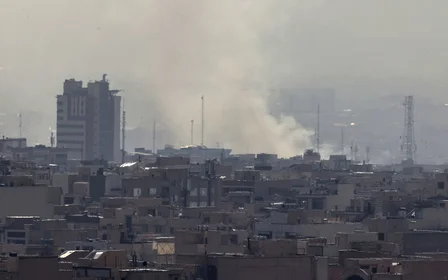
Israeli warplanes have carried out air strikes targeting multiple locations in southern Lebanon, Al Jazeera is reporting, citing the Lebanese National News Agency.
Recent attacks targeted Zebdine, Qaqaiyat al-Jisr, and Yahmar al-Shaqif.
Iranian President Masoud Pezeshkian delivered a message for Persian New Year on Friday in which he stated that his country does not want war with its neighbours or to acquire nuclear weapons, state media have reported.
“Our difficulties are the result of the interference of enemies,” he said, addressing Iran's “dear neighbours” as “our brothers” and expressing his intention to “resolve all these differences with you”.
He added that Iran wants “to establish peace and stability in the region” and proposed “a regional security structure be formed from Islamic countries” without “the presence of outsiders in the region”.
Iran has a religious fatwa forbidding the development of nuclear weapons, and, although it retains a supply of enriched uranium to enable the production of weapons if threatened, US intelligence officials have stated that there has been “no effort” to develop these capabilities.
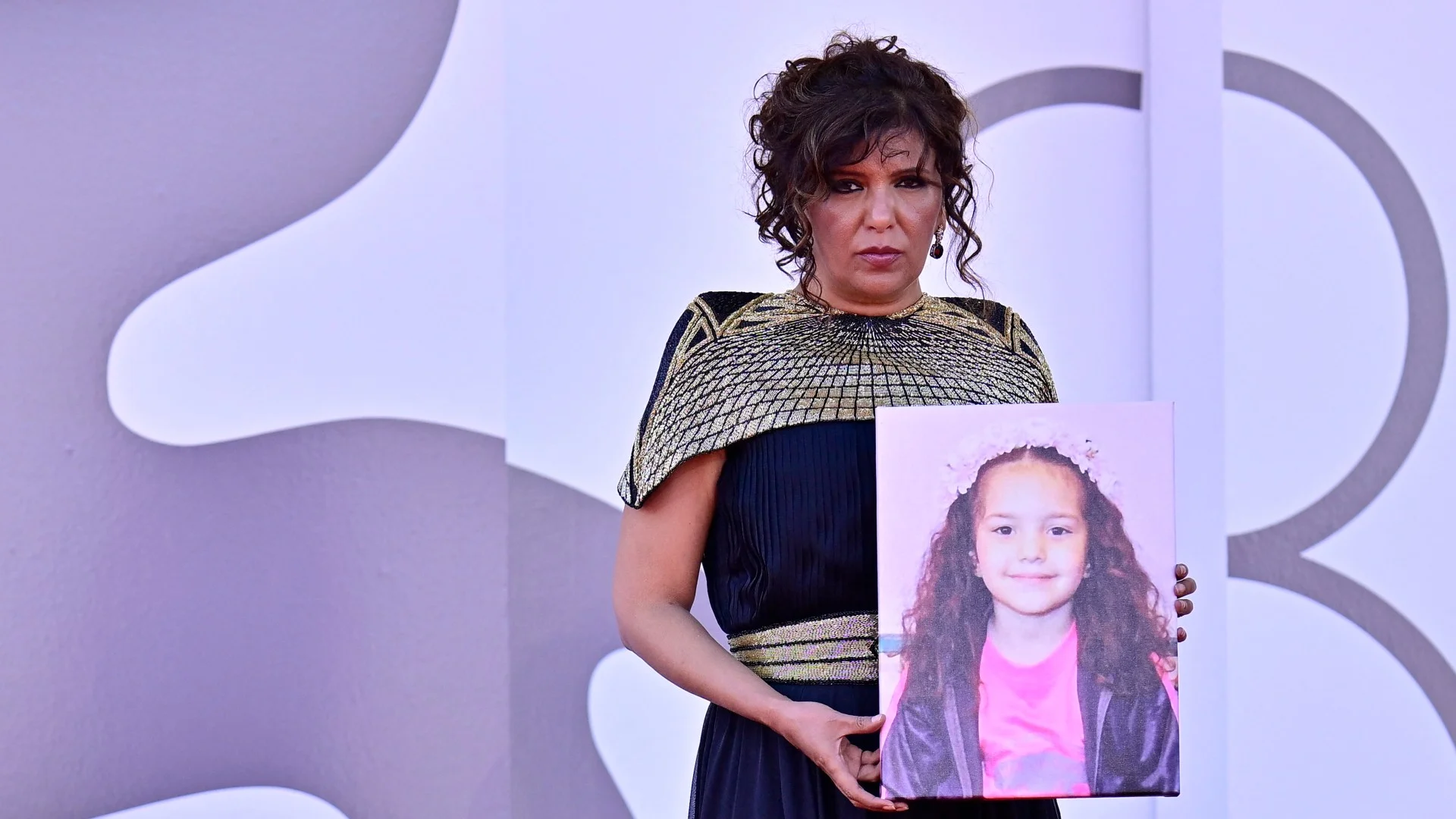
India's Central Board of Film Certification (CBFC) is blocking the release of the Oscar-nominated film, The Voice of Hind Rajab, because of the threat it could pose to the relationship between India and Israel, according to a report by Variety.
Tunisian director Kaouther Ben Hania’s docudrama tells the story of Hind Rajab, a five-year-old Palestinian girl in Gaza who was deliberately killed by Israeli soldiers after they fired 335 bullets inside the car from which she was waiting to be rescued.
The Voice of Hind Rajab’s India-based distributor, Manoj Nandwana, told Middle East Eye that he had submitted it for central approval in February, in anticipation of a March release.
However, the CBFC blocked the film, reportedly telling Nandwana that “if it gets released, it would break up the India-Israel relationship”, according to the Variety report.
Read More: India bans 'The Voice of Hind Rajab', citing threats to relationship with Israel
A British journalist released a video report showing footage of US military personel loading weapons at British bases.
The report, by Phil Miller, the editor of independent outlet Declassified UK, suggests that British Prime Minister Keir Starmer was lying to the public when he said the UK was not involved in the US-Israeli aggression against Iran.
The video shows US troops loading 2,000 lb bombs onto B-52s at RAF Fairford in Gloucestershire “to go and bomb Iran”, contradicting Starmer's claims that Britain “will not be drawn into the wider war”.
A poll recently suggested that only 8 percent of the British public would back offensive military support for US attacks against Iran.
🚨 BREAKING NEWS
— 𝐓𝐌𝐓 (@TMT_arabic) March 20, 2026
A British journalist has released a secret video report, leaking a major story…
The UK Prime Minister, Keir Starmer, has been caught lying to the public. The world has learned the truth. He had claimed that Britain is not involved in a war against Iran, while… pic.twitter.com/5q3yxCq4NI
Iran’s Islamic Revolutionary Guard Corps (IRGC) Quds Force commander Esmail Qaani has applauded the “resistance front” of Tehran’s regional allies for uniting against US and Israeli aggression in the current conflict, Iranian media reports.
These remarks form Qaani’s first statement since Israel’s killing of Iranian Supreme Leader Ayatollah Ali Khamenei on 28 February, which marked the start of the current US-Israel war on Iran.
UK Foreign Secretary Yvette Cooper has warned her Iranian counterpart Abbas Araghchi “against targeting UK bases, territory or interests directly”, in a phone call on Thursday, according to a statement from the Foreign Office.
This comes in response to comments made by the Iranian foreign ministry that Iran considers the UK’s decision to allow the US use of its bases as “participation in aggression”.
The British Foreign Office insisted that “the defensive UK operations in the region were a response to the Iranian aggression against Gulf partners”, adding that “the UK wants to see a swift resolution in this conflict”.
Iranian attacks on Gulf states and US bases in the region followed the US-Israeli strikes on Iran, including hitting energy infrastructure in the South Pars gas field, which the British government has yet to condemn.
Iranian Supreme Leader Mojtaba Hosseini Khamenei said his country was not behind strikes on Turkey or Oman, blaming Israel for playing a “trick” to create division between Iran and its neighbours.
In a written statement released to state media to mark the Persian New Year, Khamenei described Iran's relations with eastern countries as “very close”.
He called on Afghanistan and Pakistan to mend ties with the region, saying he is “ready to take the necessary actions” on his part.
Iran’s Supreme Leader Mojtaba Hosseini Khamenei has said that US and Israel’s expectations that their attacks would topple the Iranian government were a “gross miscalculation” in a written statement released to state media.
In a message marking the start of the Persian New Year, Nowruz, on Friday, Khamenei wrote that “despite all differences in religious, intellectual, cultural and political origins”, the country was united while “a fracture has emerged in the enemy”.
Khamenei is Iran’s third Supreme Leader, having taken over from his father when he was killed in a US air strike at the start of the war.
He said the year would be one of "resistance economy under national unity and national security."
In a post on X, Iran's foreign minister claimed to have “intelligence on Israeli plans to strike infrastructure”, and said the nation would exercise “ZERO restraint” if the attack took place.
“We are men and women of principles. Iranians do not sneak attack adversaries while engaged in dialogue. Only when attacked do we powerfully respond,” wrote Abbas Araghchi.
His comments came after tensions escalated since the Israeli attack on Iran’s South Pars gas field and the subsequent retaliatory strikes by Iran against energy infrastructure in Israel and the Gulf.
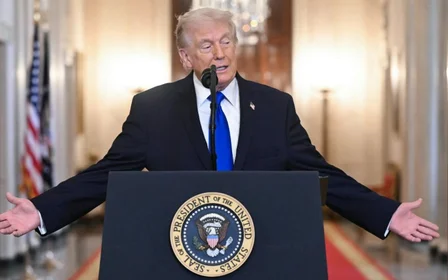
US President Donald Trump called Nato allies "cowards" at the Commander in Chief trophy presentation at the White House for reluctance to support US war efforts in Iran or deploy forces to secure the Strait of Hormuz.
“Without the U.S.A., NATO IS A PAPER TIGER!”, Trump wrote on Truth Social, berating his allies for failing to “join the fight to stop a Nuclear Powered Iran” and “complain[ing] about the high oil prices they are forced to pay” as a result of the closure of the Hormuz Strait.
“COWARDS, and we will REMEMBER!”, the president continued in the post.