Keir Starmer resigns as British prime minister

Keir Starmer has resigned as the prime minister of Great Britain less than two years after winning a landslide general election.
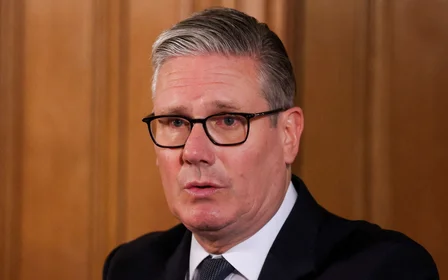
On Monday morning Starmer gave an address outside Number 10 Downing Street after days of speculation over his next move.
"I will resign as leader of the Labour Party," he said.
He said he has asked the National Executive Committee of the Labour Party to set out a timetable with leadership nominations opening on 9 July, and completed by the summer recess.
In the case of a contest, the announcement means a new leader is set to be in place before parliament returns in September.
New MEE newsletter: Jerusalem Dispatch
Sign up to get the latest insights and analysis on Israel-Palestine, alongside Turkey Unpacked and other MEE newsletters
Starmer said: "The question my party is asking now is whether I am best placed to lead us into the next general election."
"I have heard the answer of my parliamentary party to that question, and I accept that answer with good grace.
"Every decision I’ve taken has been about putting the country I love first. That is why I will resign as leader of the Labour party."
He added: "I have spoken to his majesty the king this morning to inform him of my decision."
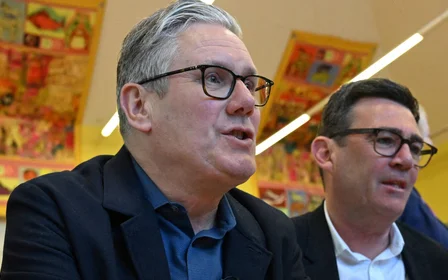
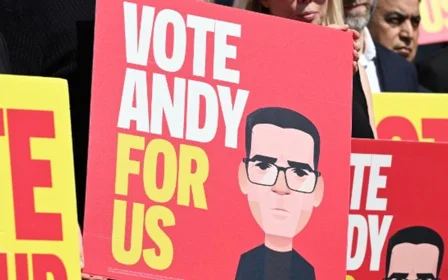
The prime minister's resignation has been triggered by the by-election victory of Andy Burnham, the former Greater Manchester mayor, in Makerfield last week, and follows a disastrous round of local elections that was widely blamed on Starmer's unpopularity with the electorate.
Burnham is popular within the Parliamentary Labour Party and is the frontrunner to be the next prime minister.
If he runs unopposed, which seems likely, he could become prime minister by mid-July.
Starmer said in his speech that "I inherited a Labour Party that was politically, financially and morally bankrupt."
He said "we changed our party, ripping out the poison of antisemitism" and "restoring trust on the economy, defence and national security".
He added: "I will also give my successor my full and unequivocal support, knowing that they will inherit a Britain that is far stronger and fairer than the one I inherited two years ago, better prepared for the challenges ahead and better able to ensure the Labour Party secures a second term in office."
What next?
Burnham is set to take his seat in the House of Commons later on Monday.
Although former Health Secretrary Wes Streeting has previously said he would stand in a leadership contest, members of his team have reportedly said he is reconsidering doing so.
Polling has shown Streeting is unpopular among Labour members - even compared to Starmer.
Burnham, meanwhile, is seen as being on the soft left of the party.
He is often characterised as a political chameleon who has changed his positions dramatically over the years.
But as the highly popular mayor of Greater Manchester, Burnham and his allies promoted a political philosophy called "Manchesterism", which he is now proposing for the country at large.
Manchesterism is defined by a more interventionist approach to the economy - not socialist, but much bolder than Starmer's vision.
In Burnham's own words, it is a "modern and functional response to the high-inequality, low-growth trap that came from the 1980s drive to privatise economic power and overcentralise political power in the Treasury".
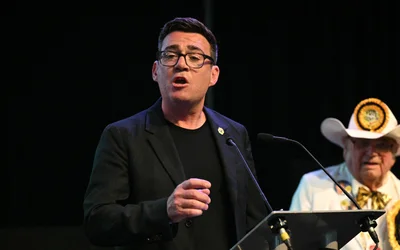
He has already said he wants to bring water and energy into public control.
There are question marks, however, over which version of Burnham will turn up as prime minister.
In his by-election campaign, he suggested he would retain elements of Starmer's approach. In particular, he signalled he would stick with the government's drive to drastically reduce immigration.
This forms part of an effort to win back voters who have gone to Reform. But it will be seized on as a point of attack by the left-wing Green Party, which has surged in the polls in recent months.
Burnham and his team will be acutely aware of that. Some of his economic policies will likely be designed to win over voters who have recently turned away from Labour and towards the Greens.
This could lead to significant changes in Britain in the months to come.
Middle East Eye delivers independent and unrivalled coverage and analysis of the Middle East, North Africa and beyond. To learn more about republishing this content and the associated fees, please fill out this form. More about MEE can be found here.