Why have Saudi air defences failed to intercept Houthi missiles?

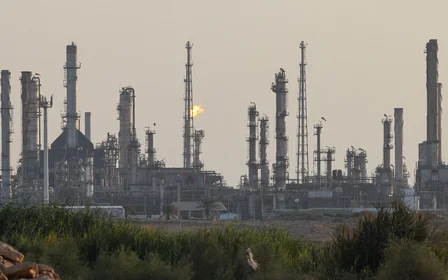
For years, Yemen's Houthis have demonstrated their ability to strike some of Saudi Arabia's most strategically important targets, from oil infrastructure to the kingdom's capital.
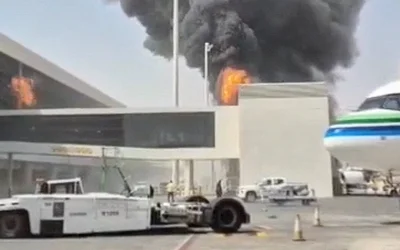
But repeated missile and drone strikes on Riyadh's main international airport have raised fresh questions about the limits of the kingdom's sophisticated air defences.
Since 6 October, the strikes have killed at least 20 people and injured almost 400. The deadliest attack so far happened on 10 October when 12 people were killed and more than 300 wounded.
On Monday, the kingdom vowed a "serious" response to the attacks and less than 24 hours later, Saudi strikes targeted energy facilities in Sanaa - causing massive fires and explosions that rocked the Yemeni capital.
So why have the latest Houthi attacks repeatedly penetrated Saudi defences, and what do they reveal about the kingdom's ability to protect its most valuable assets?
New MEE newsletter: Jerusalem Dispatch
Sign up to get the latest insights and analysis on Israel-Palestine, alongside Turkey Unpacked and other MEE newsletters
Riyadh has spent billions of dollars on some of the world's most advanced air-defence systems, assembling an arsenal designed to counter precisely these threats.
Its equipment includes the American-made MIM-104 Patriot, including the advanced PAC-3 variant with hit-to-kill technology, and the even more sophisticated Terminal High Altitude Area Defense (THAAD) system.
Both can intercept ballistic missiles and have demonstrated their capabilities in combat. Saudi Arabia also has a well-equipped air force, including advanced F-15s and Eurofighter Typhoons, capable of engaging drones and cruise missiles.
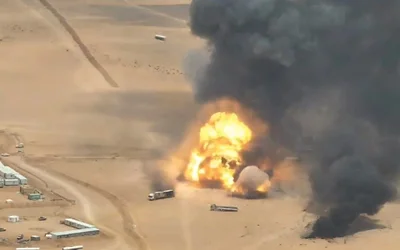
Yet Houthi missiles and drones have repeatedly evaded or penetrated the kingdom's defences, exposing the difficulty of protecting a vast territory and its high-value targets from sustained attacks.
Nicholas Heras, interim executive director at the Middle East Policy Council and senior director at the New Lines Institute, said Saudi Arabia’s vast territory leaves it "unusually exposed" to Houthi attacks launched from northern Yemen.
"Much of Saudi territory is desert, which makes it challenging to fully defend because of the distances that must be accounted for - and it costs more to have personnel maintain early warning systems in that terrain," Heras told Middle East Eye.
"The Houthis have a target-rich environment in Saudi Arabia that includes some of the most important oil infrastructure in the world that are more immediately exposed to the drone and missile attack capabilities that the Houthis possess."
Heras said the attacks on Riyadh were intended to send a message to Saudi Arabia amid renewed fighting in Yemen.
"The Houthis perceived a gap in Saudi capability and attention span and struck Riyadh to send a signal to Saudi Arabia that if Sanaa is hit, Riyadh will be hit," he said.
'Deliberate escalation'
Federico Borsari, a defence expert at the Centre for European Policy Analysis (Cepa), believes the strikes represent an escalation in the Yemeni group’ willingness to attack the kingdom rather than necessarily demonstrating a fundamentally new capability.
The group has possessed long-range strike capabilities for almost a decade and previously targeted Riyadh in 2017.
"Since then, their arsenal has further expanded to include increasingly sophisticated ballistic and cruise missiles built with Iranian help," Borsari told MEE. "But without evidence it is hard to tell whether some new capabilities were used."
For Borsari, the more concerning development "is the Houthis' ability to conduct repeated, coordinated strikes against heavily defended targets."
He added that the timing appears consistent with "deliberate escalation intended to impose economic and political costs" on Saudi Arabia amid renewed fighting in Yemen.
Freddy Khoueiry, lead Middle East and North Africa and defence analyst at risk intelligence company RANE, said it remained unclear whether the attacks reflected new Houthi capabilities.
'The escalation is significant because the Houthis are demonstrating both the capability and willingness to impose direct costs on the Saudi capital'
- Freddy Khoueiry, RANE
"Based on publicly available information, it is still difficult to determine whether the Riyadh attacks represent a specific new technological upgrade or simply a decision to employ existing capabilities more aggressively against civilian aviation infrastructure," he told MEE.
"In either case, the escalation is significant because the Houthis are demonstrating both the capability and willingness to impose direct costs on the Saudi capital," he said.
Mohammed al-Basha of the Virginia-based Basha Report risk advisory said the Houthis had spent years refining their long-range strike capabilities.
"For years, the Houthis have used their attacks on Israel to refine their long-range strike capabilities," he told MEE. "What appeared to be failed attacks were also opportunities to learn and adapt."
The group may have applied lessons from its regional attacks, as well as from Iran’s confrontations with the US and Israel, to improve its ability to challenge sophisticated air-defence networks.
"Saudi Arabia has invested heavily in Patriot, Thaad, and other systems, but its vast territory makes comprehensive protection difficult," al-Basha said.
"The Houthis do not need to overwhelm the entire network. One successful strike can cause significant damage and disruption."
The repeated strikes also raise questions about whether Saudi Arabia has enough interceptors to sustain its defences during a prolonged campaign.
The interceptor problem
Saudi Arabia's interceptor stockpiles may have been depleted following sustained use during the wider regional conflict with Iran. Repeated missile and drone attacks can rapidly consume the expensive interceptors needed to stop incoming threats.
The United States has also expended significant quantities of Patriot and Thaad interceptors during the conflict, putting pressure on supplies that could take years to replenish.
Borsari described interceptor depletion as a "credible explanation" for the breaches, although he cautioned against treating it as the only possible cause.
He pointed to media reports from last month suggesting that Riyadh was running low on ballistic missile interceptors.
"If true, this would create difficult operational trade-offs for air-defence commanders when deciding which threats to engage, how many interceptors to allocate, etc," he said. "These decisions become even more problematic during mass salvos."
The Houthis could also be attempting to saturate Saudi defences by launching different types of weapons simultaneously, including one-way attack drones, cruise missiles and ballistic missiles.
Even sophisticated, multilayered air-defence systems cannot guarantee that every incoming projectile will be intercepted during a sustained bombardment.
Borsari said it would be "naive to deny" that the Riyadh strikes raise "serious questions" about the effectiveness of Saudi Arabia’s ballistic missile defences, particularly their ability to protect fixed, high-value targets under repeated attack.
Khoueiry similarly argued that the strikes were less evidence of "a fundamental deficiency" in Saudi air defences than a reminder of the limitations facing even advanced systems.
"Saudi Arabia has to defend a very large territory and prioritize coverage around major cities, military sites and critical infrastructure, while interceptor availability is also under pressure," he said.
"Direct ballistic-missile impacts could reflect those constraints, but on their own they do not prove a severe interceptor shortage."
A costly game of adaptation
"We don't know what the specific cause of this failure is," Borsari said of the attacks. He noted that an air defence network's effectiveness depends on several components.
"The effectiveness of a defensive network depends not simply on the sophistication of its interceptors but also on sensor coverage and integration, proficient C2 (command and control), ammunition availability, etc. So it could be any of these, or - most likely - a combination thereof."
Saudi Arabia's geography compounds those challenges. Its airports, oil facilities, ports and military installations are spread across a vast area, making continuous protection expensive and difficult to sustain.
'For years, the Houthis have used their attacks on Israel to refine their long-range strike capabilities. What appeared to be failed attacks were also opportunities to learn and adapt'
- Mohammed al-Basha, Basha Report
"The main challenge is detection, and for that you need to rely on various assets, including aircraft, to ensure proper early warning," Borsari said.
"But maintaining such a detection regime over time is very costly and a sustainment burden on both the equipment and personnel."
There are cheaper options for countering drones in particular, including automated anti-drone turrets equipped with heavy machine guns and low-cost short-range interceptors. But these require supporting infrastructure and careful integration with existing systems.
"So I'm afraid we will continue to see drones penetrating Saudi territory for the foreseeable future," Borsari said.
Khoueiry sees the latest Houthi strikes, alongside recent Iranian attacks on American and regional targets, as evidence of a wider effort to adapt to sophisticated air-defence systems rather than simply a matter of luck.
"Iran and its partners appear to be learning how to operate against layered air defence networks, adapting flight routes and tactics to improve penetration and impose higher interception and economic costs," he said.
"The lesson for Saudi Arabia and the wider region is that increasingly sophisticated air defences still need dense surveillance, sufficient interceptor stocks and constant adaptation to keep pace with evolving missile and drone threats."
Middle East Eye delivers independent and unrivalled coverage and analysis of the Middle East, North Africa and beyond. To learn more about republishing this content and the associated fees, please fill out this form. More about MEE can be found here.