
Conflict in Yemen transforms the lives of long-marginalised Muhamasheen minority

It is common in Yemen for people to inherit their professions from their fathers, especially those without formal education, who enter the workforce at an early age.
Ridhwan Raweh, 28, inherited the craft of shoe polishing from his father. For over 13 years, every morning was the same for Raweh: carrying an old bag packed with worn shoes, a small hammer, and polishing supplies, he would head to the market. Sitting on the street with shoes arranged before him, he began his daily routine.
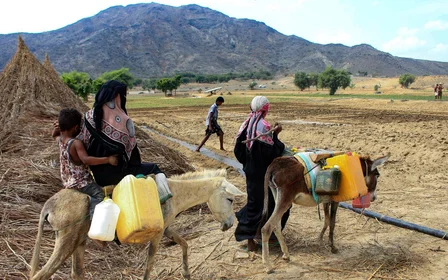
Raweh belongs to the Muhamasheen – literally "the marginalised" – an ethnic and social minority in Yemen who have long endured caste-like discrimination, extreme poverty and social isolation.
For generations, rigid social barriers have relegated the Muhamasheen to low-wage, informal jobs such as street cleaning and shoe repair.
While this work allowed Raweh to earn enough to marry and support his three children, he felt it wasn't enough to provide food while his family continued to live under a flimsy plastic sheet, without running water, electricity, proper roofs to block the rain, or walls to offer basic dignity.
New MEE newsletter: Jerusalem Dispatch
Sign up to get the latest insights and analysis on Israel-Palestine, alongside Turkey Unpacked and other MEE newsletters
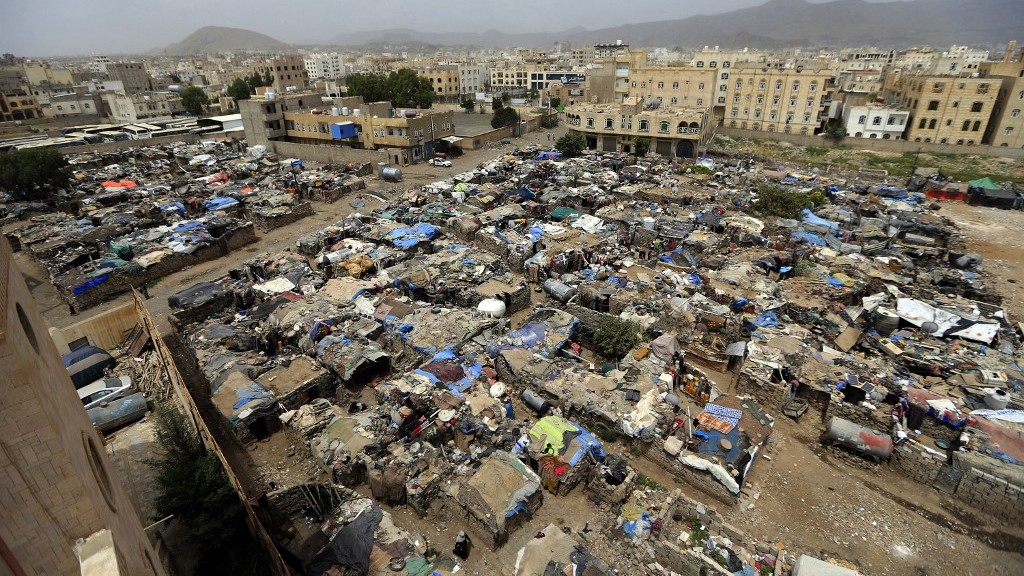
Most Muhamasheen live in slums made of makeshift shelters, but Raweh was determined to give his family a better life.
"I grew up in a home that was defined by suffering, and I always hoped to change things for my family," Raweh told Middle East Eye.
"But it was difficult: my work barely put food on the table, and sometimes even that was impossible."
Fighting for a better life
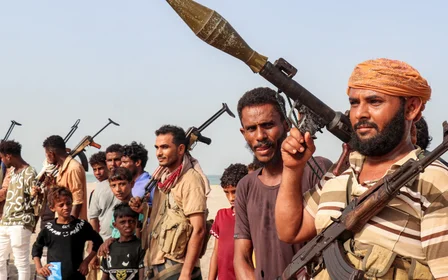
Raweh noticed that many young people around him, both from the Muhamasheen community and other Yemenis, were joining different battlefronts.
Many sought out specific units where fighters received high salaries paid in Saudi Arabian riyals or US dollars.
“Many of my customers, relatives, and even shop owners in the market closed their businesses and joined the fight along the Saudi border against the Houthis,” Raweh recalled.
“They returned driving modern cars and building proper homes, so I decided to join those same battlefronts to achieve my dream.”
In early 2023, Raweh and 12 other young men travelled from Taiz to Marib governorate before heading to the Saudi Arabian border fronts. None of them had any fighting experience; they were motivated purely by the money and the promise of a better life.

Raweh remained on the border for two years before returning home, this time not just with dreams, but with concrete plans and the financial means to execute them.
“I didn’t go back to our tent. I checked into a hotel where my family was waiting for me,” Raweh said. “The very next day, I rented a good house far from our old neighbourhood. I was determined never to go back to the tent and wanted to keep my children far away from that life.”
Raweh earns 2,500 Saudi Riyals per month (around $665). With his savings, he bought a plot of land, built a two-storey house, and purchased two minibuses. He drives one himself and leases the other to a driver for a daily fee.
'Uneducated fighters now receive more respect from society… than educated professionals, simply because they carry guns'
– Fahd Al-Thobhani, sociologist
“There wasn’t any fierce fighting along the Saudi border, so it was a good opportunity for me to achieve my dream and give my family a better life,” he said, clearly proud of what he had accomplished.
Since the UN-brokered truce took effect in April 2022, major combat operations across Yemen’s front lines have largely subsided. This relative calm has enticed many to enlist, as they can draw reliable foreign-currency salaries with far less physical risk.
Raweh believes that his life is better now, but he wouldn’t encourage his children to inherit it.
“I was forced to fight to support my family, but I will never allow my children to do the same in the future. They will pursue civilian careers,” Raweh said.
His children are now enrolled in a good private school in Taiz. Denied an education himself, Raweh is deeply invested in their studies so they never have to rely on shoe polishing or other marginalised jobs assigned to the Muhamasheen.
“I inherited shoe polishing from my father, but I refuse to pass down my professions, neither shoe polishing nor fighting,” he added.
“We hope for a better Yemen, where my children can help build the future.”
Other battlefields
Recently, some Yemenis have attempted to join forces fighting along the Saudi Arabian border or with the Republic Guards on the west coast, where salaries are paid in Saudi riyals.
However, many have been unsuccessful, as recruitment on those fronts appears to have paused.
Hani, 39, another member of the Muhamasheen community who worked as a street cleaner, tried and failed to enlist in local forces. Desperate for income, he fell victim to brokers recruiting Yemeni fighters for the Russia-Ukraine war.
'I advise every woman to stop her husband, son or brother from joining battles anywhere'
– Ahlam, widow
“Like so many other men, Hani was struggling to provide for his family and felt he had no choice but to go to war,” his wife, Ahlam, told MEE.
“He wasn’t happy about travelling to Russia, but after failing to join local battlefronts, it felt like his only option.”
After more than two months of hesitation, Hani left for Russia two months ago. He hoped to save enough money to return, start a small business, and build a decent home for his family, just as some of his neighbours had done.
“We were all heartbroken when he left, but we held onto the hope that he would come back and give us a better life,” Ahlam recalled.
“Unfortunately, we weren’t as lucky as the others. A month ago, we lost all contact with him and the friends he travelled with.”
Hani’s family endured anxious days waiting for any word from the family's sole provider, who had promised them a better future. But the situation took a tragic turn.
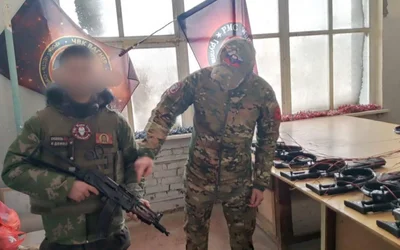
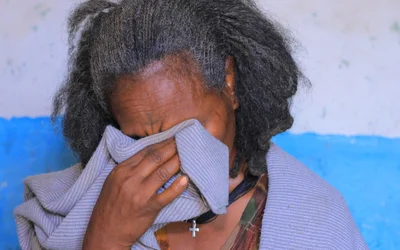
“Ten days ago, we received news of his death. It was the worst news of our lives.”
Ahlam expressed deep regret over the fact she could not stop Hani from travelling to Russia. She now urges other families to prevent their loved ones from going to war, “even if they starve to death".
“I advise every woman to stop her husband, son or brother from joining battles anywhere,” she said. “Nothing is worse than losing them.”
There are no exact official statistics on the size of the Muhamasheen population, but local reports estimate there are around 3.5 million – roughly 10 percent of Yemen's population.
Most live in makeshift slums on the outskirts of cities. The vast majority lack access to basic human needs and public services, though since the conflict erupted in Yemen in 2015 this problem has not been unique to the Muhamasheen.
According to the United Nations Office for the Coordination of Humanitarian Affairs (Ocha), an estimated 22.3 million people in Yemen – more than half the population – remain in dire need of humanitarian assistance and protection services.
Reshaping the caste system
Abdullah, 51, who preferred to use only his first name, rents a house from a Muhamasheen fighter in Taiz city. For him, the tenancy is a vivid illustration of how the war has flipped social dynamics, as members of the Muhamasheen historically rarely owned multistorey buildings.
“It is fighters – both from the Akhdam [the local name of Muhamasheen in Yemen] and other groups – who have the money to build multistorey homes now. Meanwhile, people like me who receive irregular salaries can barely pay rent,” Abdullah told MEE.
Despite holding a bachelor’s degree in accounting and working for the public electricity authority in Taiz, Abdullah’s modest salary is insufficient to support his family of seven. His eldest son was forced to drop out of school to work as a daily construction labourer to help the family make ends meet.
“I am not looking down on any social class,” Abdullah said. “I am simply pointing out that uneducated fighters now receive more respect from society and recognition from authority figures than educated professionals, simply because they carry guns.”
Sociologist Fahd al-Thobhani notes that war inevitably reshapes social hierarchies, typically rewarding fighters and war profiteers while the rest of society suffers.
“We see members of the Muhamasheen who cannot write their own names owning modern homes, while university professors are reduced to working as street vendors,” Thobhani told MEE.
“This is the natural outcome when formal state governance breaks down and power shifts to armed groups who value combatants over scholars.”
Thobhani warned that the true long-term crisis will impact the next generation, who see educated professionals struggling while fighters enjoy wealth and societal status.
He emphasised that Yemen’s long-standing caste system is fracturing, though not necessarily for noble reasons.
“The Muhamasheen have historically been relegated to the lowest social rung,” he said. “Today, however, we see traditional Yemenis taking orders from a Muhamasheen commander simply because he has money and influence. Money – not traditional lineage or education – now controls those in need."
Middle East Eye delivers independent and unrivalled coverage and analysis of the Middle East, North Africa and beyond. To learn more about republishing this content and the associated fees, please fill out this form. More about MEE can be found here.