Columbia University suspends or expels almost 80 students for pro-Palestine protest

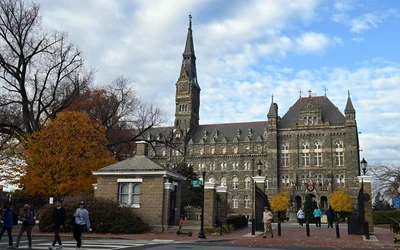
Columbia University announced new sanctions against student activists on Tuesday, suspending or expelling dozens of students for their participation in pro-Palestine protests.
The suspensions will last between one and three years and will require students to write an apology letter if they wish to return to the university.
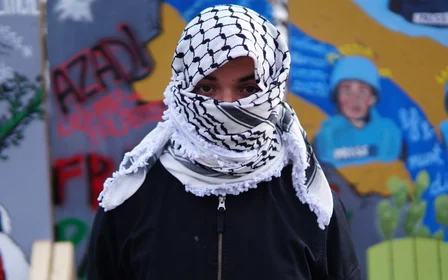
The disciplinary proceedings primarily targeted students involved in the takeover of Butler Library to host a teach-in honouring the Palestinian writer Basel al-Araj, who was killed by Israeli forces in 2017. Protesters renamed the library “the Basel al-Araj Popular University”.
“The sanctions issued on July 21 by the University Judicial Board were determined by a UJB panel of professors and administrators who worked diligently over the summer to offer an outcome for each individual based on the findings of their case and prior disciplinary outcomes,” Columbia wrote in a statement.
Columbia University Apartheid Divest (CUAD) said in a statement: “Once Barnard joins Columbia in announcing charges, these will be the most suspensions for a single political protest in Columbia campus history and hugely exceed sentencing precedent for teach-ins or non-Palestine-related building occupations.”
Barnard is a Columbia University affiliate.
New MEE newsletter: Jerusalem Dispatch
Sign up to get the latest insights and analysis on Israel-Palestine, alongside Turkey Unpacked and other MEE newsletters
CUAD alleged that Columbia president Claire Shipman modified disciplinary proceedings to crack down on student protesters.
“[Shipman] illegally restructured the University Judicial Board (UJB) and removed student members and faculty oversight to pursue exceptionally harsh sanctions against its own students,” CUAD said in a statement.
Pro-Palestine protests at Columbia and other universities have come to the forefront since the beginning of Israel’s war on Gaza, which several countries, as well as many international rights groups and experts, now say qualifies as genocide.
More than 100 Palestinians in Gaza, including at least 80 children, have starved to death as a result of Israel’s siege, and more than 1,000 Palestinians have been killed at aid distribution sites since March.
Police on campus
Students have condemned Columbia’s collaboration with the New York Police Department (NYPD) and Trump administration officials.
During the takeover of Butler Library, Columbia invited NYPD officials on to campus, who ultimately arrested 78 demonstrators.
Columbia claimed the NYPD’s presence was necessary to “assist in securing the building and the safety of our community”.
But four students were hospitalised with concussions due to NYPD brutality during the protest, according to CUAD.
One of the arrested students reported being “choked and going in and out of consciousness after the arrest. One of [the police officers] kept trying to gouge my eyes. They slammed my head into the floor multiple times.”
CUAD alleged that the disciplinary sanctions were a result of talks between Columbia and the Trump administration to restore $400m in cancelled federal funding.
They listed Columbia’s adoption of a definition of antisemitism that considers Zionism a protected class and a new partnership with the pro-Israel Anti-Defamation League as similar concessions.
Columbia’s press office did not respond to a request for clarification.
Student activists say they will continue to organise undeterred by disciplinary proceedings.
According to one student quoted on CUAD’s Substack, “if this hearing was meant to isolate or shame, it has done the opposite. It has made us more clear: no sanction handed down here can expel principle. Basel al-Araj wrote: ‘Join them, and don’t betray the question.’ We have joined, and we will not betray the question."
Middle East Eye delivers independent and unrivalled coverage and analysis of the Middle East, North Africa and beyond. To learn more about republishing this content and the associated fees, please fill out this form. More about MEE can be found here.