
Why Egypt held back from joining Turkey, Saudi Arabia and Pakistan's defence pact

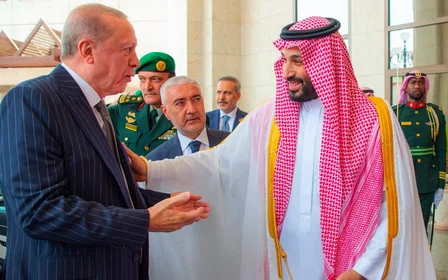
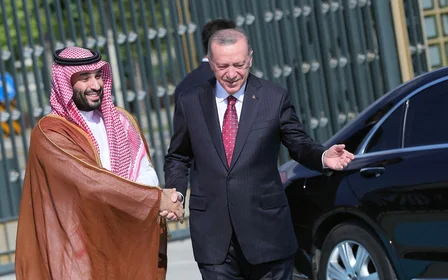
When Turkish President Recep Tayyip Erdogan travelled to Mecca on Friday to sign a security pact with Pakistan and Saudi Arabia, Turkish officials chose to keep the trip secret.
The visit did not appear on Erdogan's official schedule. Instead, the three countries decided abruptly on Tuesday that the signing ceremony would take place on Friday.
People familiar with the matter told Middle East Eye that senior Turkish officials feared that publicising Erdogan's schedule would give unwanted powers an opportunity to disrupt the agreement.
Their concerns were understandable.
Turkish Foreign Minister Hakan Fidan said on Saturday that Ankara had spent two years trying to persuade all of the parties involved to sign the security pact.
New MEE newsletter: Jerusalem Dispatch
Sign up to get the latest insights and analysis on Israel-Palestine, alongside Turkey Unpacked and other MEE newsletters
The agreement, despite leaving specific military commitments vague, includes a collective-defence provision resembling Nato's Article 5, under which an attack on one member is considered an attack on all.
For several months, officials from Turkey, Pakistan, Egypt and Saudi Arabia have held regular foreign minister-level consultations under a grouping known as "The Regional Four", moves that have triggered outrage in Israel.
In February, former Israeli Prime Minister Naftali Bennett accused Turkey of "trying to flip Saudi Arabia against us and establish a hostile Sunni axis with nuclear Pakistan."
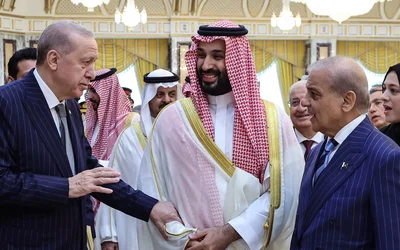
Several Turkish sources in Ankara told MEE that, in recent months, both Egypt and Saudi Arabia had shown palpable hesitation in establishing a closer regional security architecture with Turkey.
Expressing frustration with the matter, a Turkish official told MEE earlier this year: "We are trying to keep the Egyptians and the Saudis on this platform, while the Israelis are constantly trying to bully them."
Although Turkish officials initially envisioned a trilateral treaty, the sources said that Egypt emerged as a natural candidate for inclusion in the mechanism.
Possessing a powerful military, Egypt increasingly found itself aligned with Turkey, Qatar and Saudi Arabia on issues ranging from the negotiations to end the war on Gaza to developments in Africa.
An Ankara-based source familiar with the discussions told MEE that Turkey had made considerable efforts to include Egypt in the treaty and had formally proposed its participation.
However, once it became clear that Cairo was not prepared to join, the other countries decided to proceed without it.
Fidan downplays Egypt's decision
In an interview on Saturday, Fidan sought to downplay Egypt's decision not to join the treaty at this stage.
"I believe that, in the next stage, Egypt will also be part of the alliance," he said.
"We are already acting as if we are members of the alliance; that is the nature of our relations with all these countries. There are a few technical issues. Once they are resolved, there is no reason why Egypt should not be there."
A second Ankara-based source said Egypt's decision was primarily driven by its sensitive relationship with Israel.
As a US ally, a neighbour of Israel and an Arab country with full diplomatic relations with Tel Aviv, Egypt must carefully manage its complex engagement with the Israeli government.
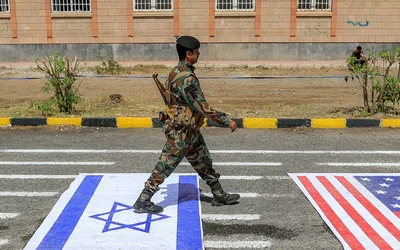
The source said Cairo would have to withstand pressure from Israel if it were to join the treaty.
Egyptian publication Madamasr reported on Sunday, citing sources, that Cairo indeed declined to join.
Regional officials who spoke to MEE did agree, however, that Cairo also had its own reasons for declining to join for now.
Amid rising tensions between Saudi Arabia and the United Arab Emirates, Egypt is struggling to choose a side. Staying out of the alliance gives Cairo some breathing room.
Egypt has a defence treaty with Abu Dhabi and deployed Rafale fighter jets in response to Iranian strikes against the UAE in May.
According to the second source, this predicament has also led Saudi Arabia to view Egypt as somewhat unreliable.
The source added that Egypt does not want to choose sides between emerging blocs comprising Turkey, Saudi Arabia and Pakistan on one side, and Israel, the UAE and India on the other.
Cairo lacks a broader strategic vision beyond the region and remains interested in deepening its commercial ties with New Delhi, while also relying on financial assistance from Abu Dhabi.
Turkish officials nevertheless hope that as the alliance takes shape and establishes itself as a credible deterrent against potential regional aggression, Cairo will be more receptive to joining.
Middle East Eye delivers independent and unrivalled coverage and analysis of the Middle East, North Africa and beyond. To learn more about republishing this content and the associated fees, please fill out this form. More about MEE can be found here.