Revealed: Microsoft signed $125m contract with Israel during first year of Gaza war

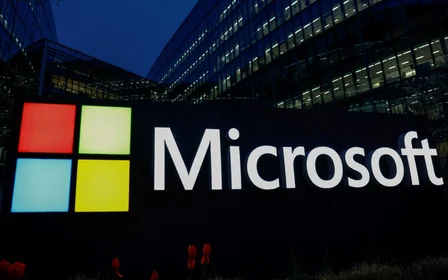
Microsoft signed a contract worth more than $100m with the Israeli government in 2024, according to documents published on the Israeli Ministry of Finance’s Hebrew-language website, Middle East Eye can reveal.
The multimillion-dollar deal appears in Israel's annual budget-execution report for 2024, which was published by the finance ministry's accountant general in March 2025.
However, details of the Microsoft agreement were obscured within a lengthy list of procurement commitments and only surfaced following close analysis of the budget report by MEE.
Buried in the report is a list of the defence ministry's largest procurement commitments. One entry records an agreement signed in 2024 with Microsoft "for the purchase of software licensing", worth approximately 464 million shekels (about $125.4m).
According to the document, the full value of the contract remained outstanding as of 31 December 2024 – meaning nothing had been paid that year – and the engagement is expected to conclude in 2027.
New MEE newsletter: Jerusalem Dispatch
Sign up to get the latest insights and analysis on Israel-Palestine, alongside Turkey Unpacked and other MEE newsletters
The report does not disclose what software the agreement covers, which bodies or units within Israel’s defence ministry or armed forces would use it, or whether the 2027 date refers to the licence term, the payment schedule or both.
Microsoft did not answer questions about the contract, telling MEE it "had nothing to add from our side".
Renewal of previous contract
Last year, an internal document reviewed by the Associated Press revealed that Microsoft signed a $133m three-year contract with the Israeli military in 2021. The AP also found that Microsoft listed the Israeli military as an "S500" client, a designation reserved for the company's highest-priority customers.
The AP identified at least 635 individual subscriptions held by the Israeli military, under code names including "Mamram" and "8200", the latter referring to an elite Israeli cyberwarfare unit.
Former Microsoft employees who have tracked the tech giant’s Israeli contracts told MEE that the newly identified agreement could be a renewal of the agreement Israel signed with Microsoft in 2021.
Both deals share several features. The earlier contract ran for three years, while the Israeli government documents record a Microsoft agreement beginning in 2024 and running until 2027.
Their reported values are also similar: $133m for the earlier contract and approximately $125.4m for the new one.
The two figures come from different sources, however.
The Israeli budget report does not identify the 2024 agreement with Microsoft as a renewal of a previous one.
What Microsoft cut, and what it kept
The contract signed in 2024 predates the controversy over Microsoft's provision of cloud services to the Israeli military, and the budget document recording it was published months before that period began.
In August 2025, the Guardian, working with +972 Magazine and Local Call, reported that Israel's military surveillance agency, Unit 8200, had used Microsoft's Azure cloud platform to store recordings of millions of phone calls made by Palestinians in Gaza and the occupied West Bank, with sources saying the database helped shape military operations and prepare air strikes.
Internal documents obtained by the AP show that Microsoft’s global Azure support team responded to approximately 130 direct requests from Israel’s military during the first 10 months of the war.
'This contract is yet another crystal clear evidence of how Microsoft and its executives continue to enable, power, accelerate, and profit from Israel's ongoing crimes against Palestinians'
- Abdo Mohamed, No Azure for Apartheid
The investigation described invoices showing Unit 8200 had paid Microsoft tens of millions of dollars for priority computing resources and technical support across Azure and related AI products – a smaller sum than the licensing engagement recorded in the Israeli budget document, and one billed on a different basis. Cloud services are charged by consumption; the engagement in the budget report is a fixed multi-year commitment.
Microsoft commissioned an external review, conducted by the law firm Covington & Burling. The following month, the company's president, Brad Smith, said Microsoft had "ceased and disabled a set of services to a unit within the Israel Ministry of Defense".
A leaked email seen by the Guardian sent by Smith, who is also Microsoft’s vice-chair, to company employees said the company had “only disabled a small subset of services to only one unit of the Israeli military” without specifying which one.
The budget document, which records the ministry's position as of 31 December 2024 - nine months before the cloud services were disabled - shows no link between the licensing agreement and the products Microsoft cut.
What it does establish, however, is that the licensing agreement was on the ministry's books, unpaid and running to 2027, before the controversy broke. The engagement it records is described as software licensing rather than cloud or AI services – the categories Microsoft said it had disabled.
A long-standing presence
Microsoft has said the bulk of its Israeli military business continues. The company has held large-scale licensing arrangements with Israeli government bodies for more than two decades.
The tech giant also has at least nine Microsoft employees dedicated to serving the Israeli military, according to documents obtained by the AP.
Information posted online showed the team includes a senior executive who spent 14 years in Unit 8200 and a former IT leader for military intelligence.
Its physical presence in the country is substantial. Microsoft runs server farms in two large buildings outside Tel Aviv and a 46,000-square-metre campus in Herzliya, along with an office in Gav-Yam in the south that has flown a large Israeli flag.

Microsoft has fired at least nine employees over protests against its business with Israel since October 2024, and more than a dozen have been fired or arrested in total.
Among them was Abdo Mohamed, a data scientist fired by Microsoft after organising a vigil for Palestinians killed in Gaza outside the company's Redmond headquarters.
Now an organiser with the campaign group No Azure for Apartheid, Mohamed told MEE that the contract demonstrates the company's continuing role in Israel's crimes against Palestine.
"The newly revealed deal cements the active role Microsoft, its technologies and its executives play in powering Israel's apartheid and genocide,” said Mohamed.
"Make no mistake: as Israel intensified its ongoing genocidal and ethnic cleansing campaign all over Palestine in 2023 and 2024, and as workers with our campaign at Microsoft spoke out in protest of its genocide profiteering business, Microsoft executives chose willingly to double down on their complicity in genocide and apartheid by signing this contract worth [over $100m]."
Mohamed said the deal’s timing coincided with a surge in the Israeli military's use of Microsoft's cloud and AI services during the war, which he said reached as much as 200 times pre-October 2023 levels in some cases.
"This contract is yet more crystal-clear evidence of how Microsoft and its executives continue to enable, power, accelerate and profit from Israel's ongoing crimes against Palestinians," added Mohamed.
"That's why our campaign continues to apply pressure until Microsoft puts an end to its genocide-profiteering business with the Israeli military and government."
Marcus Barnett, a spokesperson for the United Tech and Allied Workers (UTAW) section of the UK’s Communication Workers Union (CWU), said tech workers are turning to union organising to exert some influence over the company’s role in the genocide.
'Tech workers haven’t been isolated from the rest of the world witnessing war and genocide dominate the news headlines and our phone screens'
- Marcus Barnett, United Tech and Allied Workers
“Tech workers haven’t been isolated from the rest of the world witnessing war and genocide dominate the news headlines and our phone screens,” said Barnett.
“It’s no surprise that many are turning to workplace organising to assert their humanity, and we urge anyone with real concerns to stand up and form a workplace union to articulate these issues with strength.”
The Microsoft contract is one of 33 defence engagements that the report dates to 2024, collectively worth about $13.6bn.
The overwhelming majority by value are arms and military hardware – fighter aircraft, ammunition, air-defence systems – bought largely from the US government.
Microsoft is among a small number of non-hardware contracts. The report does not describe the Microsoft engagement as war-related. Only one of the 33 contracts from that year carries an explicit reference to the war in the ministry's own text. The others are identified here by their recorded date alone, in a year when Israel was conducting a genocidal war.
Israel's defence ministry buys a wide range of goods and services that are not weapons, and a licensing renewal may be routine procurement unconnected to the conduct of the war.
MEE contacted the Israeli government and Israeli embassy in the UK for comment, but received no response.
Middle East Eye delivers independent and unrivalled coverage and analysis of the Middle East, North Africa and beyond. To learn more about republishing this content and the associated fees, please fill out this form. More about MEE can be found here.