
Sanctions on Israeli settlements: Here’s what Europe is saying and doing

Relations between Israel and European states have deteriorated after the UK led moves on Tuesday to impose sanctions against Israeli settlements.
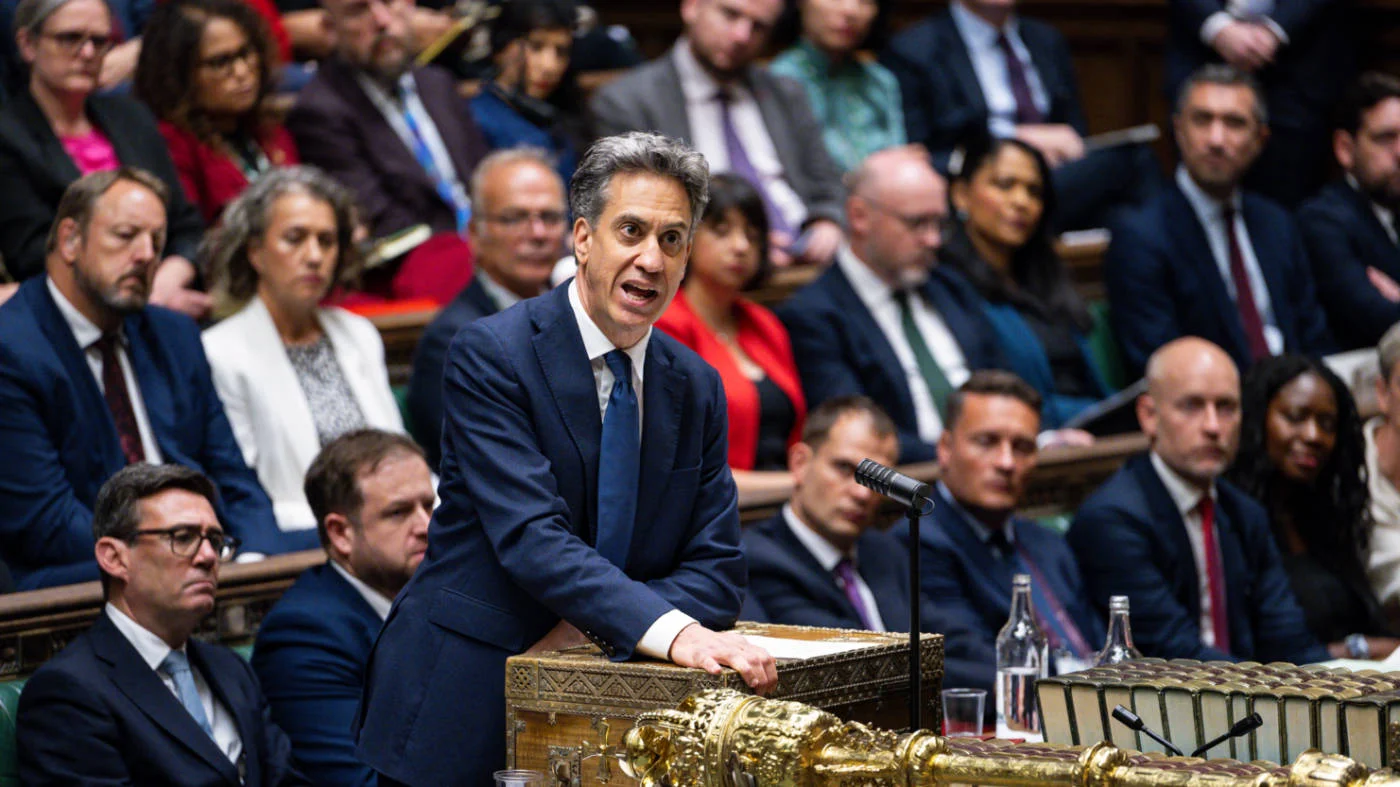
In London, UK Foreign Secretary Ed Miliband, using some of the harshest language by a government minister about Israel, said that the decision came amid the “ethnic cleansing of Palestinians in areas of the West Bank perpetrated by settler terrorists”.
In Paris, meanwhile, his opposite number Jean-Noel Barrot announced similar measures, saying that “France cannot, through its trade, support a situation that threatens the security of Israelis and Palestinians alike”.
In a joint statement, they, along with the foreign ministers of Spain, Ireland Norway and others, confirmed their intention to “introduce national and/or support European restrictions on trade in goods with settlements which are illegal under international law, or that they are actively considering these and other measures, in accordance with their national procedures”.
Several countries, notably Sweden, Denmark and Finland, later stated that they would only impose sanctions as part of joint EU action rather than unilaterally, according to Israeli media reports.
New MEE newsletter: Jerusalem Dispatch
Sign up to get the latest insights and analysis on Israel-Palestine, alongside Turkey Unpacked and other MEE newsletters
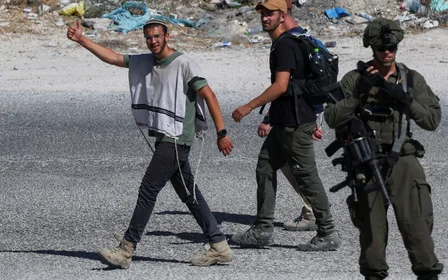
The announcements came amid growing international condemnation of attacks by Israeli settlers on Palestinians in the occupied West Bank, as well as the expansion of settlements by the government of Benjamin Netanyahu.
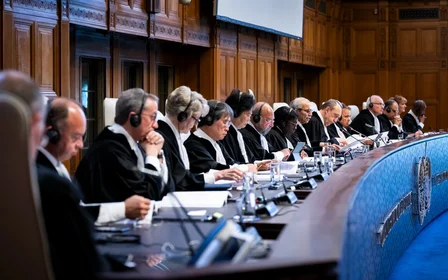
Several European countries previously issued sanctions following a 2024 ruling from the International Court of Justice (ICJ) that the settlements were illegal under international law.
The moves come amid deadlock in the EU over proposals to introduce an EU-wide ban on settlement goods, with key states such as Germany and Italy stalling.
UK
The UK played a leading role in Tuesday’s 12-nation sanctions on settlements, with the joint statement released at the same time as a speech from Miliband in the UK parliament.
The UK will now have some of the strongest policies against the settlements, targeting the import of goods from settlements, investment in settlement businesses and properties, and advertisement of services in settlements.
Announcing the measures, Miliband accused the Israeli government of turning a “blind eye” to the displacement of Palestinians in the West Bank, where over 450,000 Israeli settlers now live, adding: “The action we are taking today is against the government of Israel, not its people."

Israel lashed out in response, closing the British consulate in occupied East Jerusalem, ejecting British representatives from the International Gaza Support Center, and banning 11 British MPs from entering Israel (none have government roles).
Relations between London and Tel Aviv have worsened in recent months, with Israeli Prime Minister Netanyahu sparking fury in Westminster in August by referring to the UK as the “Islamic Republic of Britain”.
France
Until this week, France had not banned imports of goods from Israeli settlements, despite efforts from opposition lawmakers and ex-diplomats.
But in a statement on X on Tuesday, French Foreign Minister Jean-Noel Barrot said that “France cannot, through its trade, support a situation that threatens the security of Israelis and Palestinians alike”.
Paris previously sanctioned around 50 individual settlers, plus some of the organisations that run outposts that have not been approved by the Israeli government.
France has also led calls for a ban on trade with the settlements at an EU level, where talks have stalled for months.
“The settlements are illegal,” Barrot previously said on 5 September, citing the ICJ ruling. “It is not normal that the European Union can support this trade.”
He added that the EU’s response should match the swift action it took to halt imports from Crimea following its occupation by Russia in 2014. “This is the same thing that we must do with the illegal settlements.”
Spain
One of Europe’s firmest critics of Israel, the government headed by centre-left Prime Minister Pedro Sanchez banned imports from Israeli settlements in September 2025.
Under the law, all produce from anywhere in Israel or the occupied territories must specify its postcode of origin, with penalties for non-compliance.
Also banned are advertisements for services based in West Bank settlements. In line with the law, Spain said in December that it had ordered seven companies, which it did not name, to remove listings for rental properties in settlements. It later investigated when Israeli firms advertised settlement properties at an international tourism fair in Madrid in January.
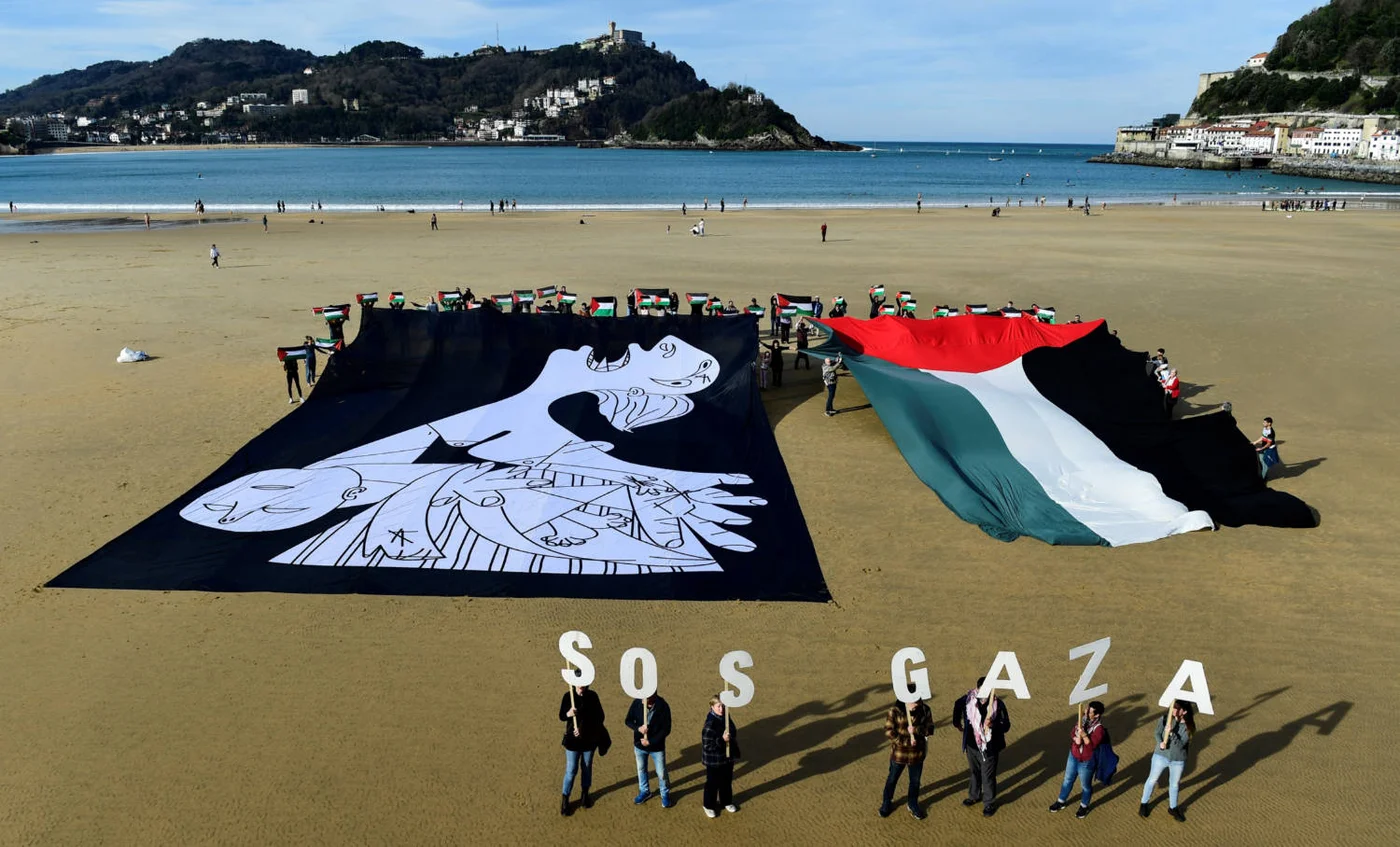
Spain has issued other measures to curb its involvement in Israel’s genocide in Gaza and the war on Iran: in October 2025, for example, it issued an embargo on the sale of weapons and dual-use goods to Israel, and a ban on imports of Israeli-made military goods to Spain, albeit with some exceptions.
Madrid has also prohibited vessels transporting fuel for the Israeli military from using its ports, and planes supplying Israel with military equipment from crossing its airspace.
The measures have damaged Spanish relations with Israel, which in 2024 recalled its ambassador after Spain recognised Palestinian statehood. Madrid in turn pulled its ambassador from Tel Aviv the following year.
Relations with the US have also suffered, with President Donald Trump hitting Spain with fresh tariffs in June, and threatening to cut off US trade completely in July.
Ireland
Although a signatory to Tuesday’s joint statement, Ireland had previously banned the import of goods from settlements in July, amid wide support for Palestine and criticism of Israel across the country.
A law banning goods and services from Israeli settlements was initially proposed in 2018, but shelved amid fears it could fall foul of EU trade regulations.
Provisions within the bill to ban services based in illegal settlements were dropped after they were rejected by senators from Ireland’s centre-right governing coalition, fearful it might cause economic harm and a backlash from the US.
The change prompted anger from opposition lawmakers, who said that the legislation had been “watered down”, and was not compliant with international law.
Under the current law, websites such as Airbnb, which has its European headquarters in Dublin, face no restrictions on advertising property rentals in the illegal settlements to Irish customers.
But the ban on goods was nonetheless criticised by Mike Huckabee, the US ambassador to Israel. “Did the Irish fall into a vat of Guinness?” he posted on X, calling the new law an act of “diplomatic intoxication”.
Netherlands
The Netherlands banned the import of goods produced in Israeli settlements in May, with the law due to come into effect on 22 September.
But the measures, which will apply for a fixed three-year period, do not prohibit trade in services based in settlements, other than financial services directly relating to the import of banned goods.
Relations between Amsterdam and Tel Aviv have worsened since the law was announced. Israel expelled two Dutch representatives from the US-led International Gaza Support Center in the Israeli city of Kiryat Gat on 25 August.
Norway
In June, Norway’s government proposed a law banning the import and export of all goods to and from Israeli settlements. Public consultation on the bill ends on 19 September.
The proposal also includes a trade ban on “services related to the construction, renovation, purchase or sale of property” in the settlements, and “acquiring businesses with headquarters and production”.
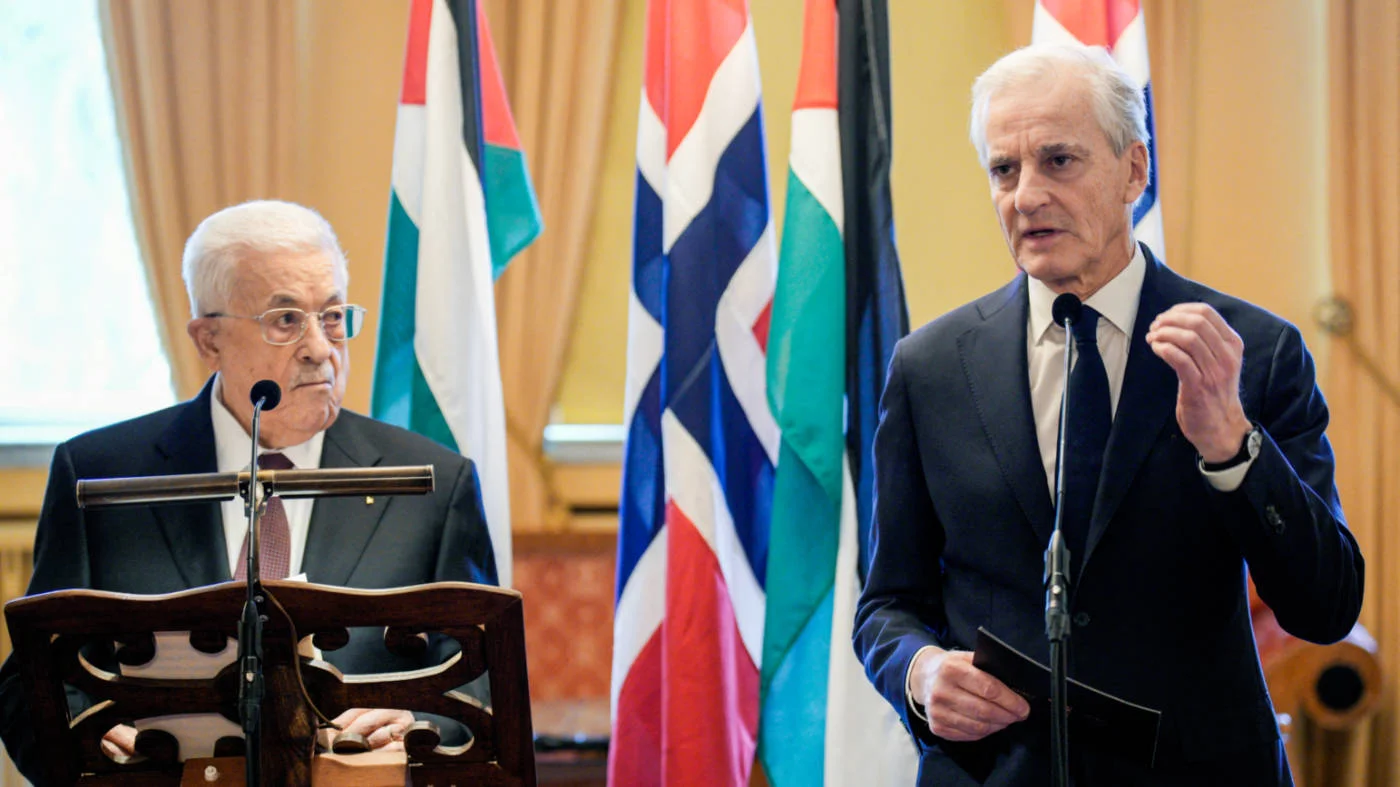
Announcing the proposals in June, Espen Barth Eide, Norway’s foreign minister, said: “The settlements undermine the basis for a Palestinian state.
“Norwegian citizens and Norwegian companies must not contribute to maintaining this development. With this legislative proposal, the government takes a clear stance”.
Belgium
In July, Belgium’s cabinet announced that it had approved a ban on imports of settlement goods, just before parliament closed for its summer recess until October.
Full details of the law, which awaits review before it takes effect, have not been made public. Belgium stopped offering consular services to its citizens living in Israeli settlements in January.
Sweden
Stockholm’s decision to align itself with the UK, France and others on Tuesday appears to be a hardening of its position. Back in April, it only proposed creating tariffs on settlement goods imported at the EU level.
That measure, intended to “differentiate this trade from other trade”, according to Sweden’s foreign ministry in April, fell short of calling for a trade ban.
But Sweden’s foreign minister, Maria Stenergard, said on Tuesday that her government now “believes that more needs to be done to reduce trade with Israeli settlements”, which she said “violate international law and undermine the two-state solution”.
Denmark
Denmark was also a signatory to the 12-country statement announcing a prospective ban. “Israel's settlement policy is illegal & undermines a two-state solution. E1 plans are unacceptable,” Foreign Minister Lars Loekke Rasmussen said on Tuesday.

But Denmark caused confusion when it told Haaretz on Wednesday that it would either impose national restrictions or instead support EU measures to bring in such restrictions.
The latter move would amount to little change on its previous position, as the embassy said that Denmark had “for some time” called for an EU-wide trade ban on settlements.
Finland
Finland also signed the 12-country statement pledging to ban settlement goods on Tuesday, although it has not yet provided further details on its proposed policy.
A statement posted by Finland’s foreign ministry on Tuesday said that the “viability of the two-state solution is being steadily undermined by settlement expansion and escalating settler violence. This must stop. International law must be upheld and [the] path to peace preserved,” the ministry added.
Finland has generally maintained a cautious foreign policy since it became a Nato member in 2023, not least because it depends on US security assurances against its neighbour, Russia.
But the move to ban settlement goods comes as support for the US and Israel has fallen amid the US-Israeli war on Iran.
Iceland
Iceland was also among the 12 countries announcing a ban on settlements on Tuesday, although it has yet to formally comment.
The announcement came hours after Trump posted a map on Truth Social that appeared to show Iceland as part of the US, prompting Iceland to summon the American ambassador.
Iceland joined South Africa’s long-stalled genocide case against Israel at the ICJ in March.
Poland
While Warsaw has been opposed to full sanctions against Israel, it has voiced increasing disquiet in recent years about proposals for illegal settlements.
In August, the Ministry of Foreign Affairs said that the plans to build in the West Bank’s E1 area were a “flagrant breach of international law”.
In a signal that it was mulling sanctions against settlements, it said: “We are communicating with the EU’s diplomacy and our European partners to come up with a joint response to these measures.”
Portugal
Portugal added its name to the list of countries banning settlement goods on Tuesday amid growing domestic discontent over Israeli conduct in the West Bank and Gaza.
A statement posted by the country’s foreign ministry said that Portugal “has consistently defended and advocated” for banning settlement goods in private EU discussions. Former Portuguese Prime Minister Antonio Costa currently leads the European Council.
The EU
This week’s announcements on sanctions on Israeli settlements came amid long-standing deadlock on the issue at the EU.
France and Sweden previously proposed measures against settlement imports at the EU level, only for it to stall amid opposition from Germany and Italy, two of the continent’s largest economies.
Germany has for decades been among Tel Aviv’s firmest allies in Europe, and currently faces a case at the ICJ over its weapons sales to Israel during its genocide in Gaza.
Italy, meanwhile, has seen its ties with Israel flourish under right-wing Prime Minister Georgia Meloni, although they have lost momentum in recent months amid Rome’s tepid support for the US-Israeli war on Iran.
Both countries were also notable for their absence in Tuesday’s joint declaration - but Johann Wadephul, Germany’s foreign minister from the embattled Christian Democratic Union party, still insists that Berlin is opposed to Israeli settlements in the West Bank.
“We have a clear position on settlement policy: it is inconsistent with international law,” he said in August, adding that he had “made this clear” to the Israeli government that month.
Other countries that have opposed EU action on settlements include Austria, where a right-wing government is in charge, and Slovenia, the first country in Europe to ban imports of goods from Israeli settlements in August 2025.
But new conservative Prime Minister Janez Jansa overturned that decision during his first week in office in June and also lifted other measures against Israel, including an arms embargo and entry ban on Netanyahu and other officials.
The moves were welcomed by Israel, where Foreign Minister Gideon Saar called Jansa a “bold leader and true friend”, and announced that Israel would open an embassy in Ljubljana (it had previously run consular services from neighbouring Austria).
Middle East Eye delivers independent and unrivalled coverage and analysis of the Middle East, North Africa and beyond. To learn more about republishing this content and the associated fees, please fill out this form. More about MEE can be found here.