Igor Tulchinsky: Sponsor of British Museum Bayeux Tapestry exhibition funded community centre in West Bank settlement

The sponsor of the British Museum’s Bayeux Tapestry exhibition has funded a community centre in Efrat, an illegal Israeli settlement in the occupied West Bank that is now under UK sanctions.
Igor Tulchinsky, a Belarus-born billionaire who has backed the Bayeux Tapestry exhibition in a deal estimated to be worth £5m ($6.75m), unveiled a “therapy yurt” in Efrat’s Mondlak Center in November 2025 alongside the settlement’s mayor, Dovi Shefler.
The yurt is part of a “community resilience centre” serving Gush Etzion, a bloc of illegal Israeli settlements 12km southeast of Jerusalem, and Tulchinsky was identified as its primary sponsor.
Tulchinsky is reported to have dedicated the facility to “Israel's brave warriors and their families” during a visit to the settlement in November 2025, according to a post on the Efrat Development Foundation’s Instagram page.
Speaking at the opening, Tulchinsky described the yurt as “Israel’s inner Iron Dome”.
New MEE newsletter: Jerusalem Dispatch
Sign up to get the latest insights and analysis on Israel-Palestine, alongside Turkey Unpacked and other MEE newsletters
Efrat is built on land seized from four Palestinian villages, home to around 12,000 Israeli settlers and considered the capital of Gush Etzion, a sprawling collection of settlements that is expanding towards nearby Bethlehem.
The Mondlak Center is an arm of the Efrat Development Foundation, a nonprofit organisation that describes itself as “dedicated to advancing Efrat’s social, cultural, and physical development”.
According to the Efrat Development Foundation’s website, there are three levels of partnership for donors and sponsors, with the top “Vision Partner” level costing over $50,000 and providing the opportunity for “strategic planning”.
The Efrat Development Foundation also advertises that it gives “pioneer family support in Givat HaEitam”, a reference to settlers who are establishing a highly controversial hilltop development known as “E-2” that peace activists warn will sever Bethlehem from the southern West Bank and ghettoise the city.
The nature and extent of Tulchinsky's support, whether financial or otherwise, for the community centre is unclear, and Middle East Eye received no response to requests for comment directed to his investment firm, WorldQuant.
When approached for comment by MEE, the Efrat Development Foundation confirmed Tulchinsky was a donor but said he did so through a separate organisation that it declined to name.
An image of Tulchinsky attending the opening of the therapy yurt appears on the fundraising page of the foundation’s website.
Sanctions
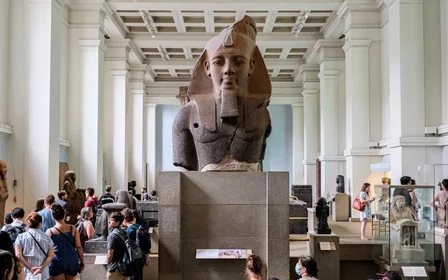
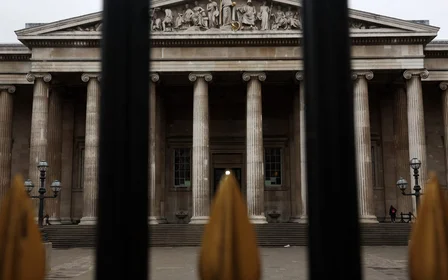
The British Museum has not responded to MEE’s requests for comment about Tulchinsky’s sponsorship of the Bayeux Tapestry exhibition, which opened to the public on Thursday.
But revelations about his visit to Efrat and his support for the community come just two days after British Foreign Secretary Ed Milliband announced a raft of sanctions against Israeli settlements.
He accused settlers of “ethnic cleansing” Palestinians from the West Bank and said that the occupation is “unlawful because of Israel's entrenchment of its control, its intention to extend permanent sovereignty and its expansionist agenda via illegal settlements".
"We will take action against specific companies and individuals who provide services such as construction, infrastructure financing or real estate for settlement expansion,” he said in parliament.
"So to those who finance or facilitate illegal settlements, let me say this: You will face the full force of UK sanctions. Settlements are illegal. They should not be promoted in our country."
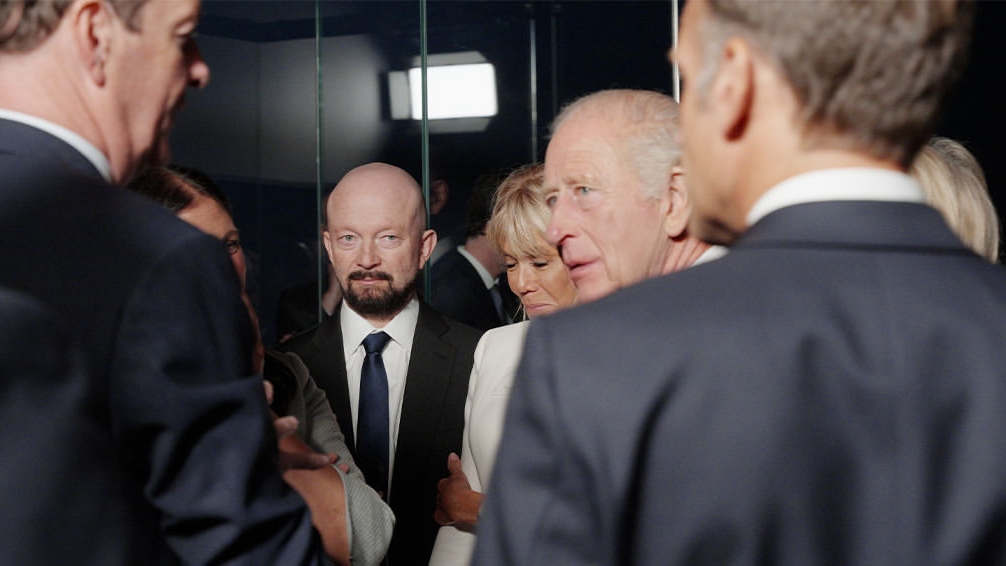

Shefler, Efrat’s mayor standing with Tulchinsky as the yurt was unveiled last year, has a history of making strong statements backing Israeli annexation of the West Bank.
The council he oversees has breached even Israeli military regulations by expanding into territory administered by the Palestinian Authority, and he has lauded the way Efrat’s eastward expansion severely impedes chances of establishing a viable Palestinian state.
“We are physically blocking the connection between Bethlehem and Hebron,” he said in an interview in April.
“Whoever is plotting to establish a terrorist state here - we are simply cutting off their dream through construction.”
Efrat is a distinctly far-right, religious-nationalist community.
In Israel’s last election, in 2022, 48 percent of its votes went to Religious Zionism and Jewish Power, two far-right parties led by Finance Minister Bezalel Smotrich and National Security Minister Itamar Ben Gvir.
The UK sanctioned Smotrich and Ben Gvir in June 2025 for “repeated incitements of violence against Palestinian communities”.
Smotrich appeared in a video alongside Shefler in May, where the minister is seen praising the mayor’s work to expand Efrat and the two urge construction of settlements in the Gaza Strip.
'A great living standard'
It is estimated that around 50-60 percent of Efrat’s residents are native English speakers.
In April, Declassified UK revealed that an Israeli organisation had been caught on camera offering to help British citizens move to Efrat.
“You’re next to the Arabs; you’ll hear their mosques,” a member of the organisation, Shivat Zion, was recorded saying. “But apart from this, it’s a great living standard.”
The Mondlak Center was named after Moshe and Lina Mondlak, residents of Gush Etzion who emigrated from the United Kingdom, and provides mental health services.
According to a report in the Jerusalem News Syndicate, the yurt that Tulchinsky unveiled in November has space for three therapy rooms and an area outside for yoga, mindfulness and breathing workshops.
Demand for its services from soldiers and civilians reportedly surged during Israel’s genocide in Gaza.
Tulchinsky dedicated the therapy yurt to “Israel’s heroes”, speaking about a “war after the war being fought by therapists, volunteers and by soldiers and their families who are learning to breathe again”.
On Wednesday, Middle East Eye revealed that Tulchinsky has a defence tech-focused venture capital fund based in Israel headed by a recently retired army commander who has promoted the use of remote-controlled vehicles in Gaza.
These vehicles have been described by one rights group as a “direct tool for committing genocide” and implicated in the destruction of entire neighbourhoods of Gaza and Lebanon, including priceless cultural heritage.
In an interview with the Jerusalem Post in March, Tulchinsky said he had provided financial support to the Israeli army since the 7 October 2023 Hamas-led attacks and the start of the Gaza war, and said he visited the country regularly.
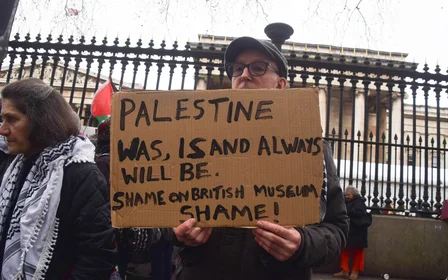
Artists for Palestine UK, a network of artists and cultural workers, called the British Museum’s decision to partner with Tulchinsky “outrageous”.
Middle East Eye delivers independent and unrivalled coverage and analysis of the Middle East, North Africa and beyond. To learn more about republishing this content and the associated fees, please fill out this form. More about MEE can be found here.