
Exclusive: Igor Tulchinsky, British Museum's Bayeux Tapestry sponsor, backs Israeli defence tech fund

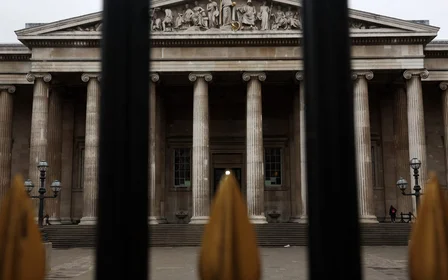
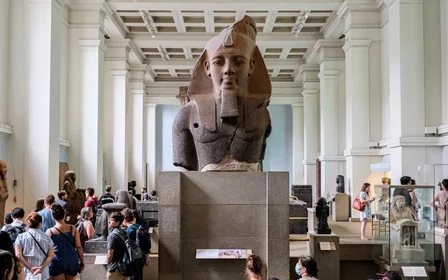
At 10 am on Thursday, the British Museum will open its doors to the general public for the most hotly anticipated exhibition in its history: the return of the Bayeux Tapestry to England.
Hundreds of thousands of visitors are expected to file past the fragile 70-metre-long artefact, which tells the story of the Norman conquest of England in 1066, during the next 11 months.
Since 1931, British governments have tried to negotiate the loan of the Bayeux Tapestry from France, before it finally arrived amid tight security this summer.
Tickets for the first four months of the exhibition, described as a "once-in-a-generation show", sold out within hours during the 273-year-old museum's single biggest day of sales.
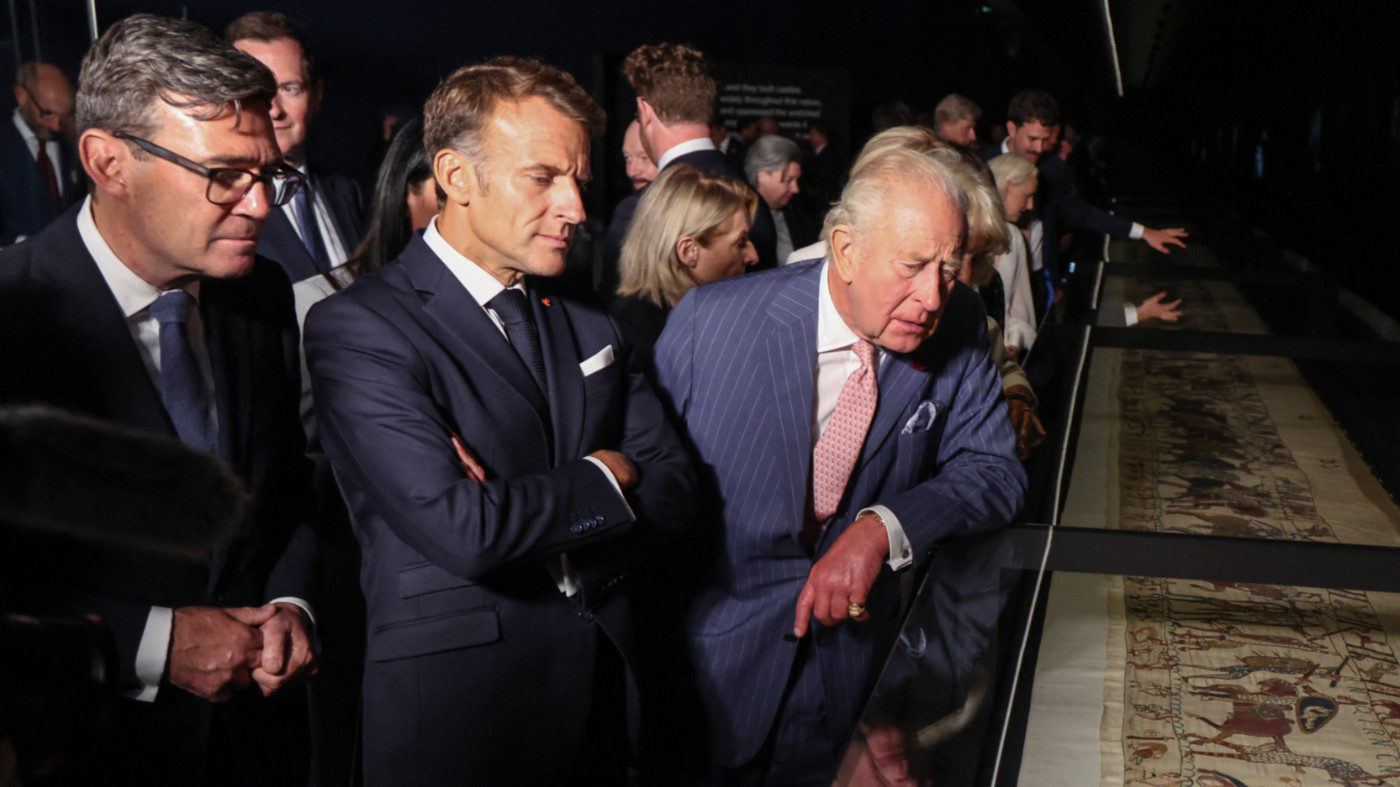
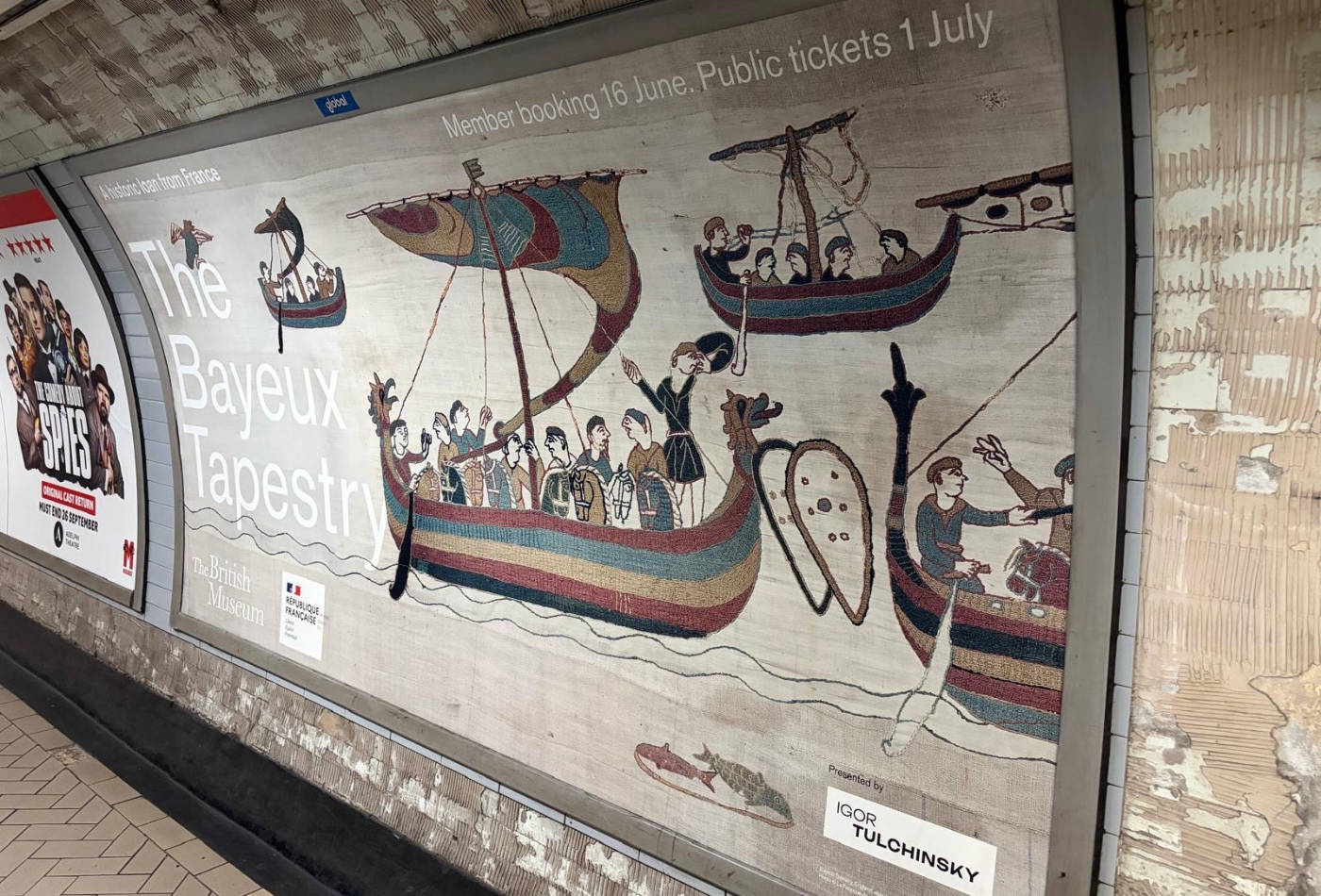
But much of this was made possible by the financial support of a billionaire benefactor whose name is on posters advertising the exhibition, and who kept a discreet profile at the official reception for the Bayeux Tapestry last week, standing near dignitaries including King Charles, French President Emmanuel Macron and British Prime Minister Andy Burnham as they pored over the medieval embroidery through its security glass.
New MEE newsletter: Jerusalem Dispatch
Sign up to get the latest insights and analysis on Israel-Palestine, alongside Turkey Unpacked and other MEE newsletters
Igor Tulchinsky is the founder, chief executive and chair of a US-based investment firm, WorldQuant. In February, he was named as the sponsor of the Bayeux Tapestry exhibition, with media reports valuing the deal at £5m ($6.75m). Next month he is set to chair a fundraising ball at the museum “in recognition of his support for the Bayeux Tapestry”.
But among Tulchinsky’s other business interests is a defence tech-focused venture capital fund based in Israel headed by a recently retired army commander who has promoted the use of remote-controlled vehicles in Gaza described by one rights group as a “direct tool for committing genocide”.
The sponsorship deal predates WorldQuant Genesis, Tulchinsky’s new Tel Aviv-based fund, which was launched in April.
And while at this stage the scale and precise nature of WorldQuant’s investment in defence technologies remains unclear, the revelations about Tulchinsky's business interests in Israel are likely to raise further questions for the museum, which has faced calls from MPs for an investigation into its removal of several references to Palestine in its galleries, as well as criticism over controversial sponsorship deals.
Last week, the Guardian revealed that the museum gave a private view of the Bayeux Tapestry to Peter Thiel, the billionaire founder of Palantir, a tech firm that supplies the Israeli military with advanced AI and data-analysis software.
Artists for Palestine UK, a network of artists and cultural workers, called the British Museum’s decision to partner with Tulchinsky “outrageous”.
Neither the British Museum nor WorldQuant offered any response to Middle East Eye's multiple requests for comment for this article.
WorldQuant Genesis is headed by Major General Saar Tzur, a senior former soldier who commanded the Israeli army’s Northern Corps and Manoeuvre Array - a military command structure designed to support ground forces tasked with advancing into and securing enemy-held territory - during the first year of the war in Gaza, where Israel is accused of waging a campaign of genocide against Palestinians, and operations against Hezbollah in Lebanon.

Tzur was replaced in those roles in October 2024 and retired from the army shortly afterwards. He then joined the advisory board of Ottopia, a tech startup supplying the Israeli military with technology used to control unmanned vehicles remotely.
In his work for Ottopia, Tzur has described the deployment of these vehicles as “force multipliers” in Gaza.
“Teleoperation is essential for unmanned operations, enhancing ground superiority by reducing casualties, improving maneuver resilience, and boosting combat effectiveness,” he is quoted as saying on Ottopia’s website.
Ottopia describes its technology as “battle proven” in roles including “direct combat” and “target engagement”.
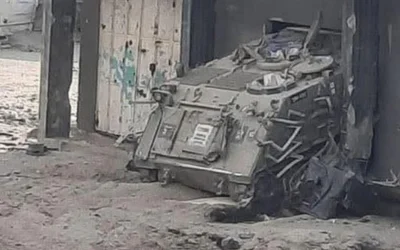
As well as advertising remote-control bulldozers, Ottopia's founder Amit Rosenzweig has also acknowledged the firm has supplied the Israeli military in Gaza with armoured personnel carriers (APCs) laden with explosives.
"He or she can drink coffee while using a joystick to control a tank or an APC or whatever it is that he or she needs to control to get the job done," Rosenzweig said.
Use of vehicles in Gaza
The use of such remote-controlled vehicles by the Israeli army in Gaza and Lebanon has been linked by rights groups to indiscriminate attacks on civilians and the systematic demolition of buildings and neighbourhoods.
According to Euro-Med Human Rights Monitor, Israel began using explosive-laden remote-control vehicles in densely populated residential areas of Gaza in May 2024.
Their use intensified in October 2024, as Israel implemented the so-called “Generals’ Plan”, which sought to depopulate northern Gaza and forcibly displace its residents.
By August, September and October 2025, Euro-Med Monitor documented the destruction of approximately 300 residential units every day, with the Israeli military using about 15 exploding “robots” daily, amounting to an estimated 100 tonnes of explosives used against residential areas.
Speaking to MEE in September 2025, residents of Gaza City described the explosions caused by the vehicles as “more devastating than air strikes”, with multi-storey buildings reduced to rubble in an instant.
Many residents fled their neighbourhoods in terror, they said.
“If the building were seven storeys high, it would become rubble. You can’t even tell there used to be a building there. Just tiny pieces of stone,” said Shabaan, a resident of eastern Gaza City.
Though the Gaza ceasefire agreement between the US, Hamas and Israel in October last year reduced or halted their use, Euro-Med Monitor has recorded an escalation of exploding vehicles in northern and eastern Gaza over the past two months.
“For example, throughout August, we documented the detonation of around two to three remotely operated explosive vehicles per week in areas near the Yellow Line,” said Euro-Med Monitor’s Anas Jerjawi, referring to the demarcation line that Israeli forces are meant to have withdrawn behind.
Jerjawi told MEE that the destruction of cultural heritage sites directly as a result of these vehicles has not yet been recorded.
However, cultural heritage sites have been affected by Israeli military operations in areas where these explosive vehicles were deployed, including several places in Gaza City's Jabalia, such as the Old al-Omari Mosque, the Byzantine Church, al-Mathaf Hotel, al-Sheikh Saad Mosque and the Rajab Ibrahim Abedrabboh House and Shop.
“What is clear is that the use of these weapons has taken place in and around densely populated areas containing homes, religious sites, and other elements of Gaza’s historic and cultural fabric,” Jerjawi said.
“Their large-scale use has therefore posed a serious threat not only to civilian lives and residential structures, but also to the cultural heritage embedded within these communities.”
Euro-Med Monitor told MEE that it could not independently verify that the vehicles it had documented in Gaza were controlled using Ottopia's technology. But the vehicles identified in Gaza have a number of features in common with the type of remote-controlled vehicles described by Tzur and in the company's marketing material.
Ottopia's website features graphics of an APC-style autonomous vehicle. It describes its work with the Israeli army as enabling "fully unmanned ground operations, even with legacy vehicles".
And in an article for the company, Tzur described how it had provided "teleoperation solutions for a wide variety of IDF vehicles - bulldozers, trucks, and more" following the 7 October 2023 Hamas attacks and the start of the Gaza war.
In Lebanon, whole towns and villages along the southern border have been intentionally razed by the Israeli military, including several heritage sites such as the Shrine of the Prophet Benjamin in Muhaibib.
Though remote-control vehicles have been spotted in Lebanon, they have not yet been reported as used in the demolitions of Lebanese communities.
Israel Katz, Israel’s defence minister, said the military is recreating the model of destruction in Gaza in southern Lebanon.
Ottopia did not respond to MEE's multiple requests for comment. There is no suggestion of any association between Tulchinsky and Ottopia.
'Cultural genocide'
In April, Israeli business newspaper Calcalist reported that Tulchinsky’s newly launched WorldQuant Genesis would fund “early-stage research companies combining AI, robotics, and biotechnology”.
It said the fund had already invested in NavAiro, which it described as an “Israeli defense-tech start-up developing solutions to counter swarms of low-cost drones”.
“Even against the backdrop of the complex reality, my commitment to Israel and its future remains intact,” Tulchinsky was quoted as saying.
'How can the museum’s trustees possibly have come to the conclusion that Tulchinsky, with his links to the ongoing erasure of Gaza and parts of Lebanon, was a suitable sponsor?'
- Artists for Palestine UK
“Israel has an extraordinary combination of world-class universities, military experience and the ability to deal with a complex and challenging reality, which makes it one of the most fascinating places in the world for growth.”
Tulchinsky was born in Belarus under the Soviet Union but emigrated to the US as a child.
He has longstanding business interests in Israel where WorldQuant has maintained an office in Ramat Gan, near Tel Aviv, since 2009.
In an interview with the Jerusalem Post in March, Tulchinsky said he had provided financial support to the Israeli army since the 7 October 2023 Hamas-led attacks and the start of the Gaza war, and said he visited the country regularly.
“First I was helping the army financially,” he said. “I gave them money and they did whatever.”
Pressed by the interviewer for more details about the nature of his donations to the army, Tulchinsky said he had donated money through an organisation.
In a statement to MEE, Artists for Palestine UK noted that remote-controlled bulldozers and exploding vehicles have contributed to the damage and destruction of more than 70 percent of Gaza’s total documented cultural heritage sites, including a Unesco World Heritage Endangered Site.
“These mosques, shrines, historical houses, archaeological mounds and excavation sites, ancient artifacts, cemeteries, palaces, fortresses, mosaics, fountains, bathhouses, monasteries and churches were built by Palestinians, Romans, Egyptians, Greeks, Persians, Nabataeans, Assyrians and others over centuries,” it said.
“Too many are now lost forever to the rubble in what a UN report states may amount to cultural genocide.”
The network noted that Tulchinksy appeared to be seeking to profit from Israeli military activities through his business interests in the country, and described his sponsorship of the Bayeux Tapestry exhibition as "shameful".
“How can the museum’s trustees possibly have come to the conclusion that Tulchinsky, with his links to the ongoing erasure of Gaza and parts of Lebanon, was a suitable sponsor? And, more fundamentally, how are basic ethical standards, human rights and international law not guiding factors in such decisions, even before considerations of reputational damage?”
The British Museum has faced criticism and protests over previous corporate sponsorship deals, including a £50m ($67.5m) 10-year deal with oil giant BP to fund its “Masterplan” redevelopment project.
Middle East Eye delivers independent and unrivalled coverage and analysis of the Middle East, North Africa and beyond. To learn more about republishing this content and the associated fees, please fill out this form. More about MEE can be found here.