Why Palestinian electoral gains in Israel cannot alter the racist structure of the state


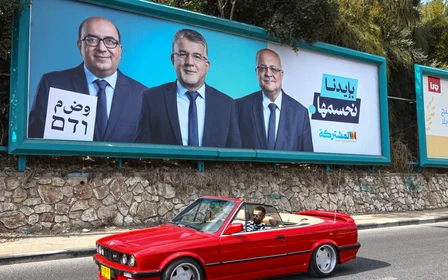
The high Palestinian voter turnout in Israel’s election was fuelled in part by recent attempts to eliminate Palestinian political representation in the Knesset.
This is true regardless of what we think about Palestinian participation in the Israeli parliament; Israel and its allies have long used Palestinian participation to whitewash the state’s racist character and dismiss allegations of apartheid.
The existence of Palestinian parliamentary representation negates neither the apartheid regime nor the 50 discriminatory laws that govern the lives of Palestinian citizens of Israel.
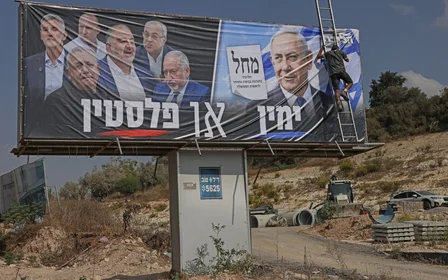
Palestinians in Israel went out to vote because another term under Prime Minister Benjamin Netanyahu, propped up by an alliance with far-right ministers Itamar Ben Gvir and Bezalel Smotrich, would have deadly consequences for Palestinians everywhere.
This includes Palestinians inside Israel, who have faced escalating political violence and incitement, growing calls for their displacement and expulsion, and increasingly aggressive efforts to harass and persecute them.
New MEE newsletter: Jerusalem Dispatch
Sign up to get the latest insights and analysis on Israel-Palestine, alongside Turkey Unpacked and other MEE newsletters
These include the recent establishment of an outpost on the lands of Majd al-Krum, led by a group of far-right settler youth and driven by Israel's Finance Minister Bezalel Smotrich, replicating the very practices of land seizure and settlement expansion taking place in the West Bank. They also include attacks on Palestinian cultural identity, restrictions on the use of Arabic in workplaces
As much as we might want to understand the increased turnout as a response to the genocide in Gaza, the accelerating campaign of ethnic cleansing in the occupied West Bank, and the deteriorating conditions of Palestinian prisoners - and indeed, many voters had these concerns in mind, including people who had boycotted Israeli elections their entire lives - a significant part of the motivation was Israel’s increasing expansion of its violent repression into the 1948 territories.
Indeed, Palestinians in Israel were voting for their own survival.
Bigger picture
At the same time, I have some reservations about how Palestinian participation in these elections, and the initial results, have been portrayed and narrated. It is important to correct some of these misrepresentations and not lose sight of the bigger picture.
Firstly, Palestinian reluctance to participate in Israeli elections has a long political history, grounded in several considerations. Some Palestinians boycott elections as a matter of principle, rejecting parliamentary participation as a political path, and refusing to legitimise the institutions of the Israeli state.
Others question whether parliamentary representation can bring about any fundamental change within a state that was established through their displacement and dispossession, and which has continued these processes, in different forms, across all Palestinian geographies since 1948.
Even as Palestinian voters constitute a political bloc that cannot be ignored, their ability to translate electoral gains into political influence remains severely constrained
For many, the experience of decades of parliamentary participation has only reinforced this position. The conditions facing Palestinians have not fundamentally changed, and cannot fundamentally change, without dismantling the deeper structures of Zionist domination and Jewish supremacy, and transforming the power relations between Israeli Jews and Palestinians.
This position also rests on an understanding that the civil rights of Palestinians in Israel cannot be separated from their political and national rights. Parliamentary representation has not fundamentally altered their subordinate position, not even at the level of civil rights.
Yet, at a critical moment when conditions are rapidly deteriorating, Palestinians are being pushed further into a corner. The already narrow space for political action is being further restricted. Many now see voting as one of the few remaining tools available to them, even with very limited expectations of what it can achieve.
Palestinians in Israel, whether or not they articulate it in these terms, know the realities of living under a system in which Israeli Jews enjoy privileges and rights systematically denied to them - a system where racism is embedded into the state’s laws, institutions and everyday practices.
This is why we should be cautious about the celebratory atmosphere surrounding the initial election results.
No illusions
Secondly, the fact that Palestinian citizens of Israel can vote in Knesset elections, and that they constitute a significant electoral bloc capable of weakening the Netanyahu-Ben-Gvir-Smotrich alliance, does not change the reality that Israel remains an apartheid regime, including within the 1948 territories, as several human rights groups have established.
We should have no illusions about this. I find it hard to believe that some continue to point to Palestinian citizenship and participation in Israeli elections as evidence of the “democratic” and “liberal” character of the Israeli state, or as a glimpse of an Israel that can somehow be saved or restored.
Israeli citizenship for Palestinians must be understood within the broader settler-colonial project, as a mechanism through which the state governs and incorporates the indigenous population while maintaining structures of dispossession and domination.
Citizenship grants Palestinians certain individual and political rights, while simultaneously subordinating their collective rights and claims to land and self-determination to the settler-colonial order. Palestinian parliamentary representation, including the 19 seats won in the Knesset, must therefore be understood within these structural limits.
These structural limitations are also reflected in Israel’s political institutions and parties, where the exclusion of Palestinians is hardly confined to Netanyahu and the far right.
Even as Palestinian voters constitute a political bloc that cannot be ignored, their ability to translate electoral gains into political influence remains severely constrained.
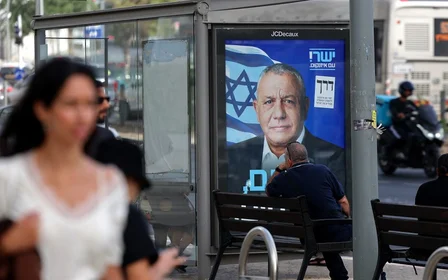
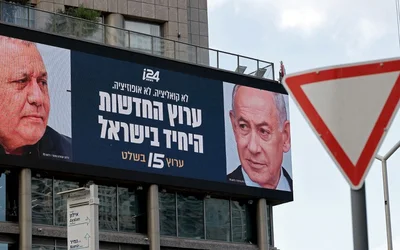
Even in the hypothetical scenario in which Palestinian parties were willing to join a coalition government, leading figures in the “change camp” have already ruled out such a possibility. Gadi Eisenkot, for instance, has explicitly rejected including Ra’am in his government, despite the party’s willingness to participate in past coalitions.
This illustrates how the exclusion of Palestinians is embedded across the Israeli political spectrum, rather than being a feature of its far-right parties alone. Such political partnerships are thus not simply difficult to achieve; they are fundamentally constrained by the racist and settler-colonial foundations of the state and its political system.
Thus, while higher Palestinian turnout and greater parliamentary representation may disrupt Netanyahu's alliance with religious Zionism, they cannot overcome these structural limits.
It is precisely for this reason that Palestinian parliamentary representation should not be romanticised or treated as an achievement in itself, detached from the broader political structure within which it operates.
Beyond the ballot
More fundamentally, Palestinian parliamentary participation cannot be interpreted as separate from Israel’s ongoing genocide in Gaza and the intensification of military and settler violence, dispossession and displacement in the occupied West Bank.
These are not separate political realities, but different manifestations of the same settler-colonial project, which governs Palestinians through various legal and political regimes. Any celebration of Palestinian electoral gains that overlooks this broader reality risks reproducing the very fragmentation of the Palestinian people that Israeli settler-colonialism has historically sought to impose.
The question, then, isn’t about how many seats Palestinians can secure in the Knesset. It is about what parliamentary participation can achieve within a political system that continues to deny Palestinians, across all of historic Palestine, their collective rights and self-determination.
The desire to put the brakes on the rapidly deteriorating conditions facing Palestinians across all geographies is entirely understandable.
Since the beginning of the genocide in Gaza, this deterioration has been particularly severe and, under figures such as Ben Gvir, increasingly theatrical - from the systematic abuse, torture and inhumane treatment of Palestinian prisoners, to the provocative invasions of Al-Aqsa Mosque, to the highly publicised police raids on Palestinian towns inside Israel and demolitions of Palestinian homes.
Yet it is important not to mistake these developments for a rupture with Israel’s history, nor to understand the genocide and intensification of violence against Palestinians as simply the product of Netanyahu and his religious Zionist allies.
Despite their political differences, successive Israeli governments have maintained these structures, including through the expansion and consolidation of settlements in the occupied West Bank, which have long been part and parcel of Israeli state policy - not an exclusively rightwing project.
While removing Netanyahu and his allies could offer some immediate relief or constrain particular forms of violence, it would not fundamentally change the political reality facing Palestinians, particularly as the genocide in Gaza continues alongside accelerating dispossession, displacement and violence in the West Bank.
Nor should Palestinian participation in the Knesset, regardless of recent electoral gains, distract from the bigger and more urgent question of how Palestinians can organise and develop more effective political strategies to confront the reality that exists across all Palestinian geographies.
The views expressed in this article belong to the author and do not necessarily reflect the editorial policy of Middle East Eye.
Middle East Eye delivers independent and unrivalled coverage and analysis of the Middle East, North Africa and beyond. To learn more about republishing this content and the associated fees, please fill out this form. More about MEE can be found here.