‘Bismillah, it's the darkness’: How a suspected police infiltration became a protest meme in France

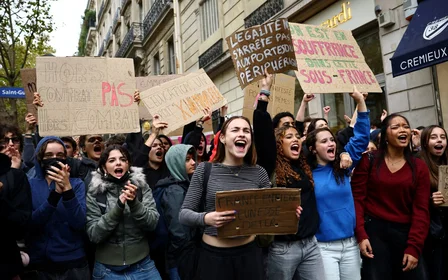
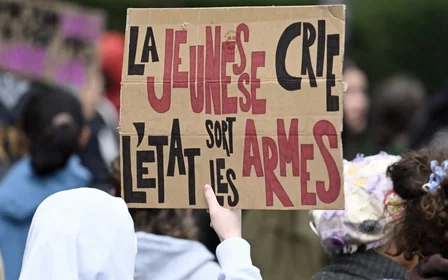
A phrase mocking an alleged attempt by police to infiltrate student protest groups has become a viral slogan in France, appearing on placards, in social media videos and across demonstrations.
“Bismillah, c’est les tenebres” has spread rapidly since early October, turning an unverified Snapchat message into a symbol of the ongoing student protests and the racial stereotypes protesters say it exposes.
The phrase originated in a screenshot of a message attributed to a user called “Mamadou”, apparently seeking information about a planned school blockade.
“Hey, bismillah, it’s the darkness. When’s the school blockade, bro, wallah?” the message read.
Other similar messages were reportedly posted by accounts using names typically associated with people with North and West African heritage.
New MEE newsletter: Jerusalem Dispatch
Sign up to get the latest insights and analysis on Israel-Palestine, alongside Turkey Unpacked and other MEE newsletters
“Bismillah” is an Arabic expression meaning “in the name of God”, commonly used by Muslims before beginning an activity. Paired with “c’est les tenebres” (“it’s the darkness” ), the phrase makes little sense.
« Bismillah c’est les ténèbres » : cette expression qui n’a absolument aucun sens aurait été utilisée par des policiers pour s’infiltrer dans des boucles snapchat avant de se faire démasquer. Devenue la risée des lycéens en colère, l’expression est largement présente sur les pancartes pendant les manifestations. #bismillah #lycées
— Jeanne Baron (@jeannebarontv) October 13, 2026
Translation: "Bismillah, it's the darkness": this expression, which makes absolutely no sense whatsoever, was reportedly used by police officers to infiltrate Snapchat group chats before getting exposed. Having become the laughingstock of angry high schoolers, the expression is widely featured on placards during the protests.
Its awkward mixture of Arabic expressions, stereotypical slang and references to North African identity led students to suspect the account belonged to a police officer posing as a teenager to gain access to private protest groups.
The account’s identity has not been independently verified.
From screenshot to street slogan
The Snapchat screenshot quickly inspired parodies mocking what students saw as a clumsy attempt to imitate Gen Z’s online language. Critics also pointed to the message’s use of an African name, Algerian flag emojis and Arabic expressions as a caricature of young people of African descent.
The phrase soon spread from Snapchat to TikTok, Instagram and X, appearing on protest placards and in videos from school blockades and demonstrations.
It was also repeated by activist Greta Thunberg, who joined the protests this week.
The slogan emerged amid a wave of student mobilisation that began in Creteil, in the suburbs of Paris, on 18 September and spread across the country.
Students have organised blockades and demonstrations over staff shortages, overcrowded classrooms, deteriorating school facilities and insufficient educational resources. Some have also demanded changes to Parcoursup, France’s higher education admissions system.
Many have highlighted how schooling conditions disproportionately affect the country's minorities and working-class suburbs.
Protesters have grown to the hundreds of thousands across the country. Police have fired tear gas and carried out baton charges against the demonstrations, which are largely peaceful.
As the protests have grown, memes and internet trends have become part of their visual language, used to mock authority, build solidarity and attract attention while expressing anger over their education and treatment by police.
Middle East Eye delivers independent and unrivalled coverage and analysis of the Middle East, North Africa and beyond. To learn more about republishing this content and the associated fees, please fill out this form. More about MEE can be found here.